

BORDERLINE EVERYTHING
Metabolic syndrome — the quiet cluster of “slightly high” numbers behind diabetes, heart attack and stroke — and why early action matters more than ever

PLUS
- Sidebar: The Five Numbers That Matter
- Sidebar: Metabolic Syndrome in the Philippines at a Glance
- Sidebar: Measure Your Waist Tonight
- Prediabetes: The Window You Shouldn’t Waste
- Your Liver Is Talking: The New Name for Fatty Liver
- The Weight-Loss Shots: What Filipinos Should Know About GLP-1 Medicines
- Too Young for Diabetes? The Rise of Metabolic Disease in Filipino Kids
- Commentary: Primary Care Is Where Metabolic Syndrome Is Won or Lost
- Doctor’s Note: The Trouble With “Borderline”
Your blood pressure is a little high. Your sugar is a little high. Your triglycerides are a little high, your “good” cholesterol a little low, and your belt has moved a notch or two. None of it sounds alarming on its own. Together, it has a name: metabolic syndrome. It roughly doubles the risk of heart disease, sharply raises the risk of diabetes, and it is quietly spreading across the Philippines, where nearly half of adults now carry excess weight. This World Diabetes Day, whose theme is “Early action on diabetes,” here is what every Filipino should know about the cluster that comes before the crisis — and how to reverse it.
By Rafael R. Castillo, MD
“Borderline lang naman, Doc”
She was 46, an office manager in Pasig, and she came in for her company’s annual physical exam with no complaints at all. She slept a little less than she should and skipped breakfast most days, but she felt fine.
Her results told a different story, though not a dramatic one. Blood pressure, 134/86. Fasting blood sugar, 108. Triglycerides, 190. HDL, the “good” cholesterol, 38. Waist, 94 centimeters.
“Borderline lahat,” she said, almost relieved. “Nothing serious.”
Each number, taken alone, was only slightly off. That is exactly what makes them dangerous. Put together, those five readings met the definition of metabolic syndrome several times over — a condition that roughly doubles her risk of a heart attack or stroke and makes type 2 diabetes far more likely in the years ahead.
She is a composite, but I meet her, or her husband, or her brother, almost every week. Very few of them have ever heard the term.
What metabolic syndrome is
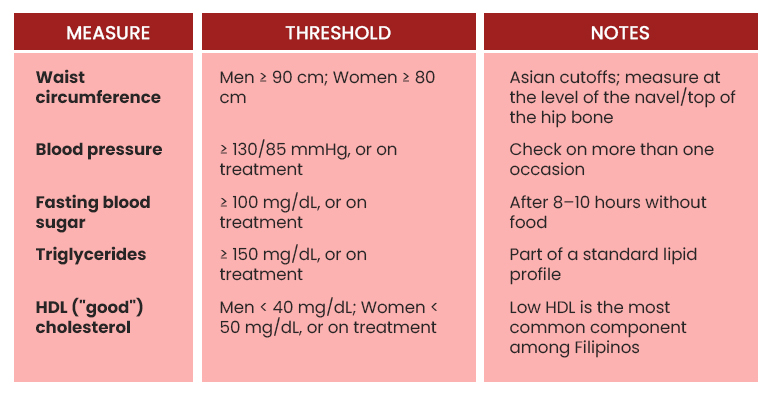
Metabolic syndrome is not a single disease. It is a cluster of risk factors that tend to travel together and feed one another. Under the widely used harmonized criteria endorsed by major international heart, diabetes and obesity organizations, a person has metabolic syndrome if they have any three of these five:
• A large waist: 90 cm or more in Asian men, 80 cm or more in Asian women.
• High blood pressure: 130/85 mmHg or higher, or on treatment for hypertension.
• High fasting blood sugar: 100 mg/dL or higher, or on treatment for diabetes.
• High triglycerides: 150 mg/dL or higher, or on treatment.
• Low HDL (“good”) cholesterol: below 40 mg/dL in men, below 50 mg/dL in women, or on treatment.
Notice the waist cutoffs. They are lower for Asians than for Europeans, and that difference matters enormously — more on it below.
Why “a little high” adds up to a lot
Each of these factors raises cardiovascular risk on its own. Together, they compound. A large meta-analysis published in the Journal of the American College of Cardiology found that people with metabolic syndrome had about twice the risk of cardiovascular disease and about one and a half times the risk of death from any cause, compared with people without it. The risk of developing type 2 diabetes rises even more steeply.
The reason is that the five components are not really separate problems. Most of them grow from the same root: insulin resistance, usually driven by excess fat stored deep in the abdomen, around the organs and in the liver.
When the body’s cells stop responding well to insulin, the pancreas pumps out more to compensate. For years, that extra insulin keeps blood sugar near normal. But it also nudges blood pressure up, raises triglycerides, lowers HDL and promotes more abdominal fat. Eventually, the pancreas tires, and blood sugar climbs into prediabetes and then diabetes. Along the way, the arteries are quietly damaged.
That is why I tell patients that metabolic syndrome is not five problems. It is one problem with five faces.
The Filipino picture
The numbers in the Philippines are sobering — and rising.
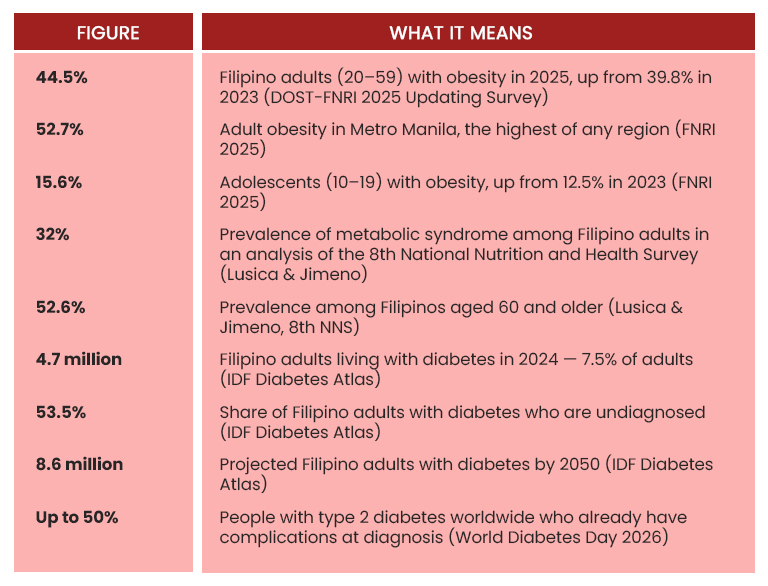
• Excess weight is now the norm among adults. The Food and Nutrition Research Institute’s 2025 updating survey, released in June, reported that obesity among Filipino adults aged 20 to 59 rose from 39.8 percent in 2023 to 44.5 percent in 2025. In Metro Manila, the figure was 52.7 percent.
• Adolescents are following. Obesity among those aged 10 to 19 rose from 12.5 percent to 15.6 percent — about one in six — and more than three in four teenagers were physically inactive.
• Metabolic syndrome is common. An analysis of the 8th National Nutrition and Health Survey by Lusica and Jimeno, published in Acta Medica Philippina, found metabolic syndrome in 32 percent of Filipino adults studied. Among Filipinos aged 60 and older, the same researchers found a prevalence of 52.6 percent — more than half. Low HDL cholesterol was the most common component.
• Diabetes is widespread, and often hidden. The IDF Diabetes Atlas estimates that about 4.7 million Filipino adults were living with diabetes in 2024, a prevalence of 7.5 percent — and that more than half of them, about 53 percent, did not know it. The Atlas projects 8.6 million Filipino adults with diabetes by 2050.
• Diabetes is a leading killer. Diabetes ranks among the top five causes of death in the country, with more than 31,000 deaths in provisional 2025 data from the Philippine Statistics Authority, as cited by doctors in a DOH media briefing last week.
Thin outside, fat inside
Here is something many Filipinos don’t realize: you don’t have to look heavy to have metabolic syndrome.
Compared with people of European descent, Asians tend to carry more fat around the abdomen and organs at the same body weight, and to develop insulin resistance, diabetes and heart disease at lower body mass index levels. A WHO expert consultation recognized this two decades ago, noting that health risks in many Asian populations rise at BMI levels well below the standard Western cutoffs.
So a man who weighs “normal” on the scale but has a firm, protruding belly may be at higher risk than a heavier man whose weight sits more on his hips and thighs. That’s why waist size is often more revealing than weight. A tape measure may tell you more than a bathroom scale. (See our sidebar on how to measure your waist.)
What’s new: three ideas reshaping how doctors think
Metabolic syndrome has been around as a concept for decades. But three recent developments are changing how doctors understand and treat it.
1. The heart, kidneys and metabolism are one system. In 2023, the American Heart Association introduced the concept of cardiovascular-kidney-
2. Fatty liver has a new name. In 2023, international liver societies renamed non-alcoholic fatty liver disease as metabolic dysfunction-associated steatotic liver disease (MASLD), to reflect its close ties to metabolic syndrome. Fat in the liver is now seen as both a marker and a driver of insulin resistance. (See our supplemental article.)
3. Obesity is increasingly treated as a disease, with powerful new medicines. In January 2025, a Lancet Diabetes & Endocrinology commission proposed distinguishing “preclinical” obesity from “clinical” obesity — excess fat that is already harming organs or daily function. In December 2025, the World Health Organization issued its first guideline on GLP-1 medicines such as semaglutide and tirzepatide, conditionally recommending them for adults with obesity as part of long-term care. The landmark SELECT trial had already shown that semaglutide reduced heart attacks, strokes and cardiovascular deaths by about 20 percent in people with overweight or obesity and heart disease, even without diabetes. (See our supplemental article on what these medicines can and can’t do.)
The good news: it’s reversible
Metabolic syndrome is not a life sentence. In many people, it can be partly or fully reversed — and the earlier, the better.
The proof comes from some of the most important prevention trials in medicine. In the US Diabetes Prevention Program, people with prediabetes who lost about 7 percent of their body weight and exercised 150 minutes a week cut their risk of developing diabetes by 58 percent — more than the drug metformin did. The Finnish Diabetes Prevention Study found a similar reduction. Even a 5 to 10 percent weight loss improves blood pressure, triglycerides, HDL and blood sugar.
What does that look like for a Filipino household?
• Watch the rice — and the second cup. White rice is central to our meals, and portions have grown. Try a smaller cup, mix in brown rice, adlai or vegetables, and resist the automatic second serving.
• Drop the sugary drinks. Soft drinks, bottled iced tea, juice drinks, three-in-one coffee and milk tea are among the biggest sources of added sugar. Water is still best.
• Fill half the plate with vegetables. Follow FNRI’s Pinggang Pinoy guide: half vegetables and fruit, a quarter rice or other carbohydrates, a quarter fish, lean meat, eggs, tokwa or legumes.
• Move more, sit less. Aim for at least 150 minutes a week of brisk walking or similar activity, plus some muscle-strengthening work. A 10- to 15-minute walk after meals measurably lowers post-meal blood sugar.
• Sleep seven to eight hours. Short sleep worsens insulin resistance and appetite.
• Limit alcohol — it raises triglycerides, blood pressure and liver fat — and stop smoking.
• Manage stress, which drives cortisol, cravings and abdominal fat.
When lifestyle isn’t enough
For some people, lifestyle changes alone won’t bring every number into range, and that’s not a personal failure. Medicines have an important role:
• Blood pressure medicines to bring readings below target.
• Statins to lower LDL cholesterol and cardiovascular risk.
• Metformin, sometimes used in people with prediabetes at high risk of diabetes.
• Diabetes medicines that also protect the heart and kidneys, such as SGLT2 inhibitors and GLP-1 receptor agonists, for those who qualify.
• Weight-loss medicines for selected patients with obesity, under a doctor’s supervision.
Cost is a real barrier for many families. One helpful development: PhilHealth’s YAKAP primary care package covers consultations, indicated laboratory tests and 21 essential medicines at accredited clinics, including metformin and gliclazide for diabetes, simvastatin for cholesterol, and several blood pressure medicines such as amlodipine, losartan, enalapril, metoprolol and hydrochlorothiazide. Ask whether a YAKAP-accredited clinic is near you.
Early action, starting this week
This year’s World Diabetes Day campaign, under the banner “Early action on diabetes,” points out that up to half of people with type 2 diabetes already have complications by the time they are diagnosed. That’s the cost of waiting.
Metabolic syndrome is the early warning. It’s the stage at which the damage is still small and the chance of reversing it is greatest.
So here is my World Diabetes Day request. Tonight, take a tape measure and check your waist. If you’re 40 or older — or younger with a large waist, a family history of diabetes or high blood pressure — ask your doctor for a fasting blood sugar, a lipid profile and a blood pressure check. And if your results come back “borderline lahat,” don’t be relieved. Be grateful you caught it early, and start acting.
Borderline is not a diagnosis to ignore. It’s an invitation to change course while you still can.
“Metabolic syndrome is not five problems. It is one problem with five faces — and the earliest point at which we can still turn things around.”
THE FIVE NUMBERS THAT MATTER
You have metabolic syndrome if three or more of these apply to you (harmonized criteria, with Asian waist cutoffs):
Source: Alberti KGMM, et al. Harmonizing the metabolic syndrome. Circulation 2009.
METABOLIC SYNDROME IN THE PHILIPPINES AT A GLANCE
Sources: DOST-FNRI 2025 Updating Survey as reported by GMA News (June 17, 2026); Lusica & Jimeno, Acta Medica Philippina (2023, 2026); IDF Diabetes Atlas 11th edition, Philippines profile; World Diabetes Day 2026 campaign (IDF).
MEASURE YOUR WAIST TONIGHT
It takes one minute and a cloth tape measure.
- Stand up straight with your feet together and your belly relaxed. Don’t suck in.
- Find the top of your hip bones on both sides.
- Wrap the tape around your waist just above the hip bones — usually at or slightly above the level of the navel.
- Keep the tape snug but not tight, and parallel to the floor.
- Breathe out normally and read the number.
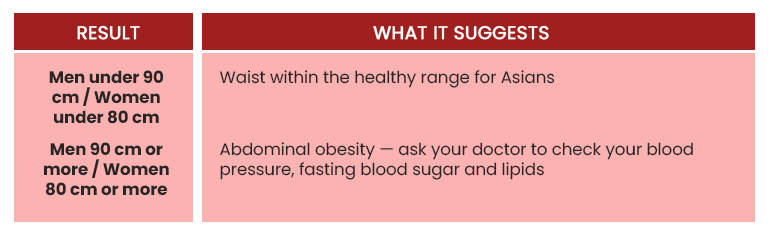
A quick rule of thumb: Your waist should be less than half your height. A person 160 cm tall should aim for a waist under 80 cm.
KEY REFERENCES
1. Alberti KGMM, Eckel RH, Grundy SM, et al. Harmonizing the metabolic syndrome: a joint interim statement of the IDF Task Force on Epidemiology and Prevention; NHLBI; AHA; World Heart Federation; International Atherosclerosis Society; and International Association for the Study of Obesity. Circulation. 2009;120(16):1640–1645.
2. Mottillo S, Filion KB, Genest J, et al. The metabolic syndrome and cardiovascular risk: a systematic review and meta-analysis. J Am Coll Cardiol. 2010;56(14):1113–1132.
3. Lusica PMM, Jimeno CA. Association of food intake with metabolic syndrome among Filipino adults in the 8th Philippine National Nutrition and Health Survey (NNHeS). Acta Med Philipp. 2026;60(3). doi:10.47895/amp.vi0.12034
4. Lusica PMM, Jimeno CA. Prevalence of metabolic syndrome and specific cardiovascular risk factors among older persons in the Philippines: results from the 8th Philippine National Nutrition Survey. Acta Med Philipp. 2023;57(12). doi:10.47895/amp.vi0.5719
5. DOST-Food and Nutrition Research Institute. 2025 Updating of the Nutritional Status of Filipino Children and Other Population Groups, as reported in: “Obesity among Filipino adults, youth rises in 2025 — DOST-FNRI survey.” GMA News Online, June 17, 2026.
6. International Diabetes Federation. IDF Diabetes Atlas, 11th edition (2025): Philippines country profile.
7. International Diabetes Federation. World Diabetes Day 2026–27 campaign: “Early action on diabetes.” worlddiabetesday.org.
8. WHO Expert Consultation. Appropriate body-mass index for Asian populations and its implications for policy and intervention strategies. Lancet. 2004;363(9403):157–163.
9. Knowler WC, Barrett-Connor E, Fowler SE, et al. Reduction in the incidence of type 2 diabetes with lifestyle intervention or metformin (Diabetes Prevention Program). N Engl J Med. 2002;346(6):393–403.
10. Tuomilehto J, Lindström J, Eriksson JG, et al. Prevention of type 2 diabetes mellitus by changes in lifestyle among subjects with impaired glucose tolerance (Finnish Diabetes Prevention Study). N Engl J Med. 2001;344(18):1343–1350.
11. Ndumele CE, Rangaswami J, Chow SL, et al. Cardiovascular-kidney-metabolic health: a presidential advisory from the American Heart Association. Circulation. 2023;148(20):1606–1635.
12. Rinella ME, Lazarus JV, Ratziu V, et al. A multisociety Delphi consensus statement on new fatty liver disease nomenclature. Hepatology. 2023;78(6):1966–1986.
13. Rubino F, Cummings DE, Eckel RH, et al. Definition and diagnostic criteria of clinical obesity. Lancet Diabetes Endocrinol. 2025;13(3):221–262.
14. World Health Organization. WHO guideline on the use of glucagon-like peptide-1 (GLP-1) therapies for the treatment of obesity in adults. Geneva: WHO; December 1, 2025.
15. Lincoff AM, Brown-Frandsen K, Colhoun HM, et al. Semaglutide and cardiovascular outcomes in obesity without diabetes (SELECT). N Engl J Med. 2023;389(24):2221–2232.
16. “PhilHealth: 21 essential medicines available under YAKAP for 2026.” GMA News Online, January 26, 2026.
17. “Doctor urges early screening as type 2 diabetes hits youths.” SunStar Davao, October 30, 2026.
18. Food and Nutrition Research Institute. Pinggang Pinoy: healthy food plate for Filipino adults. DOST-FNRI.
19. Republic Act No. 10963 (Tax Reform for Acceleration and Inclusion Law), provisions on the excise tax on sweetened beverages. 2017.
PREDIABETES: THE WINDOW YOU SHOULDN’T WASTE
Why “slightly high sugar” deserves your full attention — and how to step back from the edge
By Marie Barrientos-Regala, MD

“Pre” sounds harmless. Pre-season. Pre-order. Pre-diabetes. As if it doesn’t count yet.
But prediabetes counts. It means blood sugar is already higher than normal, the body is already struggling to handle sugar, and the blood vessels may already be taking damage. Without action, many people with prediabetes go on to develop type 2 diabetes within a few years.
The good news is that prediabetes is the stage at which diabetes is most preventable. That makes it a window — and windows close.
How it’s diagnosed
Prediabetes is usually found on routine blood tests:
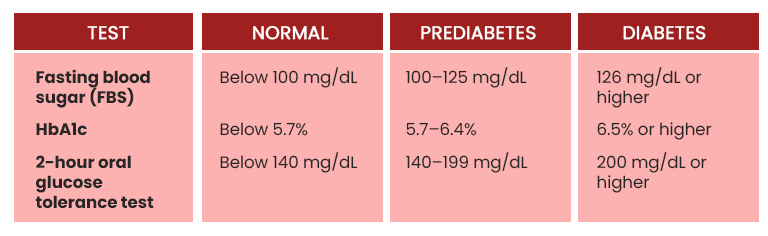
Diagnostic thresholds commonly used in international guidelines (e.g., American Diabetes Association). A diagnosis of diabetes generally requires confirmation with a repeat test unless symptoms are clear.
Who should be tested
• Adults aged 40 and older, at least once a year, as Filipino diabetologists recommend.
• Younger adults with a large waist, overweight or obesity, a family history of diabetes, high blood pressure, abnormal cholesterol, a history of gestational diabetes or polycystic ovary syndrome.
• Children and teenagers with obesity and other risk factors — screening shouldn’t wait until 40.
Most people with prediabetes feel nothing
That’s the trap. There are no symptoms in most cases. Some people notice dark, velvety patches of skin on the neck or armpits (acanthosis nigricans), a sign of insulin resistance. Most simply learn of it from a blood test — or never learn of it at all.
What reverses it
The evidence is strong and consistent: lifestyle change works.
• Lose 5 to 7 percent of your body weight. For a 75-kg person, that’s about 4 to 5 kg.
• Get at least 150 minutes of moderate activity a week — brisk walking counts.
• Cut back on refined carbohydrates and sugary drinks.
• Sleep well and manage stress.
In the Diabetes Prevention Program, this approach cut the risk of developing diabetes by 58 percent. The benefits lasted for years after the program ended.
For some high-risk people — especially younger adults with significant obesity or women with a history of gestational diabetes — doctors may also recommend metformin.
The bigger picture
Prediabetes is rarely just about sugar. It usually travels with the other components of metabolic syndrome: high blood pressure, high triglycerides, low HDL and a growing waist. That’s why a prediabetes diagnosis should prompt a full cardiovascular check-up, not just a repeat sugar test.
Your next step: If you’ve ever been told your sugar is “medyo mataas,” find that result and ask your doctor what it means. Then ask for a repeat FBS or HbA1c, a lipid profile, and a blood pressure check. That’s early action.
YOUR LIVER IS TALKING
Fatty liver has a new name — and a closer connection to your heart than you might think
By the H&L Editorial Team
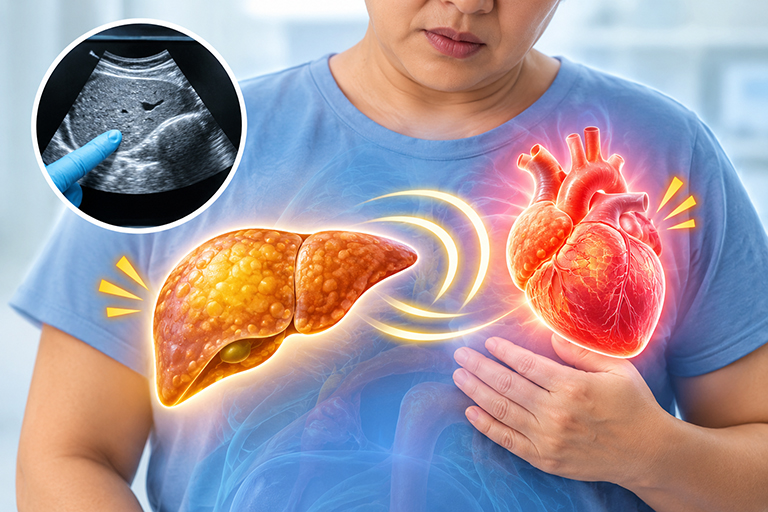
“May fatty liver po kayo.” Many Filipinos have heard this after an abdominal ultrasound done for some other reason. Most shrug it off. It doesn’t hurt, after all, and nobody seems too worried.
But doctors are increasingly worried — and in 2023, they gave the condition a new name that reflects why.
From NAFLD to MASLD
For decades, fat buildup in the liver of people who don’t drink much alcohol was called non-alcoholic fatty liver disease, or NAFLD. In 2023, international liver societies agreed on a new name: metabolic dysfunction-associated steatotic liver disease, or MASLD.
The change wasn’t just cosmetic. The old name defined the condition by what it wasn’t (not caused by alcohol). The new one defines it by what it is: a liver disease driven by the same metabolic problems behind metabolic syndrome — excess abdominal fat, insulin resistance, high blood sugar, high blood pressure and abnormal cholesterol.
To be diagnosed with MASLD, a person must have fat in the liver plus at least one cardiometabolic risk factor, such as a large waist, high blood sugar, high blood pressure, high triglycerides or low HDL.
Why it matters
MASLD is one of the most common liver conditions in the world, affecting roughly a third of adults globally by many estimates, and it is especially common among people with obesity and type 2 diabetes.
Most people with MASLD won’t develop serious liver disease. But in a significant minority, the fat triggers inflammation (now called MASH, metabolic dysfunction-associated steatohepatitis), which can lead to scarring (fibrosis), cirrhosis and even liver cancer.
And here’s the part many people don’t know: the most common cause of death among people with fatty liver is not liver disease. It’s heart disease. A fatty liver is a strong signal that the whole metabolic system is under strain.
How it’s found
• Ultrasound often shows fat in the liver.
• Blood tests such as ALT and AST may be normal or mildly raised.
• Fibrosis assessment — through simple scores calculated from routine blood tests (such as the FIB-4 index) or a special ultrasound scan that measures liver stiffness — helps doctors identify who needs closer follow-up.
What helps
• Weight loss. Losing 5 percent of body weight reduces liver fat; losing 7 to 10 percent can reduce inflammation and even scarring.
• Exercise, which reduces liver fat even with modest weight loss.
• Cut sugary drinks and refined carbohydrates. Fructose from added sugars is especially easily turned into liver fat.
• Avoid or limit alcohol.
• Control diabetes, blood pressure and cholesterol. Statins are safe in people with fatty liver and help protect the heart.
• Ask about newer treatments. Some medicines for diabetes and obesity reduce liver fat, and new drugs specifically for MASH have recently been approved in some countries.
If you’ve been told you have fatty liver: Don’t ignore it. Ask your doctor to check your blood sugar, blood pressure and cholesterol, and whether you need an assessment for liver scarring. Your liver may be giving you an early warning about your heart.
THE WEIGHT-LOSS SHOTS
What Filipinos should know about GLP-1 medicines — the science, the limits, and the fakes
By Marie Barrientos-Regala

They’ve been called miracle drugs, celebrity secrets and the biggest change in obesity treatment in decades. Brand names like Ozempic, Wegovy and Mounjaro now circulate in barangay group chats and on social media, often with dramatic before-and-after photos.
What are these medicines, really? And what should Filipino patients know before reaching for them?
What they are
GLP-1 receptor agonists, such as semaglutide, and newer dual-action drugs, such as tirzepatide, mimic gut hormones that are released after eating. They:
• signal fullness to the brain, reducing appetite and cravings;
• slow stomach emptying, so you feel full longer;
• help the pancreas release insulin when blood sugar rises.
Originally developed for type 2 diabetes, they turned out to produce substantial weight loss — often 15 percent or more of body weight with the higher-dose versions used for obesity, in clinical trials.
What the evidence shows
• Weight loss and metabolic improvement: Large trials have shown major improvements in weight, blood sugar, blood pressure and liver fat.
• Heart protection: The SELECT trial, published in 2023, found that semaglutide reduced heart attacks, strokes and cardiovascular deaths by about 20 percent in people with overweight or obesity and established heart disease, even without diabetes.
• WHO guidance: In December 2025, the World Health Organization issued its first guideline on these medicines, conditionally recommending them for long-term treatment of adults with obesity (BMI 30 or above), alongside support for healthy eating and physical activity. The recommendation is conditional because long-term data, cost and access remain concerns.
What they can’t do
• They’re not a cure. Most people regain much of the weight after stopping. These are long-term treatments for a chronic disease, not a quick fix.
• They don’t replace healthy habits. Muscle loss is a concern with rapid weight loss, so adequate protein and strength training matter.
• They’re not for everyone. They aren’t recommended in pregnancy, and people with certain thyroid cancer histories or a history of pancreatitis need careful evaluation.
Side effects
The most common are nausea, vomiting, diarrhea, constipation and stomach discomfort, especially when starting or increasing the dose. Less commonly, they can cause gallbladder problems or pancreatitis. Severe dehydration from vomiting can harm the kidneys.
The Philippine reality: cost and counterfeits
These medicines remain expensive in the Philippines and are not generally covered by PhilHealth for obesity. High demand has also created a thriving gray market — and WHO has specifically warned that this has fueled falsified and substandard products.
• Buy only from licensed pharmacies, with a doctor’s prescription.
• Be very wary of social media sellers, “peptide” vials, compounded versions, and offers that seem too cheap. You can’t know what’s really inside.
• Don’t self-inject based on online dosing guides.
The bottom line: GLP-1 medicines are a genuine advance for people with obesity and related diseases, under proper medical care. But they work best as part of a long-term plan, they aren’t right for everyone, and buying them from unregulated sellers is a gamble with your health.
TOO YOUNG FOR DIABETES?
The rise of metabolic disease in Filipino kids — and what parents can do
By the H&L Editorial Team

“Ang cute ng anak mo, ang taba!” For generations, a chubby child was considered a healthy child in Filipino families. A plump baby meant a well-fed baby. A skinny one worried the lolas.
That instinct made sense when undernutrition was the biggest threat. It still is in many communities. But a second threat has grown alongside it.
The numbers
The FNRI’s 2025 updating survey found that obesity among Filipino adolescents aged 10 to 19 rose from 12.5 percent in 2023 to 15.6 percent in 2025 — about one in six. In Central Luzon and Metro Manila, the figure was above 20 percent. More than three in four adolescents (77.5 percent) were physically inactive.
At the same time, the country still struggles with stunting and wasting. Many communities now face both problems at once — a “double burden” of malnutrition.
Type 2 diabetes in children
Type 2 diabetes was once called “adult-onset diabetes.” No longer. At a DOH media briefing ahead of World Diabetes Day, a Davao diabetologist warned that type 2 diabetes can now affect children as young as 12, driven by overweight, family history and sedentary lifestyles. He urged parents not to see an overweight child as automatically healthy, and to have at-risk children screened early rather than waiting until adulthood.
Children who develop type 2 diabetes tend to progress faster than adults and face complications earlier in life — kidney disease, eye problems and heart disease in their 20s and 30s.
Warning signs in children
• Excess weight, especially around the belly
• Dark, velvety skin on the back of the neck or in the armpits
• Frequent thirst and urination
• Unexplained weight loss or tiredness
• Blurred vision
• Slow-healing wounds
What parents can do
• Rethink drinks. Make water the default. Soft drinks, juice drinks, milk tea and sweetened “3-in-1” mixes are major sources of sugar for kids.
• Pack smarter baon. Fruit, boiled eggs, sandwiches with vegetables, or kamote instead of chips, sweet bread and instant noodles.
• Get them moving. At least an hour a day of active play — biking, running, sports, dancing, chores.
• Limit screen time, especially during meals and before bed.
• Protect sleep. Children who sleep too little are more likely to gain excess weight.
• Eat together. Family meals with vegetables and home-cooked food help shape lifelong habits.
• Don’t shame. Focus on health and habits, not on weight or appearance. Make changes as a whole family, so no child feels singled out.
• Ask your pediatrician about screening if your child has obesity plus risk factors such as a family history of diabetes.
Schools matter too. DepEd’s healthy school canteen policy (DepEd Order No. 13, s. 2017) limits the sale of sugary drinks and junk food in schools. Parents can ask whether their child’s school is following it.
PUBLIC HEALTH COMMENTARY
PRIMARY CARE IS WHERE METABOLIC SYNDROME IS WON OR LOST
By Rafael R. Castillo, MD

Metabolic syndrome rarely makes the news. There’s no outbreak, no dramatic rescue, no single moment of crisis. It builds slowly, one notch on the belt at a time, until the crisis arrives: a heart attack at 52, a stroke at 58, dialysis at 63.
By then, the treatment is expensive, the damage often permanent, and the costs — to families and to PhilHealth — enormous. The IDF estimates that diabetes alone cost the Philippine health system more than US$2 billion in 2024.
The place to stop this is not the ICU or the dialysis center. It is the barangay health station and the primary care clinic, years earlier.
That’s why PhilHealth’s YAKAP primary care benefit is worth watching. By covering consultations, indicated laboratory tests and essential medicines — including metformin, gliclazide, simvastatin and several blood pressure medicines — at accredited clinics, it offers a path for ordinary Filipinos to detect and control metabolic risk factors before they become disasters.
But a benefit package is only as good as its reach. What would it take for primary care to truly win against metabolic syndrome?
• Routine screening that includes the waist. Every adult consultation should include a waist measurement and blood pressure check, with fasting sugar and lipids at regular intervals.
• Treating the cluster, not the parts. A patient with high blood pressure should be checked for high sugar, abnormal lipids and fatty liver — and vice versa.
• Lifestyle support that’s real. Telling patients to “eat healthy and exercise” isn’t enough. Structured programs — group classes, nutrition counseling, walking clubs, follow-up calls — are what produced results in prevention trials.
• Uninterrupted medicines. Stock-outs and out-of-pocket costs push patients off treatment.
• Healthier food environments. The sweetened beverage tax under the TRAIN Law was a start. Clear front-of-pack labels, healthier school canteens and limits on marketing junk food to children can help.
• Places to move. Safe sidewalks, parks and bike lanes make physical activity part of daily life, not just a gym membership.
• Data that track progress. Not just how many people enrolled in YAKAP, but how many had their blood pressure, sugar and cholesterol brought under control.
The World Diabetes Day theme this year is “Early action on diabetes.” For a health system, early action means investing where the payoff is greatest: in prevention and primary care, long before the first heart attack.









Leave a Reply