


THE TROUBLE WITH “BORDERLINE”

Of all the words my patients use, “borderline” may be the one I’ve come to distrust most.
“Borderline high blood, Doc.” “Borderline sugar lang.” “Medyo mataas lang ang cholesterol.” They say it with a little smile, the way you’d mention a minor scratch on your car. And I understand. Nobody wants to be told they’re sick, especially when they feel perfectly fine.
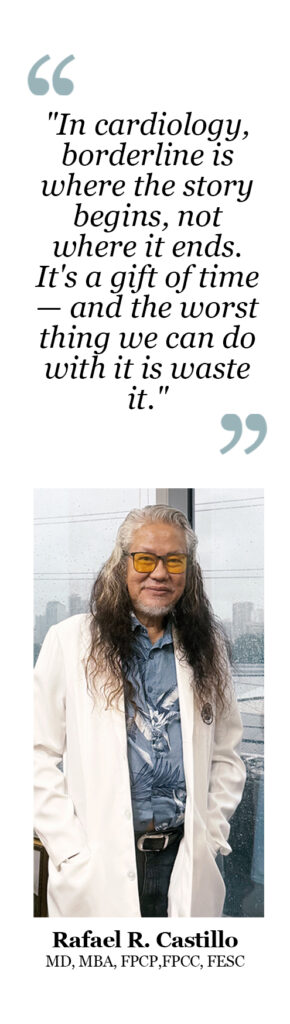
But in cardiology, borderline is where the story begins, not where it ends. The patient with a “borderline” blood pressure of 135 at age 45 is often the patient with a blood pressure of 160 at 55, and a stroke at 62. The “borderline” sugar of 108 becomes 140, then an HbA1c of 8, then numb feet and failing kidneys. None of this happens suddenly. It happens one ignored checkup at a time.
What makes metabolic syndrome so treacherous is that it is made almost entirely of borderlines. A waist a few centimeters too wide. A blood pressure a few points too high. Triglycerides slightly elevated, HDL slightly low, fasting sugar slightly above 100. No single number triggers alarm. Together, they roughly double the risk of a heart attack.
I’ll confess that we doctors share some of the blame. In a busy clinic, it is easy to say “watch your diet” and move on to the next patient. It is easy to treat the blood pressure and ignore the waist, to check the sugar and forget the triglycerides. We are trained to treat diseases. Metabolic syndrome asks us to treat a trajectory.
There is a quieter problem too. Many Filipinos don’t look like they’re at risk. I see slim-looking men in their 40s with firm, protruding bellies, normal weights and terrible metabolic profiles. Their families tell them they’re healthy because they aren’t “mataba.” The tape measure tells a different story.
So this World Diabetes Day, I want to make a small plea: let’s retire “borderline” as a reason to relax.
If your doctor says your numbers are borderline, take it as the best possible news — not because nothing is wrong, but because you’ve caught it at the stage when it’s still easiest to fix. Lose a few kilos. Walk after dinner. Cut the soft drinks. Smaller rice portions. Better sleep. Recheck in three to six months. If lifestyle isn’t enough, accept medicine without shame.
Borderline is a gift of time. The worst thing we can do with it is waste it.









Leave a Reply