



n this week’s issue, we highlight chronic kidney diseases, which is another silent but potentially life-threatening disease in the country. As physicians, we often encounter patients with kidney disease at the most difficult moment—when dialysis is no longer a choice but a necessity. These are consultations filled with shock, fear, and unanswered questions. Families ask how this could have happened so suddenly. Patients ask if anything could have been done earlier. In many cases, the honest answer is yes.
Chronic kidney disease (CKD) is not a sudden illness. It is a slow, silent process that often unfolds over years. Long before dialysis becomes inevitable, subtle signs of kidney damage are already present—detectable through simple blood and urine tests. Yet because early CKD rarely causes pain or obvious symptoms, it is frequently overlooked, underestimated, or ignored.
This is why kidney disease should no longer be viewed primarily as an end-stage problem. Treating CKD only when dialysis is required is not just medically suboptimal—it is ethically troubling. By that point, opportunities for prevention, slowing progression, and preserving quality of life have already been lost.
The upstream causes of kidney disease in the Philippines are well known. Poorly controlled diabetes and hypertension account for the majority of cases. Both conditions are common, chronic, and manageable—but only when taken seriously. Unfortunately, many patients discontinue medications once they “feel okay,” miss follow-up visits, or are never told that kidney monitoring is a critical part of long-term care. The result is preventable kidney damage that progresses quietly until it becomes irreversible.
Primary care plays a pivotal role in changing this trajectory. Routine screening of high-risk patients—those with diabetes, hypertension, advanced age, or a family history of kidney disease—should be standard practice, not an afterthought. Measuring serum creatinine, estimating glomerular filtration rate, and checking urine for protein are neither expensive nor complicated. When performed regularly, these tests allow clinicians to identify kidney injury early, adjust treatment, and refer patients before severe damage occurs.
Equally important is patient education. Many Filipinos are unaware that kidneys can fail without causing pain. Fatigue, swelling, and poor appetite are often dismissed as part of aging or stress. Over-the-counter pain relievers and unregulated supplements are commonly used without understanding their potential harm to the kidneys. Addressing these misconceptions through consistent, clear communication is as vital as prescribing the right medications.
From a policy perspective, prioritizing prevention over late intervention is both humane and economically sound. Dialysis saves lives, but it comes at enormous personal, social, and financial cost. Each avoided dialysis session represents not only healthcare savings, but preserved dignity, productivity, and family stability. It means fewer workdays lost, fewer households pushed into financial hardship, and fewer lives defined by hospital schedules.
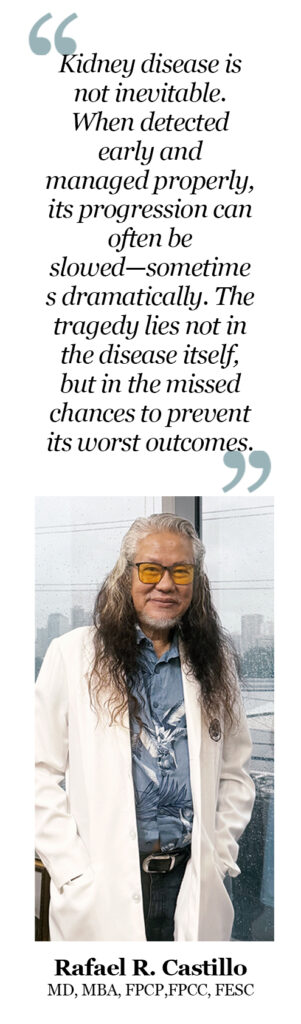
Kidney disease is not inevitable. When detected early and managed properly, its progression can often be slowed—sometimes dramatically. The tragedy lies not in the disease itself, but in the missed chances to prevent its worst outcomes.
As clinicians, health leaders, and advocates, we must shift our focus upstream. Early detection, consistent follow-up, patient education, and prevention-centered policies are not optional—they are essential. By doing so, we honor not only the science of medicine, but its deepest purpose: to prevent suffering whenever possible.