

Words and Photos by Henrylito D. Tacio
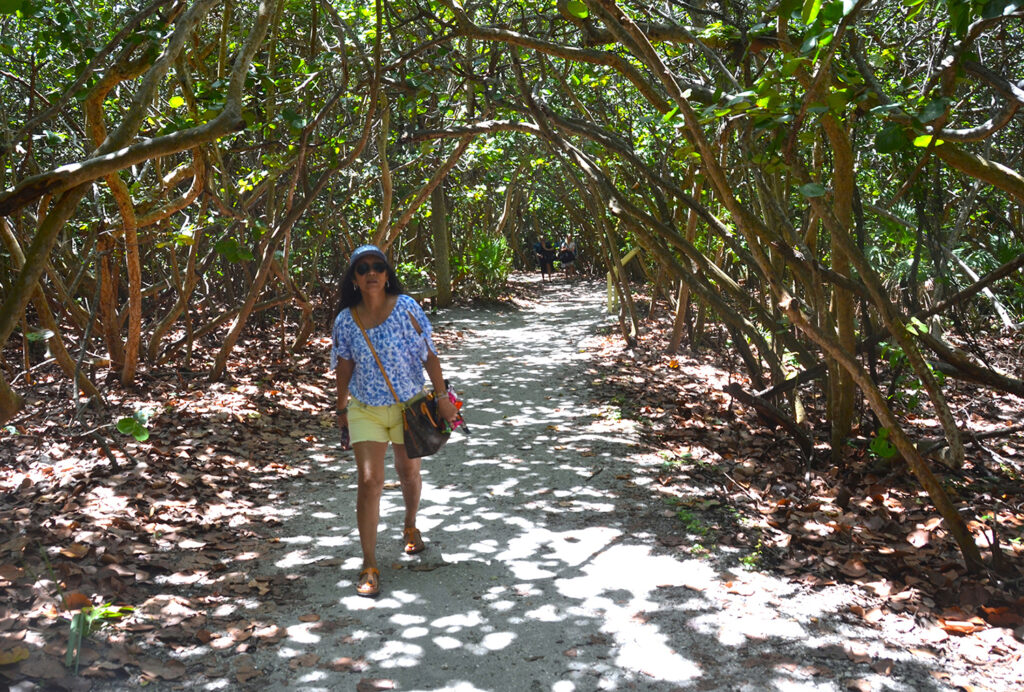
It was a beautiful sunny day along Florida’s Atlantic coast. We were walking beneath a cool canopy of sea grape plants. Their broad leaves whisper and tick while the sun flashes through, creating a sway of rays in the sandy direction beneath our slippers. We emerged at a platform overlooking the dramatic coastline.
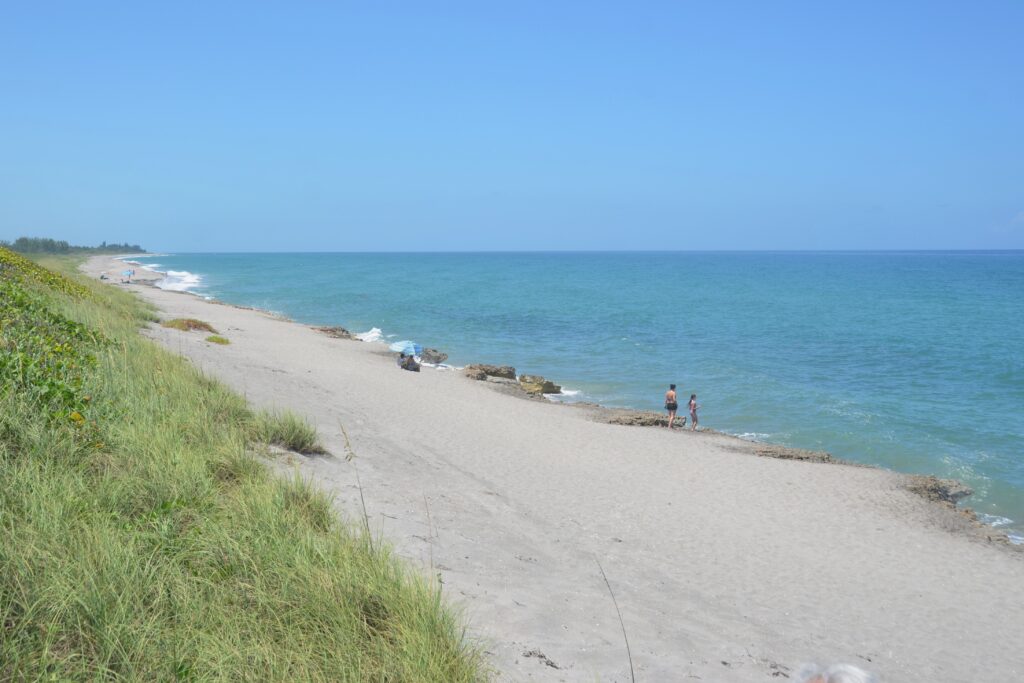
I have never seen a more breathtaking view of sand and the azure ocean than this. We made our way down to the beach. The aquamarine waters of the Atlantic Ocean called to us but mind you this is not your typical beach suitable for swimming.
I would never have discovered such a place if it weren’t for my sister Marilou Eplite and her husband David.
We were on our way back to Deland from our trip to Miami Beach when the couple chose to take us – my sister Elena Chase, who currently lives in Grand Rapids, Minnesota – to Blowing Rocks Preserve, an almost 30-hectare conservation area situated just south of Jupiter Island on Florida’s Treasure Coast.
The area is managed by Florida Chapter of The Nature Conservancy (TNC), a global environmental organization dedicated to conserving the lands and waters on which all life depends, focusing on science-based solutions and community engagement. Among its 400 preserves in the United States, this is the most frequented, attracting an average of 55,000 visitors each year, I was told.
“(We consider) Blowing Rocks Preserve as one of our proudest achievements,” TNC said in its website. “This peaceful, barrier island sanctuary is a well-known model for large-scale, native coastal habitat restoration.
“The natural features found here are disappearing fast from many Florida islands, and a number of endangered plants and animals call this special place home—including rare loggerhead, green and leatherback sea turtles.”
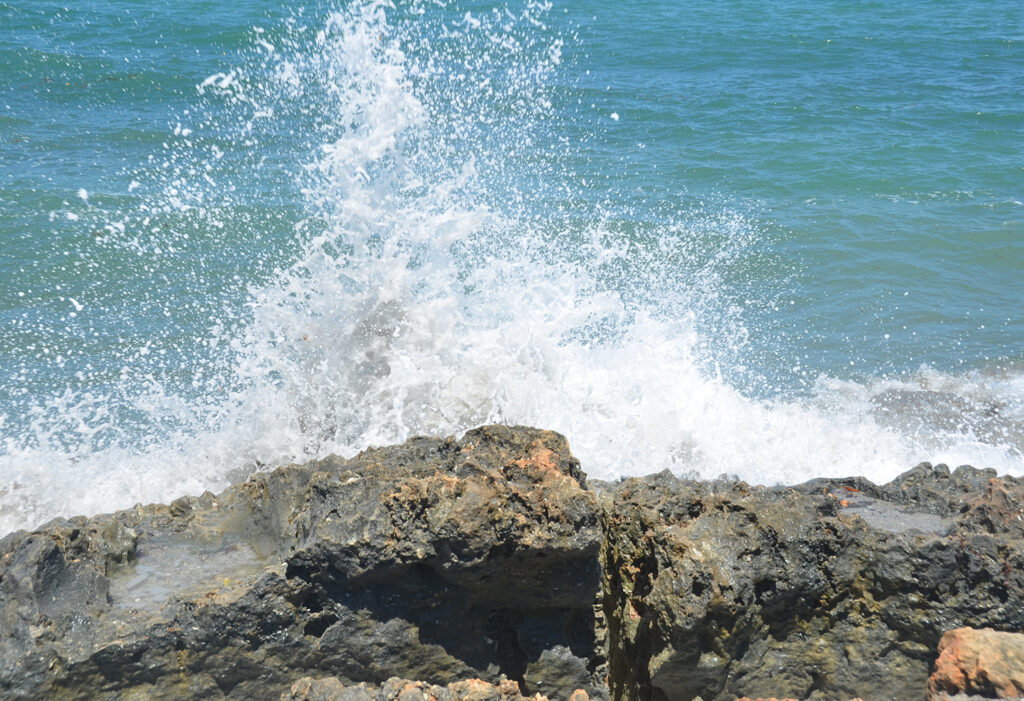
The preserve gets its name from the rugged Anastasia limestone coastline, recognized as the largest along the Atlantic seaboard. Also referred to as coquina, derived from the Spanish term for cockleshell, Anastasia limestone mainly consists of shell and coral fragments, fossils, and sand. Small fossils are distinctly visible in the rock faces, predominantly the shells of tiny clams and oysters, or fragments of a large snail known as Busycon.
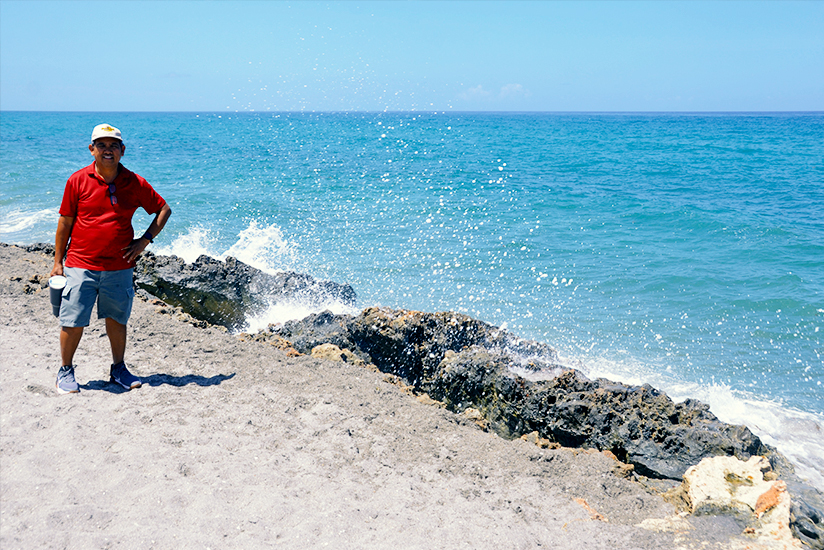
The primary attraction is an almost kilometer-long rock formation situated between the sand and the sea. During high tide, when the sea becomes turbulent, waves crash against the rocks, propelling plumes of saltwater up to 50 feet into the air. This spectacle is truly a remarkable sight!
There is some disagreement among scientists regarding the precise extent of the limestone inland, the exact time of its formation (most likely around 125,000 years ago during the Pleistocene Age), and whether it originated from a singular event or multiple fluctuations in sea level.
However, there are a few points on which scientists concur. For one, the Anastasia limestone stretches along Florida’s coastline from St. Augustine to Boca Raton. For another, Blowing Rocks Preserve contains the largest outcropping found on the U.S. Atlantic Coast.
What accounts for the significant amount of limestone exposed at Blowing Rocks? Until now, no one knows. But there are theories that this land may have previously been part of an exposed sand ridge or the summit of a reef, or perhaps due to some other factor that elevates it above the surrounding terrain.
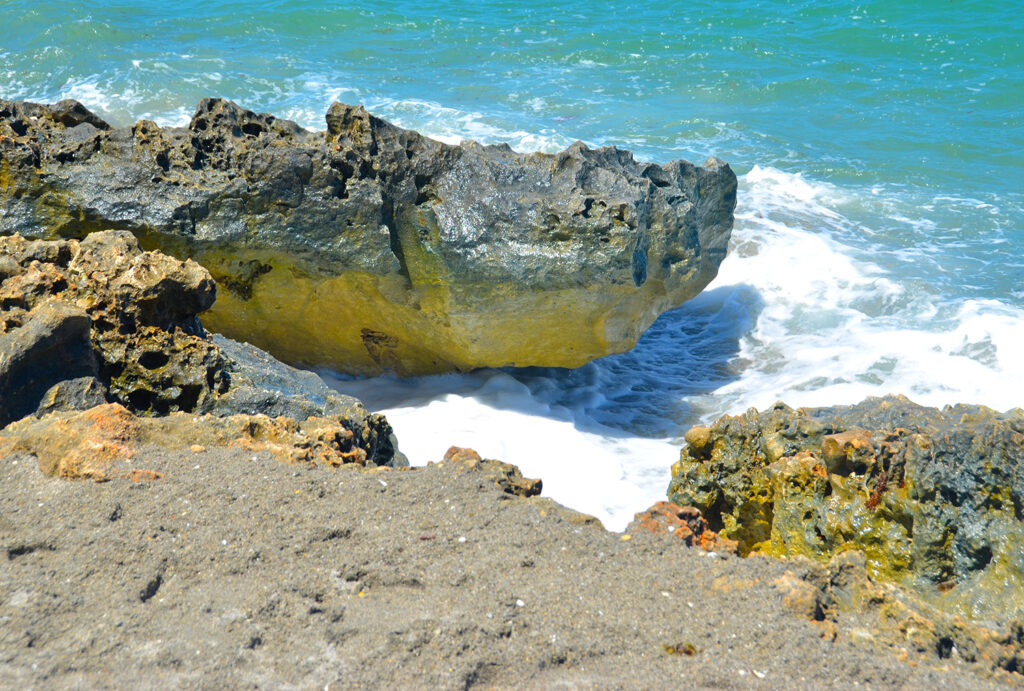
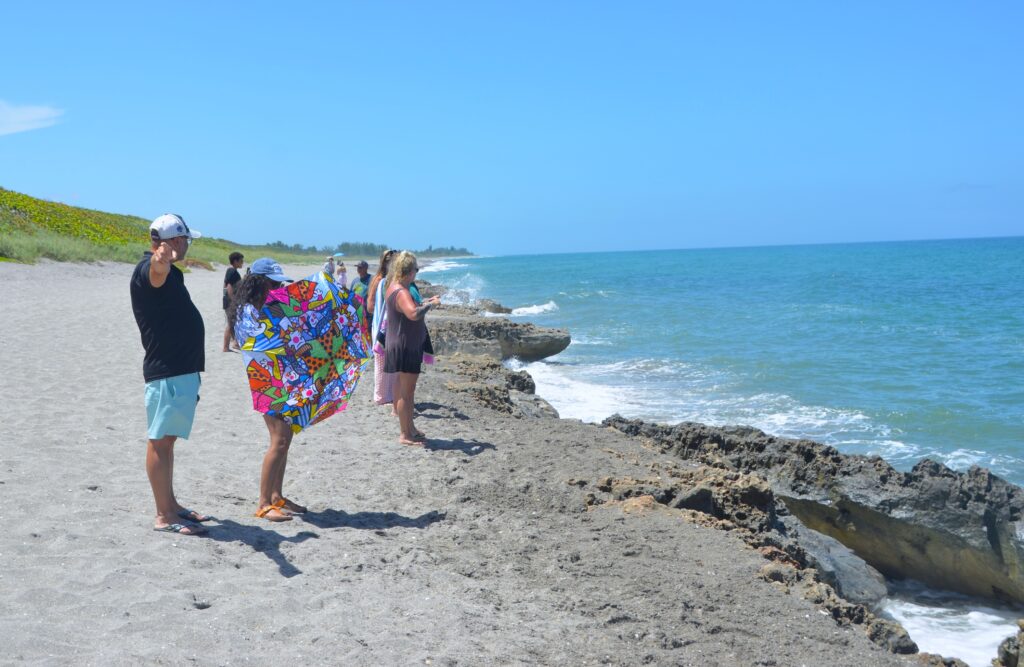
The preserve spans the barrier island, with the Atlantic Ocean on one side and the Indian River Lagoon on the opposite side. It is also situated at the intersection of temperate and tropical zones.
“This creates incredibly biodiverse habitats within a small area,” Kellilynn Hann wrote in the website of Visit Florida. “As you walk the trails, you’ll see over 250 native plant species like subtropical hardwoods, three types of mangroves, gumbo limbo, wild coffee, Jamaica caper, and sea oats. The preserve is also home to endangered beach peanuts and giant wild pine bromeliad.”
There are numerous activities available for you to engage in while visiting the area. The preserve features several short trails and picturesque walks.
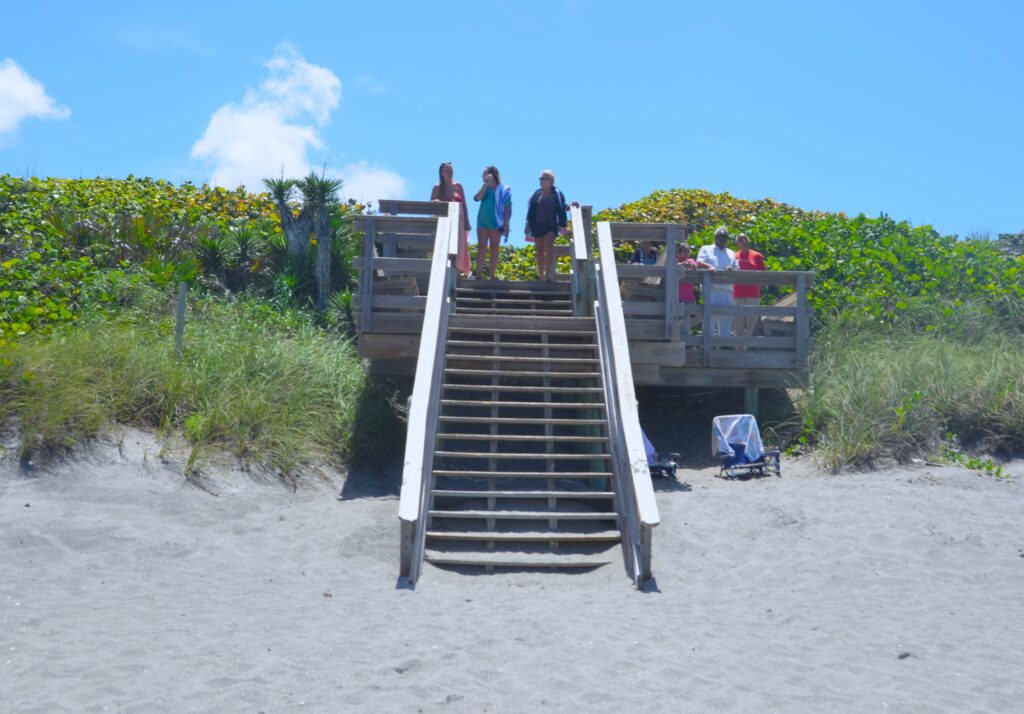
The Beach Trail is a pathway of less than one kilometer, serving as the primary access to the beach, guiding visitors through a shaded maritime hammock habitat to the main staircase leading to the beach. This staircase is equipped with benches and a viewing platform.
The Dune Trail is a one-way trail of less than half a kilometer, which takes visitors atop the beach dune, offering expansive views of the beach, and concludes at the sandy northern end of Blowing Rocks’ beach.
The Mangrove Boardwalk is an elevated boardwalk measuring 300 feet in length (with an accessible ramp) that traverses a mangrove forest and features an overlook of the Indian River Lagoon.
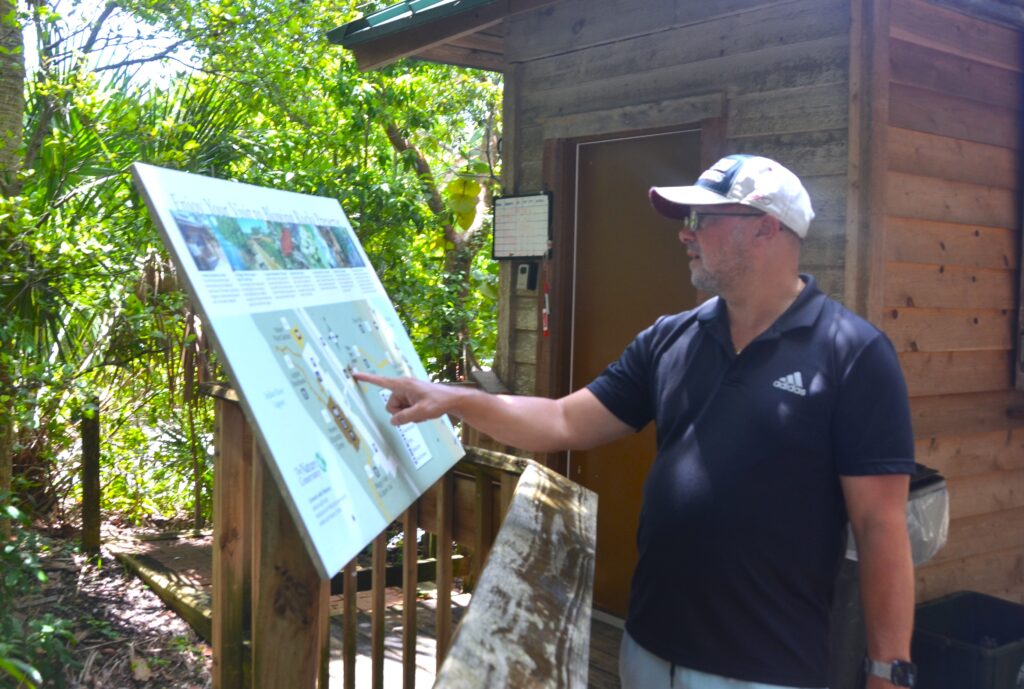
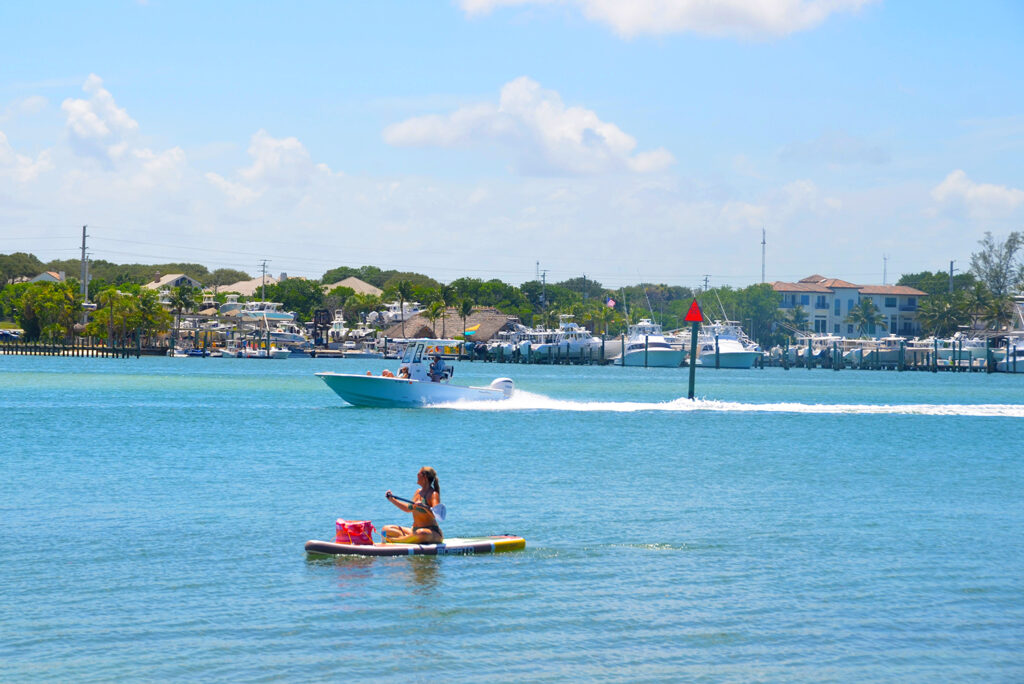
The Lagoon Trail is a loop trail of less than half a kilometer, commencing as a sandy path along the shoreline of the Indian River Lagoon and looping through saltwater marsh and coastal strand habitats.
Visitors are permitted to utilize the preserved trails to access the beach during its operational hours. Swimming and snorkeling are allowed at Blowing Rocks Preserve. If you plan to hit the waters, please take note that there is no lifeguard present on the beach.
“The beach is more reminiscent of something you might see in southern California or Hawaii,” Cristin Krasco, the Preserve manager, was quoted as saying.
Birdwatching is yet another activity you can engage in. The bluffs provide an excellent viewpoint for observing sea birds. Frigates, terns, and gannets navigate the abundant waters in pursuit of food. Ospreys are also known to nest in this area. Sandpipers, rusty turnstones, and sanderlings scurry after crustaceans that flourish in the sandy beach environment.
We were informed that while Blowing Rocks Preserve is a destination worth visiting in every season, winter remains the optimal time. According to locals, the wave-carved limestone creates burrows, blowholes, chimneys, and rocky pools. These features provide a unique opportunity to witness Florida’s natural history.
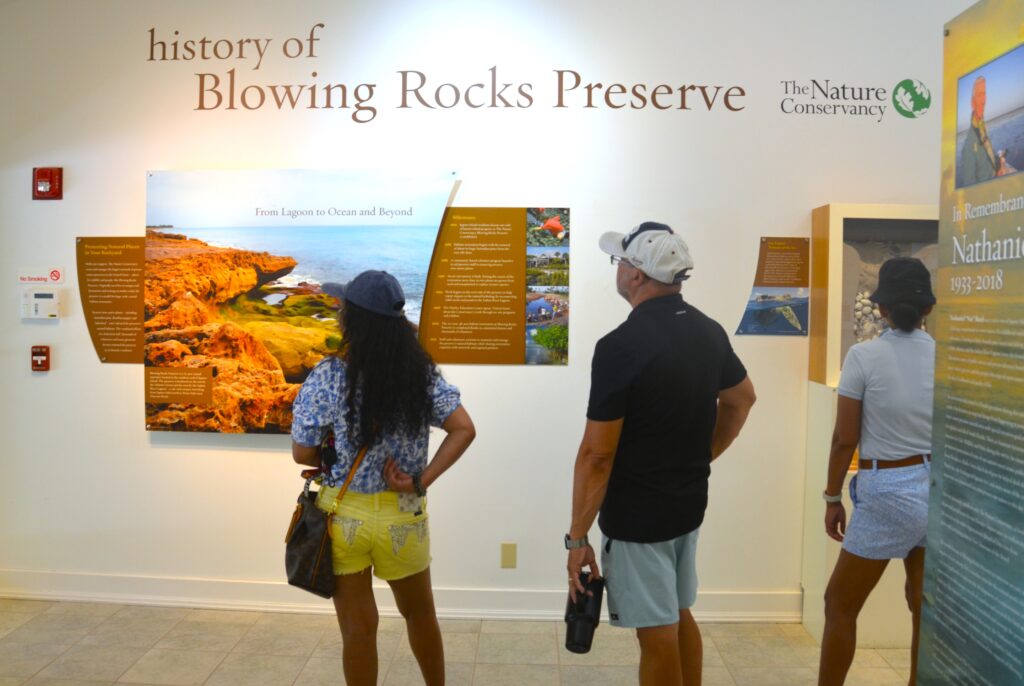
Don’t miss visiting the Hawley Education Center, which is situated within the preserve. It offers a comprehensive introduction to the ecology and history of the area. Here, guests can discover information about the local plant and animal species, the significance of barrier islands, and the ongoing conservation initiatives led by The Nature Conservancy.
The Blowing Rocks Preserve, which is three hours south of Orlando, is accessible seven days a week from 9:00 a.m. to 4:30 p.m. The final entry is at 4:15 p.m. All trails and parking facilities within the preserve close at 4:30 p.m. The preserve remains closed on Easter Sunday, Thanksgiving Day, Christmas Eve, Christmas Day, and New Year’s Day.
There are no admission fees; however, a voluntary donation of two dollars per person assists the authorities in preserving the area for both the public and wildlife. The parking is free.
On why you should visit the area, Jupiter.com gives this explanation: “(It) offers a unique experience for nature lovers, geology enthusiasts, and anyone seeking a tranquil escape from the bustling world. The beautiful landscapes, fascinating geological formations, and diverse ecosystems make it a must-visit destination on Florida’s Atlantic coast. By exploring this hidden gem, you can not only appreciate the natural beauty but also contribute to the ongoing efforts to protect and preserve these precious environments.”—###










Leave a Reply