

Understanding the different forms of hepatitis, how they spread, and why early detection matters
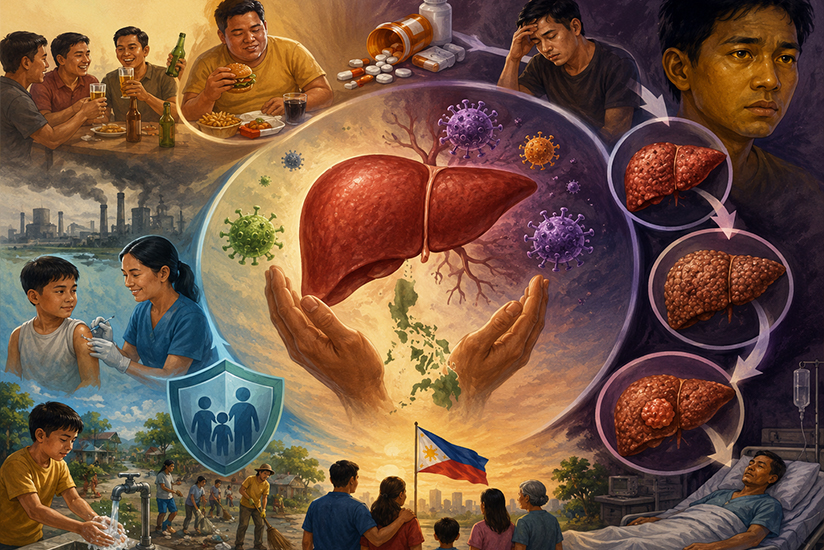
For many Filipinos, hepatitis remains a poorly understood disease associated only with jaundice or “paninilaw.” Yet hepatitis is far more complex—and far more dangerous—than many realize. Affecting millions worldwide, hepatitis refers to inflammation of the liver caused by viruses, alcohol, fatty liver disease, toxins, medications, or autoimmune disorders. Some forms resolve completely. Others quietly persist for years, eventually leading to cirrhosis, liver failure, or liver cancer. In the Philippines, where chronic hepatitis B remains highly prevalent and hepatitis A outbreaks still occur, awareness, vaccination, sanitation, and early screening are essential public health priorities.
By Rafael R. Castillo, MD
The Organ That Suffers Quietly
The liver is one of the most remarkable organs in the human body. It detoxifies chemicals, metabolizes nutrients, stores energy, produces proteins, regulates cholesterol, and processes medications.
And yet, despite its importance, the liver often suffers silently.
A person may feel perfectly well while liver inflammation quietly progresses for years beneath the surface. By the time symptoms become obvious—jaundice, abdominal swelling, bleeding, severe fatigue—significant damage may already exist.
That is what makes hepatitis dangerous.
What Is Hepatitis?
“Hepatitis” simply means inflammation of the liver.
It may be caused by: viruses, alcohol, fatty liver disease, medications or toxins, and autoimmune disease.
Among Filipinos, the most important infectious causes are:
- Hepatitis A
- Hepatitis B
- Hepatitis C
Each behaves differently.
“Many people with hepatitis feel completely normal for years—while silent liver damage slowly progresses.”
Hepatitis A: The Food- and Water-Borne Infection
Hepatitis A spreads primarily through contaminated food or water.
It is commonly linked to:
- poor sanitation
- unsafe food handling
- contaminated drinking water
Symptoms
✔ Fever
✔ Fatigue
✔ Nausea
✔ Loss of appetite
✔ Abdominal discomfort
✔ Jaundice
Children may have milder illness, while adults often become more symptomatic.
Does It Become Chronic?
No.
Unlike hepatitis B or C, hepatitis A usually resolves completely and does not cause chronic liver disease.
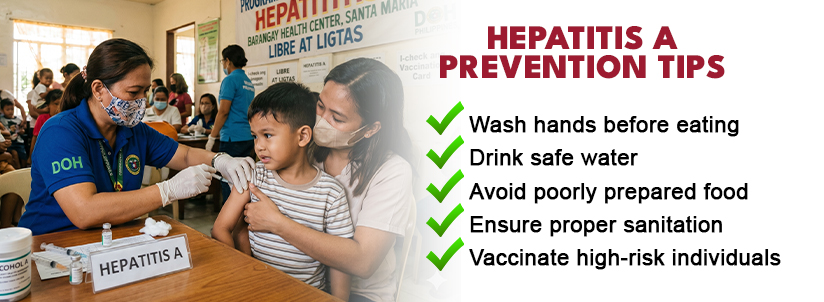
Prevention
- Proper handwashing
- Safe food and water
- Vaccination
Hepatitis B: The Silent Killer Still Common in Asia
Hepatitis B is one of the most important chronic viral infections in the Philippines.
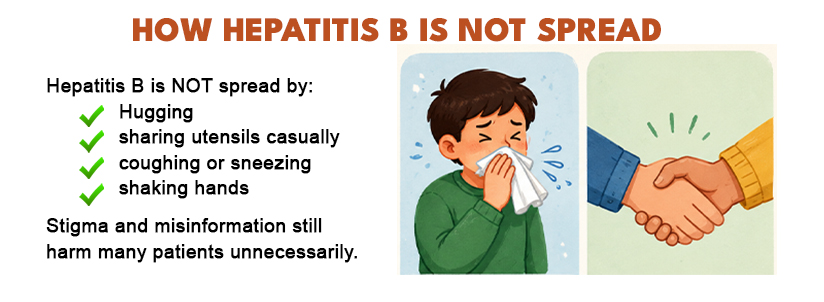
It spreads through:
- blood
- sexual contact
- contaminated needles
- mother-to-child transmission during childbirth
Why It Matters in the Philippines
The Philippines remains an area of intermediate-to-high hepatitis B prevalence.
Many people acquired this infection:
- during infancy
- from household exposure
- or unknowingly years ago
Some never realize they carry the virus until complications emerge.
Why Hepatitis B Is Dangerous
Acute infection may cause:
- jaundice
- fatigue
- nausea
But many patients have few or no symptoms initially.
The greater danger is chronic infection.
Over years or decades, chronic hepatitis B may lead to:
- cirrhosis
- liver failure
- hepatocellular carcinoma (liver cancer)
Who Should Be Tested?
Testing is especially important for:
- Pregnant women
- Healthcare workers
- People with family history of liver disease
- Sexual partners of infected persons
- People with elevated liver enzymes
Vaccination: One of Medicine’s Greatest Successes
The hepatitis B vaccine dramatically reduces infection risk.
Universal infant vaccination remains one of the most powerful preventive strategies.
Hepatitis C: The Curable Chronic Infection
Hepatitis C primarily spreads through blood exposure.
Common routes include:
- unsafe injections
- needle sharing
- contaminated blood products historically
Often Silent for Years
Like hepatitis B, hepatitis C may remain asymptomatic for years.
Many patients discover infection only after:
- routine blood tests
- cirrhosis
- liver complications
The Good News: Modern Cure Exists
Unlike hepatitis B, hepatitis C can now often be cured using direct-acting antiviral medications.
Modern treatment success rates are extremely high.
This makes early diagnosis especially important.
Not All Hepatitis Is Viral
The liver can also become inflamed from non-infectious causes.
Alcoholic Hepatitis
Heavy alcohol intake may cause severe liver inflammation.
Long-term damage can progress to cirrhosis.
Fatty Liver Disease (MASLD/NAFLD)
Now increasingly common among Filipinos due to:
- obesity
- diabetes
- poor diet
- sedentary lifestyle
Even non-drinkers may develop serious liver disease.
Drug-Induced Hepatitis
Some medications, supplements, or herbal products may damage the liver.
Autoimmune Hepatitis
A condition where the immune system attacks liver cells.
“Not all hepatitis comes from infection. Modern lifestyle diseases are now becoming major causes of liver damage.”
How Is Hepatitis Diagnosed?
Evaluation may include:
- Liver function tests (ALT/AST)
- Viral hepatitis blood tests
- Ultrasound
- FibroScan
- CT or MRI in advanced cases
Sometimes, liver biopsy may be required.
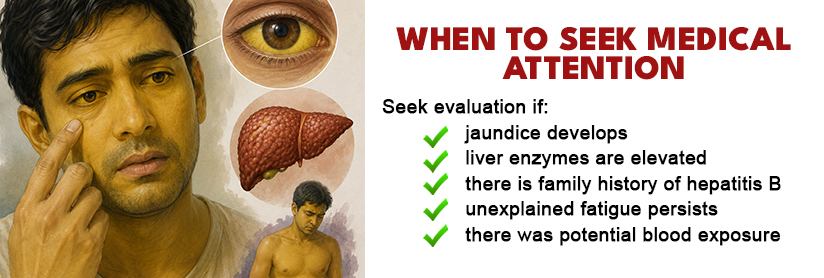
Symptoms That Should Not Be Ignored
Many people remain asymptomatic.
Possible warning signs include:
- Jaundice
- Persistent fatigue
- Dark urine
- Abdominal swelling
- Easy bruising
- Loss of appetite
Treatment Depends on the Cause
Hepatitis A
Usually supportive care only.
Hepatitis B
May require:
- antiviral medications
- long-term monitoring
- liver cancer surveillance
Hepatitis C
Often curable with antiviral therapy.
Alcoholic or Fatty Liver Disease
Lifestyle modification is critical:
- alcohol reduction
- weight loss
- diabetes control
- healthier diet
Can Hepatitis Be Prevented?
Many forms can.
Key Prevention Strategies
1. Vaccination
Especially for hepatitis A and B.
2. Hygiene and Sanitation
Critical for hepatitis A prevention.
3. Safe Blood and Needle Practices
Avoid unsafe injections or needle sharing.
4. Avoid Excess Alcohol
Protects the liver long-term.
5. Healthy Lifestyle
Helps prevent fatty liver disease.
The Philippine Challenge
The Philippines faces a dual burden:
- persistent infectious hepatitis
- rising metabolic liver disease
Urbanization, obesity, diabetes, and poor diet now intersect with longstanding viral hepatitis concerns.
This makes liver disease prevention increasingly urgent.
Final Reflection
The liver is remarkably resilient. It can regenerate. Recover. Adapt. But even resilience has limits.
Hepatitis teaches us that some of the most serious diseases progress quietly—without dramatic warning, without severe pain, and often without immediate symptoms.
That is why awareness matters. Because by the time the eyes turn yellow and the abdomen swells, the disease may already be advanced.
Fortunately, modern medicine now offers: vaccination, screening, antiviral therapy and lifestyle interventions that can dramatically change outcomes. And perhaps that is the most important message: The best way to protect the liver is not to wait until it suffers loudly—but to care for it while it is still silently serving us every day.
References
- World Health Organization. Hepatitis B Fact Sheet. Updated 2025.
- World Health Organization. Hepatitis C Fact Sheet. Updated 2025.
- Centers for Disease Control and Prevention (CDC). Viral Hepatitis Information.
- Department of Health (Philippines). National Viral Hepatitis Prevention and Control Program materials.
- Polaris Observatory Collaborators. Global prevalence of hepatitis B virus infection. Lancet Gastroenterol Hepatol. 2022.
- Terrault NA, et al. AASLD Guidelines for Treatment of Chronic Hepatitis B. Hepatology.
- Ghany MG, et al. Hepatitis C Guidance 2024 Update. Hepatology.
- EASL Clinical Practice Guidelines on hepatitis B and C. European Association for the Study of the Liver.
- Younossi ZM, et al. Global burden of liver disease. J Hepatol. 2019.
- Philippine Society of Gastroenterology educational resources on liver disease and hepatitis.
-
A must-read for every Filipino. Hepatitis isn’t just one thing—it’s viral, metabolic, and lifestyle-driven. Don’t wait for your liver to ‘suffer loudly.’ Get vaccinated and get tested!











Leave a Reply