



We focus on hepatitis for this issue of H&L. Among the body’s organs, the liver is perhaps one of the most patient.
It works continuously—filtering toxins, processing nutrients, regulating metabolism, storing energy, and helping sustain life—often without recognition and without complaint. And unlike many organs, the liver possesses a remarkable ability to regenerate and recover from injury.
But even resilience has limits. Hepatitis reminds us of this reality.
Whether caused by viruses, alcohol, fatty liver disease, medications, or autoimmune disorders, hepatitis represents inflammation of an organ that many people rarely think about until symptoms become obvious. Unfortunately, by the time jaundice appears, the abdomen swells, or severe fatigue develops, significant liver damage may already have occurred.
One of the greatest challenges in liver disease is silence.
Many individuals with chronic hepatitis B or hepatitis C feel perfectly healthy for years. They continue working, caring for families, and living ordinary lives while inflammation quietly progresses beneath the surface. This is why screening and early detection are so important, particularly in countries like the Philippines where hepatitis B remains relatively common.
Equally important is correcting misconceptions.
Hepatitis is not always associated with immoral behavior or alcohol use. Viral hepatitis can affect ordinary people, including those infected during childbirth or early childhood. Stigma only discourages testing and delays treatment.
At the same time, modern medicine now faces a new liver epidemic—fatty liver disease linked to obesity, diabetes, poor diet, and sedentary lifestyles. Increasingly, liver damage is no longer caused only by infection, but also by the cumulative effects of modern living.
The encouraging truth is that many forms of hepatitis are preventable, treatable, or controllable.
Vaccination against hepatitis B remains one of the most powerful preventive tools in medicine. Hepatitis C can now often be cured. Healthier lifestyles can reduce fatty liver disease. Early diagnosis can prevent complications such as cirrhosis and liver cancer.
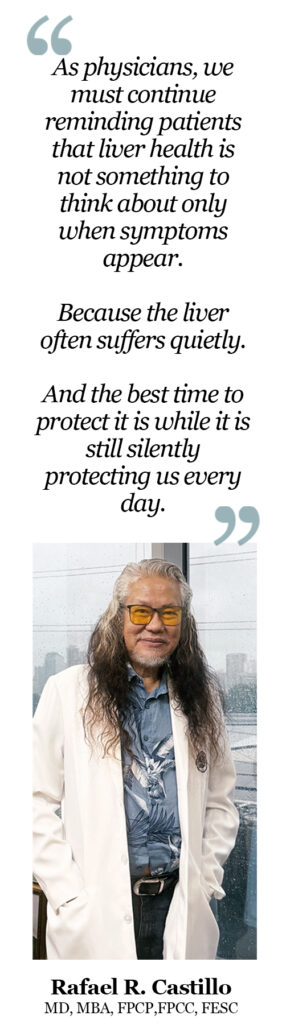
As physicians, we must continue reminding patients that liver health is not something to think about only when symptoms appear.
Because the liver often suffers quietly.
And the best time to protect it is while it is still silently protecting us every day.










Leave a Reply