
The Life and Work of Henrylito D. Tacio
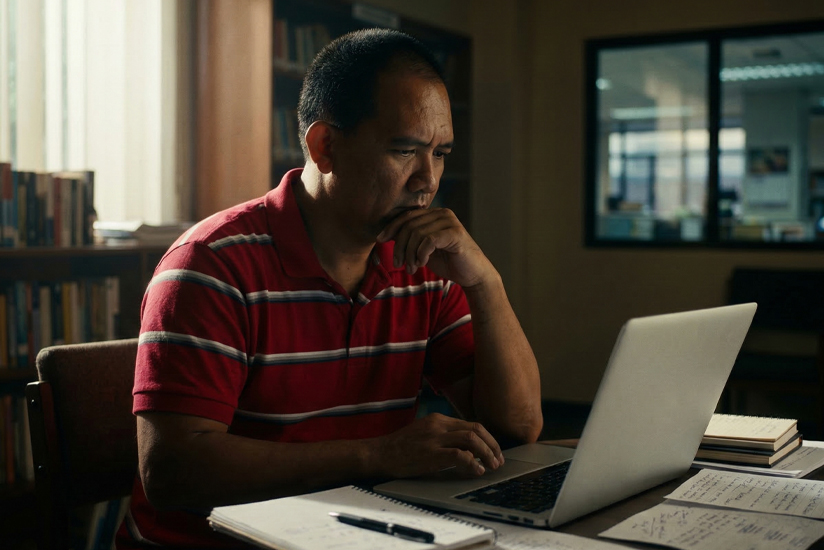
Great journalism does not always begin in large newsrooms or bustling capital cities. Sometimes it begins in a quiet provincial town, with a borrowed typewriter and a young writer determined to tell stories that matter. Such is the journey of Henrylito D. Tacio, one of the Philippines’ most respected science and environmental journalists, whose work across four decades has helped illuminate issues of food security, public health, agriculture, and environmental stewardship.
By Rafael R. Castillo
On a humid morning in Mindanao, Henry once stood beside a farmer examining a patch of newly planted crops. The farmer explained how a drought-resistant variety might help families survive the next dry season.
There were no television cameras. No microphones. No press conference. But Henry listened carefully. He asked questions. Took notes. Observed. Because to him, this was not merely a farming story—it was a story about survival, resilience, and the future of food.


That instinct—to see the larger meaning in seemingly ordinary moments—has defined Henry’s journalism for more than four decades.
Through thousands of articles, he has quietly documented the intersection of science, agriculture, environment, and human life, translating complex research into narratives accessible to ordinary readers.
From Bansalan to the World
Henrylito D. Tacio was born January 5, 1962 in Bansalan, Davao del Sur, the eldest son of Generoso Tacio Sr. and Saturnina dela Rita. Growing up in a large family with nine siblings, he witnessed firsthand the rhythms of rural life—agriculture, community cooperation, and the fragile balance between people and the environment.


Those early experiences shaped the subjects he would later pursue as a journalist.
His writing journey began when he was still in high school while penning formal themes. But it was only during his college years that he finally honed his knack for writing. Without access to modern technology, he borrowed a typewriter, carefully typed his manuscripts, and mailed them to editors in Manila.
Weeks later, he would discover whether his work had been accepted—often by simply spotting his byline in print.
When his first article appeared in Mod Magazine, his proud mother bought several copies to share with neighbors. That moment confirmed what he had already begun to believe: storytelling could be both a passion and a vocation.
“Great stories begin with curiosity—listening to people whose voices might otherwise go unheard.”
A Journalist of Science and Society
Tacio pursued degrees in AB Economics at the University of Mindanao and AB English at the University of Bansalan College, equipping himself with both analytical and literary foundations.
His early professional career included work with the Mindanao Baptist Rural Life Center and the Asian Rural Life Development Foundation, where he served as information officer and helped communicate agricultural innovations to farmers, rural communities and international visitors.


His journalism soon expanded to national publications including: Philippine Daily Inquirer, Manila Times, Today, and Daily Tribune.
Over time his writing reached international audiences through publications such as: Reader’s Digest (Singapore edition), South Review (Malaysia), Mental Floss (United States), and People and the Planet (United Kingdom).
He also contributed to DEPTHnews, the Press Foundation of Asia’s international news service distributed to newspapers across Asia.
Today he continues to write for: Edge Davao, Manila Bulletin (Sustainability & Environment section), Agriculture Magazine, and Enrich Magazine. He is contributing editor of Philippine Morning Post and Health & Lifestyle (H&L) magazine, where his regular column (Life Lessons) also appears.
He also serves as President of the Philippine Network of Environmental Journalists.
Journalism in the Field
Unlike many writers who rely solely on desk research, Henry has always practiced field journalism. His reporting has taken him to international conferences on HIV/AIDS in Malaysia, Australia, and South Africa; coral reef symposiums in Indonesia, Australia, and the United States; food security fora across Thailand, Vietnam, and Indonesia; and science updates in Montreal, Canada.
These experiences broadened his perspective and strengthened his commitment to science communication.
His advocacy work focuses on issues such as: biodiversity conservation, climate change, water resource protection, agricultural sustainability, and emerging infectious diseases.
The Storyteller’s Legacy
One of the defining moments of Tacio’s career came when he received an unexpected invitation to the Rotary Club of Manila Journalism Awards at the historic Manila Hotel in 1999.
At first he assumed he was merely attending as a guest. But when the hosts—broadcast legends Cheche Lazaro and Dong Puno—announced the recipient of the Top Journalist of the Year Award, they revealed that the winner came from the province. Moments later, they called his name.
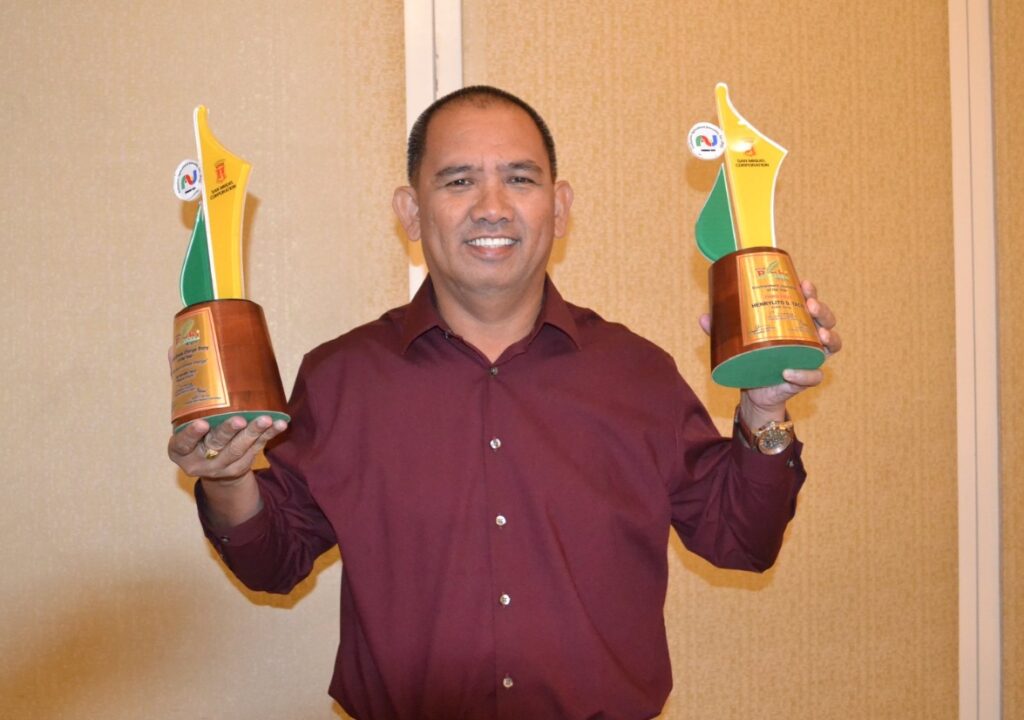
The accolade included a trophy, a citation, and a cash reward of PHP 200,000. It was quite unexpected for a journalist from the province to win this coveted award. “This signifies that even if an individual originates from a distant province, they can still compete with those from Metro Manila,” says Henry.
For a journalist from Mindanao, the recognition was profound. It proved that excellence in journalism is not confined to metropolitan centers.
Talent, dedication, and perseverance can emerge from anywhere.
A Tradition of Storytelling
In many ways, Henrylito Tacio’s career reflects a timeless Filipino tradition—the kwentista, the storyteller who shares knowledge with the community.
From a young writer mailing typed manuscripts from Bansalan to a multi-awarded journalist whose work spans continents, his journey embodies the enduring power of curiosity and perseverance.
Through thousands of stories, he has helped readers understand the delicate connections between science, nature, and society. And in doing so, he reminds us that journalism—at its best—is not merely about reporting events.
It is about illuminating the world, one carefully told story at a time.
“Even a writer from a distant province can compete with the best in the country.”