

Dr. Jim Sanchez’s simple prescription for a healthier life

By H&L Editorial Team
Modern medicine can sometimes make good health sound extraordinarily complicated.
We hear about sophisticated diagnostic tests, new medicines, wearable technology, genetic risk, longevity supplements and increasingly elaborate diets. All have their place. But amid this abundance of medical information, we can easily overlook some of the most powerful determinants of health—the things we do every day.
Dr. Jim Sanchez, founder of Hospital on Wheels, distills his health message into an easy-to-remember prescription:
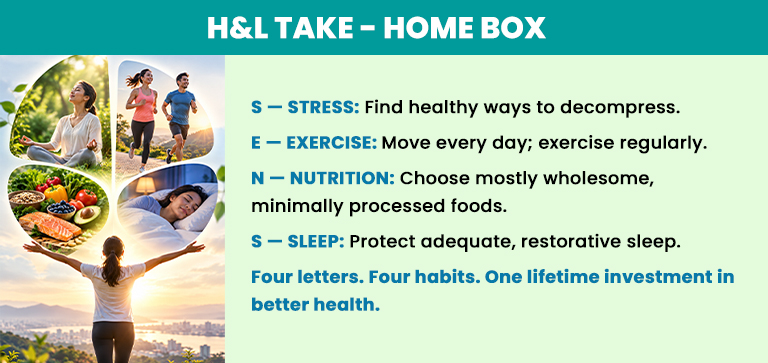
Use common SENS.
S — Stress management
E — Exercise regularly
N — Nutrition and diet
S — Sleep well
Four letters. Four foundations of healthier living.
The message is simple. The science behind it is substantial.
“For good health, apply common SENS: Stress management, Exercise regularly, Nutrition and diet, and Sleep well.”
Dr. Jim Sanchez
S — Manage Stress Before Stress Manages You
Stress is part of being human. A deadline, financial problem, illness in the family or difficult decision activates biological systems designed to help us respond to threats.
The problem is not every episode of stress. It is living as though the emergency alarm never switches off.
Chronic stress can affect sleep, eating behavior and physical activity and is associated with adverse cardiovascular and psychological health. Stress management therefore does not mean eliminating every problem from life—an impossible task. It means developing healthier ways of responding.
Take breaks. Pray or meditate. Maintain relationships. Spend time outdoors. Learn to say no when necessary. Talk to someone you trust. And when anxiety, depression or emotional distress becomes persistent or interferes with everyday functioning, seek professional help.
Sometimes strength means recognizing that we need support.
E — Exercise Regularly
If exercise could be placed inside a capsule, it would probably be among medicine’s most remarkable prescriptions.
Regular physical activity helps reduce cardiovascular risk, improves blood pressure and metabolic health, strengthens muscles and bones, supports mental well-being and helps preserve mobility and independence with aging.
WHO recommends that adults generally accumulate 150–300 minutes of moderate-intensity aerobic physical activity per week, or 75–150 minutes of vigorous activity, plus muscle-strengthening activity on at least two days weekly. Older adults should also incorporate activities emphasizing balance and functional strength.
But do not allow the ideal target to discourage you from starting.
A brisk walk counts.
Taking the stairs counts.
Dancing counts.
Gardening counts.
The best exercise is often the one you enjoy enough to keep doing.
N — Nourish, Don’t Merely Eat
Food provides calories, but good nutrition provides much more.
A healthy dietary pattern emphasizes vegetables, fruits, legumes, whole grains and other minimally processed foods while limiting excessive sodium, free sugars, saturated and trans fats and highly processed foods. WHO recommends at least 400 grams of fruits and vegetables daily for people older than 10 years and limiting salt to less than 5 grams per day in adults.
For Filipinos, that does not require abandoning our cuisine.
It may mean more vegetables beside the rice, fish more often, sensible portions, less processed meat, fewer sugar-sweetened drinks, and going easier on salty sauces and heavily seasoned processed foods.
Nutrition need not be fashionable.
It needs to be sustainable.
S — Sleep Well
Sleep is sometimes treated as whatever remains after work, social media, television and responsibilities have consumed the day.
That is a mistake.
Sleep is a biological necessity.
During sleep, the body performs processes important to brain function, metabolism, cardiovascular regulation, immune function and emotional health. Most adults generally require at least seven hours of sleep regularly, although individual needs vary. Consistently inadequate sleep has been associated with obesity, diabetes, hypertension, cardiovascular disease, depression and impaired performance.
Good sleep begins before bedtime: maintain regular sleep and wake times, keep the bedroom dark and comfortable, limit late caffeine and alcohol, and put electronic stimulation aside before sleep.
And persistent loud snoring, witnessed pauses in breathing or excessive daytime sleepiness should not simply be dismissed as poor sleep—they may warrant evaluation for sleep apnea.
Simple Does Not Mean Easy
Perhaps the wisdom of Dr. Sanchez’s SENS lies precisely in its simplicity.
We already know that we should manage stress, move our bodies, eat sensibly and sleep adequately.
The challenge is doing these things consistently.
Health is rarely created by one spectacular decision. More often, it is built quietly—one walk, one healthier meal, one good night’s sleep and one peaceful moment at a time.
Dr. Sanchez has spent years bringing surgical care to underserved Filipinos through Hospital on Wheels. Yet his message here reminds us of another side of medicine: some of our most valuable health interventions begin long before anyone needs a hospital.
So before searching for the newest secret to longevity, perhaps we should begin with something much easier to remember.
Use your common SENS.
References: World Health Organization. WHO Guidelines on Physical Activity and Sedentary Behaviour. Geneva: WHO; 2020. World Health Organization. Healthy Diet. WHO Fact Sheet. American Heart Association. Life’s Essential 8. Background on physical activity, diet, sleep and cardiovascular health. Hospital on Wheels background: Sanchez and the development of HOW are independently documented in published institutional/student-publication material.