

THE HIDDEN COST OF SELF-MEDICATION
Why the antibiotics you buy “to save money” can cost you more
By Reuben Ricallo
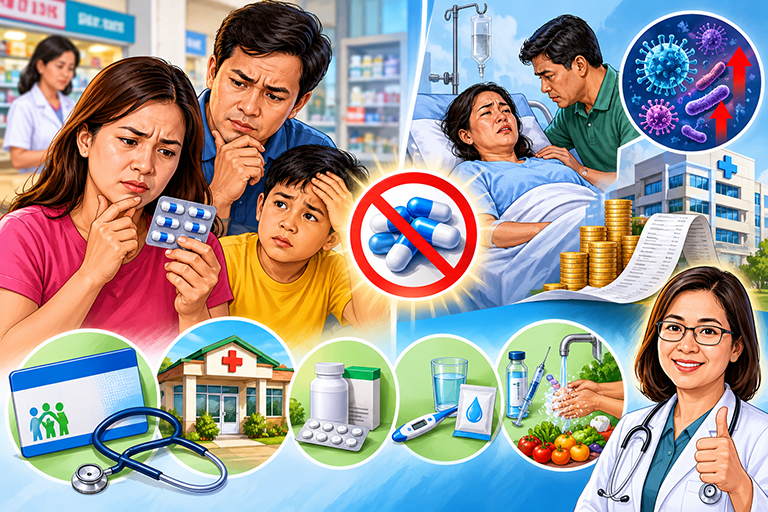
For many Filipino families, buying antibiotics directly from the botika feels like the thrifty choice. Why pay for a consultation when you can describe your symptoms and walk out with a strip of capsules for a fraction of the cost?
But self-medication often costs more in the end.
The money spent on medicine that doesn’t work
Most colds, flu and sore throats are caused by viruses. Antibiotics do nothing for them. Every peso spent on antibiotics for a viral illness is a peso wasted, on top of the side effects — diarrhea, allergic reactions, yeast infections — that may lead to more spending.
The cost of the wrong treatment
When people self-medicate, they may take the wrong antibiotic, the wrong dose or the wrong duration. Infections that do need treatment may not get better. Meanwhile, serious conditions like dengue, pneumonia or a kidney infection can be missed or delayed, leading to hospitalization.
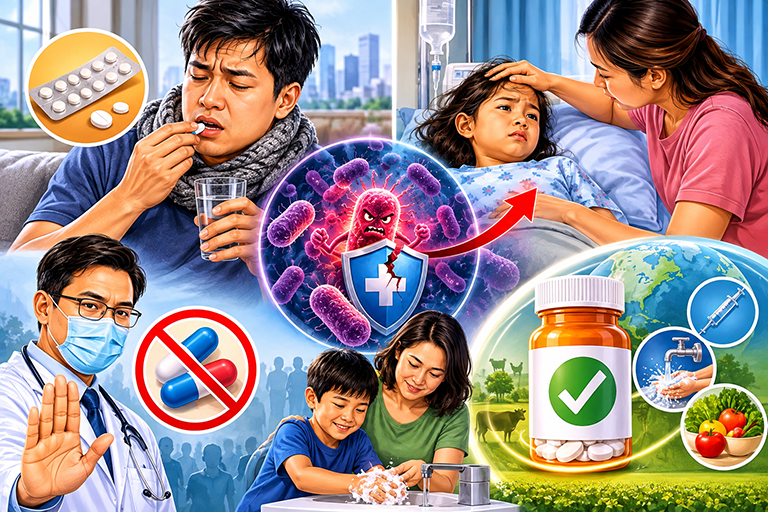
The cost of resistant infections
Resistant infections are much more expensive to treat. They often require:
• stronger, more expensive antibiotics, sometimes given intravenously;
• longer hospital stays;
• more laboratory tests;
• isolation rooms and special precautions;
• more time off work for patients and caregivers.
What started as a cheap strip of capsules can end in a hospital bill many times larger.
Smarter ways to save
• Use PhilHealth YAKAP. PhilHealth’s primary care benefit covers consultations, indicated laboratory tests and essential medicines — including several antibiotics, when prescribed — at accredited clinics where you’re registered.
• Visit your barangay health center for free or low-cost consultations.
• Ask your doctor for generic medicines, which are usually much cheaper than branded ones.
• Keep basic sick-day supplies at home: paracetamol, oral rehydration salts, a thermometer, and saline spray.
• Invest in prevention: vaccines, handwashing and safe food handling cost far less than treating infections.
• Keep your PhilHealth membership active, so you’re covered if hospitalization becomes necessary.
A simple rule: If it’s worth taking an antibiotic, it’s worth seeing a doctor first. The consultation may save you money, time and your health.
“What starts as a cheap strip of capsules can end in a hospital bill many times larger.”







Leave a Reply