
Why the health emergency may only be beginning after the streets become dry
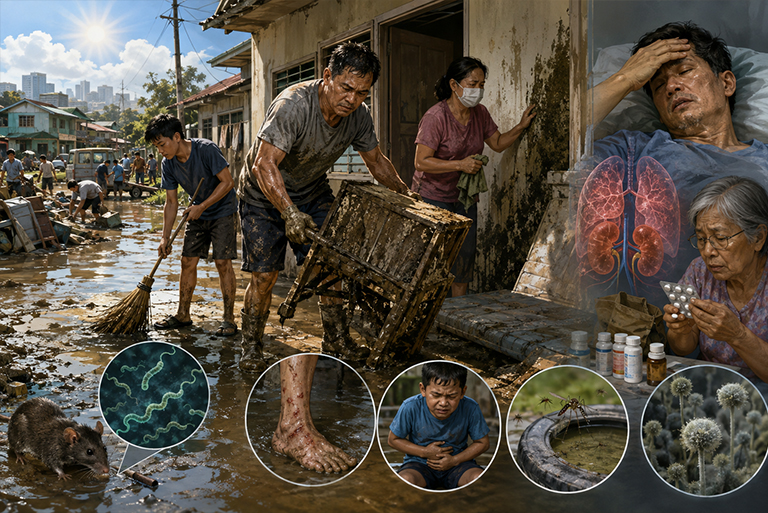
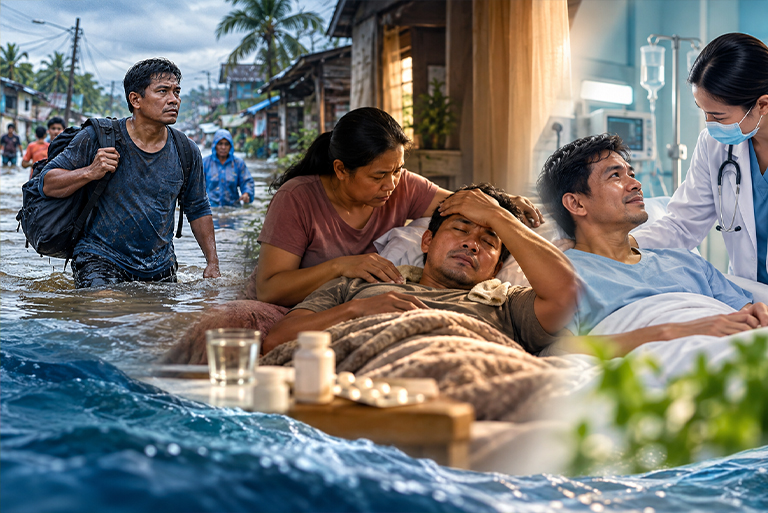
When floodwaters finally recede, families understandably feel that the worst is over. The house can be cleaned, belongings salvaged, roads reopened and ordinary life slowly restored. But medically, the danger does not necessarily disappear with the water. Contaminated mud can infect wounds. Leptospirosis may emerge days or weeks after exposure. Stagnant water can encourage mosquito breeding. Spoiled food and unsafe drinking water can trigger gastrointestinal disease. Damp homes may develop mold that aggravates asthma and other respiratory problems. Meanwhile, interrupted medicines and medical care can destabilize people living with hypertension, diabetes, heart disease and kidney disease. And long after homes are dry, the psychological wounds of disaster may remain.
For Filipinos accustomed to typhoons and seasonal flooding, post-flood recovery therefore requires more than cleaning the house. It requires protecting the health of everyone who returns to it.
By Rebecca L. Castillo, MD
The Morning After
The sun finally appears.
After three days of relentless rain, the water that reached waist level has disappeared from the street. Families emerge from evacuation centers. Shopkeepers raise their shutters. Homeowners return carrying brooms, buckets and disinfectants.
The neighborhood smells of mud.
Inside one home, a father begins hauling waterlogged furniture outside. His teenage son sweeps debris wearing slippers. His mother, who has asthma, enters a bedroom where the mattress and walls remain damp.
Everyone is exhausted but relieved.
“Salamat, tapos na.”
Except it may not be.
Three days later, the father develops fever and severe muscle pain. A week later, his mother begins wheezing.
Elsewhere in the neighborhood, children develop diarrhea. Mosquitoes multiply around water trapped in containers and discarded debris. A diabetic grandmother discovers that several days of her medication were lost during evacuation.
The flood is gone. Its health consequences are not.
“The flood may be over when the water disappears. The health emergency may only be beginning.”
A Disaster With a Long Medical Tail
The immediate dangers of flooding are dramatic: drowning, electrocution, trauma and collapsing structures.
The delayed dangers are quieter.
The World Health Organization recognizes that floods can produce medium- and long-term consequences including water- and vector-borne infections, injuries, chemical exposure, mental-health effects, disruption of healthcare and damage to food and drinking-water supplies.
That distinction matters enormously in the Philippines.
We are accustomed to mobilizing rescue operations during typhoons. But effective disaster medicine must continue into the recovery phase—sometimes for weeks or months.
1. Leptospirosis: The Illness That May Arrive Later
Perhaps no infection symbolizes Philippine flooding more clearly than leptospirosis.
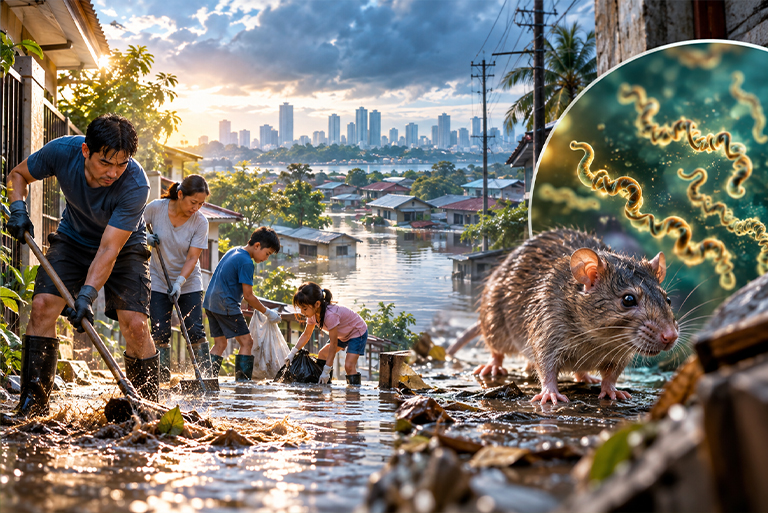
It is caused by Leptospira bacteria shed in the urine of infected animals, particularly rodents but also other mammals. Floodwater contaminated with infected urine can bring the bacteria into contact with humans.
They may enter through cuts and abrasions or through the eyes, nose or mouth.
The dangerous part is the delay.
Someone may wade through floodwater today, feel completely normal tomorrow, and become ill days later.
Early symptoms can resemble influenza or dengue:
- fever;
- headache;
- chills;
- muscle pain;
- nausea or vomiting.
Some infections remain mild. Severe leptospirosis, however, may cause jaundice, kidney failure, bleeding, meningitis, respiratory complications and circulatory collapse.
The lesson
When someone develops an acute febrile illness after recent floodwater exposure, tell the physician about the exposure. That single piece of history can be diagnostically important.
Preventive antibiotics should not become a do-it-yourself post-flood ritual. Decisions about prophylaxis should follow local health guidance and individual exposure assessment rather than indiscriminate self-medication.
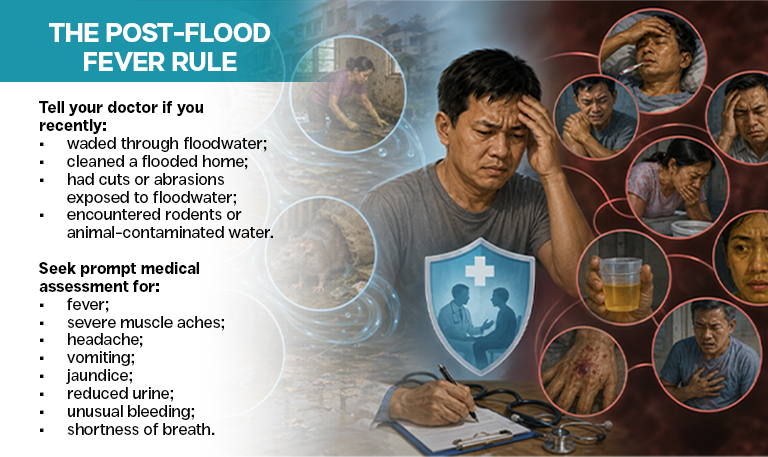
Do not simply assume every post-flood fever is dengue—or every fever is leptospirosis. Proper evaluation matters.
2. Dengue: When Standing Water Becomes the Next Threat
Floodwater itself does not automatically create an immediate dengue outbreak.
The danger often comes afterward.
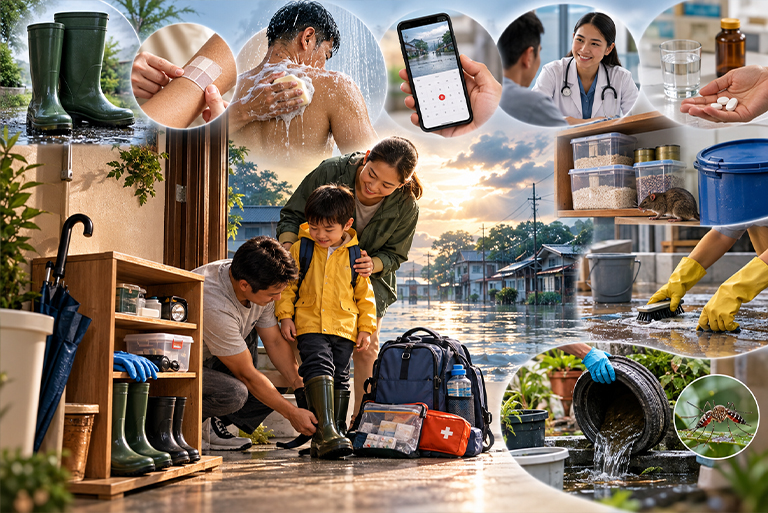
As floodwaters recede, water remains trapped in drums, buckets, discarded containers, tires, gutters, flowerpots and debris. These can become breeding sites for Aedes mosquitoes.
Mosquito-borne disease therefore illustrates why post-flood surveillance must extend beyond the first few days. WHO notes that vector-borne health effects may emerge weeks after flooding.
For Filipino households, the message is practical:
Search and destroy breeding sites repeatedly—not just once.
Empty standing water. Scrub containers. Cover water storage vessels. Clear clogged gutters. Dispose of discarded containers that collect rain.
And when dengue symptoms develop, avoid waiting for dramatic bleeding before seeking help. Persistent vomiting, abdominal pain, lethargy, bleeding, difficulty breathing or other warning signs deserve medical evaluation.
3. The Gastrointestinal Threat Does Not Vanish With the Flood
Contamination of drinking-water systems may persist even after streets appear dry.
Sewage, damaged pipes, contaminated wells and unsafe food preparation can facilitate diarrheal illnesses, typhoid fever, hepatitis A and—in outbreak settings—cholera.
The single most important preventive intervention following floods is reliable access to safe drinking water. If local authorities declare water unsafe, follow boil-water or treatment advisories.
Remember that water used for drinking is not the only concern. Safe water may also be required for brushing teeth, preparing food or infant formula, making ice and cleaning wounds.
And be ruthless about flood-contaminated food. Food that has been directly exposed to floodwater should not be rescued simply because it still smells normal. Microorganisms do not carry warning labels.
4. Wounds: The Small Injury That Becomes a Big Problem
Post-flood cleanup creates countless opportunities for injury. Broken glass hides under mud. Nails protrude from wood. Rusted metal and damaged roofing lie beneath debris. A seemingly insignificant puncture wound may become infected.
Floodwater itself may contain sewage, animal waste and numerous microorganisms. Open wounds exposed to contaminated water require prompt cleaning with soap and safe water.
Seek medical attention for deep punctures, embedded foreign objects, increasing redness, swelling, drainage, worsening pain or fever.
Tetanus status should also be reviewed after appropriate wounds. Whether a booster is needed depends on the nature of the wound and the person’s vaccination history.
“After a flood, the smallest cut deserves respect. Contaminated water can turn an ordinary wound into a serious infection.”
5. The Mold That Arrives After the Water
One of the most overlooked post-flood hazards grows silently on walls, furniture, ceilings and other damp materials. Mold. If a flooded home cannot be dried thoroughly within approximately 24–48 hours, mold growth becomes increasingly likely.
For many healthy people, exposure may cause nasal irritation, coughing, wheezing, burning eyes or skin symptoms.
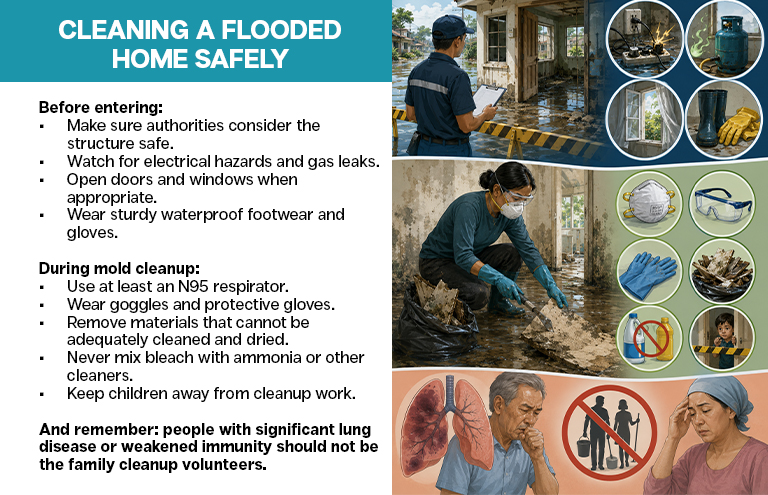
For people with asthma, COPD, mold allergy or weakened immune systems, exposure can be more consequential. Children should not participate in mold cleanup.
People with significant chronic lung disease or immune suppression should ideally avoid mold-contaminated spaces and should not perform cleanup themselves.
For those who can safely clean, appropriate protection includes gloves, goggles and at least an appropriate N95 respirator. The objective is not simply to make the house look clean—it is to make it dry and safe enough to inhabit.
6. The Hidden Cardiovascular and Chronic-Disease Emergency
Not every post-flood illness is infectious.
A typhoon may separate a patient from maintenance medicines for hypertension, heart failure, diabetes, asthma, epilepsy or kidney disease. Dialysis schedules may be disrupted. Insulin may be improperly stored. Prescriptions may be washed away. Clinics and pharmacies may be inaccessible.
Dietary restrictions become difficult in evacuation centers. Stress, dehydration, heat, exertion and interrupted treatment can destabilize chronic disease. This is particularly important in an aging population.
For someone with heart failure, several missed doses may contribute to fluid accumulation and breathlessness. For a person with diabetes, disrupted insulin therapy can become dangerous. For patients requiring dialysis, interruption can become life-threatening.
Post-disaster healthcare must therefore restore continuity of ordinary medical care, not merely treat injuries and infections.
7. The Psychological Flood That Remains
A family may replace furniture. A damaged wall can be repaired. But losing a home, livelihood—or a loved one—is not repaired so easily.
Flood survivors may experience anxiety, insomnia, grief, irritability, depression and post-traumatic stress symptoms. Children may become afraid whenever heavy rain begins.
Adults may lie awake listening to weather forecasts. Families who repeatedly evacuate can develop a persistent sense of insecurity.
These responses deserve recognition rather than dismissal.
Psychological first aid, family and community support, restoration of routines, and professional mental-health care when symptoms persist or impair functioning should be considered part of disaster recovery.
CHILDREN AND SENIORS: PROTECT THEM FIRST
Children
Children are particularly vulnerable to:
- dehydration from diarrhea;
- infectious disease;
- injuries;
- contaminated food and water;
- mosquito bites;
- emotional trauma.
They should never be allowed to play in floodwater or participate in hazardous cleanup.
Restoring normality—safe shelter, meals, school, sleep and familiar caregivers—also helps psychological recovery.
Older Adults
Older adults may have:
- reduced mobility;
- multiple medications;
- cardiovascular or kidney disease;
- diabetes;
- respiratory illness;
- hearing or visual impairment.
A disaster may therefore turn a stable chronic condition into an emergency.
Families should account not only for where older relatives will evacuate, but also how their medicines, medical records, mobility aids and continuing treatment will travel with them.
8. From Rescue to Recovery: What DOH and LGUs Should Do
The Philippine disaster-health model should explicitly recognize a post-flood surveillance window rather than scaling down health activity as soon as water recedes.
Local governments and health authorities should prioritize five areas.
First, active disease surveillance. Barangay health workers and facilities should watch for clusters of leptospirosis, dengue, diarrheal disease and wound infections.
Second, rapid restoration of primary care. Hypertension, diabetes, pregnancy, childhood vaccination, dialysis and maintenance treatment cannot wait for disaster recovery to finish.
Third, safe-water assurance. Testing, treatment and clear public advisories should continue until water safety is established.
Fourth, environmental recovery. Waste removal, drainage, mosquito-source reduction and rodent control are health interventions.
Fifth, mental-health recovery. Psychological support should be integrated into evacuation and post-disaster services rather than treated as an optional afterthought.
Climate resilience ultimately requires health-system resilience.
A barangay is not truly recovered merely because its roads are passable again. Recovery means its people can safely drink, eat, breathe, obtain medicines and receive healthcare.
“A community has not truly recovered from a flood when the streets are dry. It has recovered when its water is safe, its homes are healthy, its medicines are accessible—and its people are well.”
Summary
Filipinos have developed extraordinary resilience in the face of typhoons.
We evacuate. We rescue neighbors. We share food. We rebuild. But resilience should never mean becoming accustomed to preventable disease.
The period after a flood deserves the same seriousness as the storm itself. Because the second emergency often arrives quietly. It appears as the fever that begins a week later.
The infected wound that looked harmless. The mosquito breeding in a forgotten bucket. The wheezing child sleeping in a mold-damaged room. The grandfather whose medicines disappeared with the flood. The mother who still cannot sleep whenever rain strikes the roof.
These are the patients of the aftermath.
Protecting them requires extending our definition of disaster response beyond rescue toward recovery—and beyond surviving the flood toward remaining healthy after it.
The water eventually recedes. Our vigilance should not.
Evidence behind the package
The core public-health recommendations above are well supported. WHO specifically recognizes delayed water- and vector-borne disease, injury, mental-health effects and interruption of health services as medium- and long-term consequences of flooding. CDC advises avoiding floodwater because it may contain sewage, hazardous materials and pathogens; wounds exposed to it should be cleaned promptly, and tetanus status may need assessment depending on the wound and vaccination history.
The mold recommendations deserve particular emphasis in the Philippines’ humid environment. CDC recommends drying flooded buildings within 24–48 hours where possible; people with asthma, COPD or weakened immunity should avoid mold cleanup, while cleanup workers should use appropriate PPE, including at least an N95 respirator, gloves and eye protection. Children should not participate in disaster mold cleanup.
References
- World Health Organization. Floods. WHO Health Topics. Updated online resource.
- World Health Organization. Floods: How to Protect Your Health. Geneva: WHO; January 29, 2020.
- World Health Organization. Public Health Advice in the Aftermath of Flooding: How to Protect Your Health and Keep Safe. WHO Regional Office for Europe.
- World Health Organization. Floods and Health: Fact Sheets for Health Professionals. WHO Regional Office for Europe.
- Centers for Disease Control and Prevention. Safety Guidelines: Floodwater. Atlanta: CDC; current online guidance.
- Centers for Disease Control and Prevention. What to Do to Prevent Getting Hurt or Sick After a Disaster. Atlanta: CDC; February 14, 2024.
- Centers for Disease Control and Prevention. Guidelines for Cleaning Safely After a Disaster. Atlanta: CDC; February 2024.
- Centers for Disease Control and Prevention. Mold Clean Up Guidelines and Recommendations. Atlanta: CDC; February 16, 2024.
- Centers for Disease Control and Prevention. What You Can Do to Protect Your Respiratory Health During Disaster Cleanup. Atlanta: CDC; February 16, 2024.
- Centers for Disease Control and Prevention. Homeowners and Renters Guide to Mold Cleanup After Disasters. Atlanta: CDC; March 28, 2024.
- Centers for Disease Control and Prevention. About Invasive Mold Infections. Atlanta: CDC; December 11, 2024.
- Centers for Disease Control and Prevention. Safety Guidelines: Returning Home After a Natural Disaster. Atlanta: CDC; updated 2026.





Leave a Reply