

By Rafael R. Castillo, MD on behalf of FAME Leaders Academy and H&L
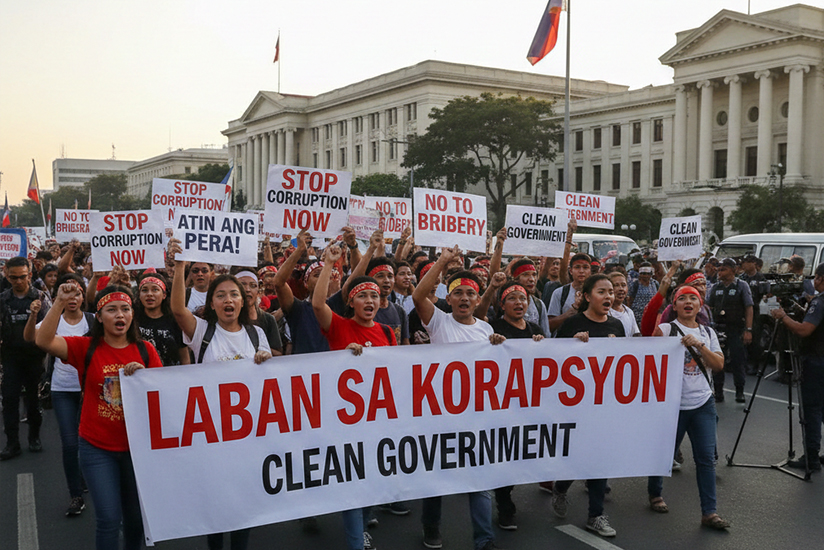
Stepping back from the Philippines, even briefly, offers a vantage point that can be both clarifying and sobering. From afar, the recent rallies sweeping parts of Metro Manila appear loud, impassioned, and unmistakably public in their demand for accountability. They have, in fairness, forced Malacañang to act swiftly—reshuffling sensitive positions, firing implicated officials, and making high-profile promises of prosecution. These are not small victories.
But the harder question—the question that matters—is this: Are these rallies truly capable of shifting political power?
So far, the answer is no.
Yes, allegations of kickbacks—some launched by former lawmakers—have rattled public confidence. Yes, investor sentiment has wavered. And yes, the administration is visibly scrambling to contain the fallout. Yet none of these developments meet the historical criteria for genuine destabilization. Not even close.
For a sitting administration to actually teeter, two conditions must align:
(1) a unified, broad, non-partisan call for resignation; and
(2) a fracture within the political or military elite signaling a withdrawal of support.
Neither is happening.
Even the most widely attended recent demonstrations, including the INC-led mass actions, have focused on transparency and accountability—worthy demands, but still abstract and ultimately limited. Crucially, they have not called for the resignation of President Marcos Jr. or Vice President Sara Duterte. And that is the clearest point of departure from the historical People Power uprisings.
People Power succeeded not only because millions took to the streets, but because those millions were united in a singular, unmistakable objective: remove the regime and install a clearly identified, broadly acceptable alternative. The Church, civil society, business leaders, the middle class, and eventually segments of the military spoke with one voice. There was moral clarity and institutional alignment.
Today’s protests—energetic as they are—have none of that.
What they have instead is fragmentation: separate grievances, disjointed messaging, and a conspicuous hesitation to endorse any successor. This is not mere political caution; it reflects a deeper national reality: there is no broadly trusted or acceptable replacement waiting in the wings.
And this is where the danger lies.
To force a regime change without a credible successor is not an act of collective courage but a national gamble with potentially devastating consequences. It risks plunging the country into the political purgatory familiar to unstable states—where power vacuums invite opportunism, institutions crack, and economies recoil. In blunt terms, it risks edging us closer to the very scenario observers fear: a banana republic in the making.
President Marcos Jr. understands this, which is why he has sought to align himself rhetorically with the public’s outrage—promising arrests by Christmas, vowing swift and sweeping cleanup. Whether this represents conviction or political choreography remains to be seen.
Ultimately, the fate of these rallies—and what they mean for the nation—depends on what happens next. If the administration follows through with credible reform, the protests may come to be seen as an important corrective moment. If not, the crisis could deepen, and the public’s demands may evolve from accountability to outright regime change.
But until a viable alternative emerges—one that unifies, not divides—these protests, however massive, will fall short of rewriting the nation’s political script.