

By Dr. Tony Leachon
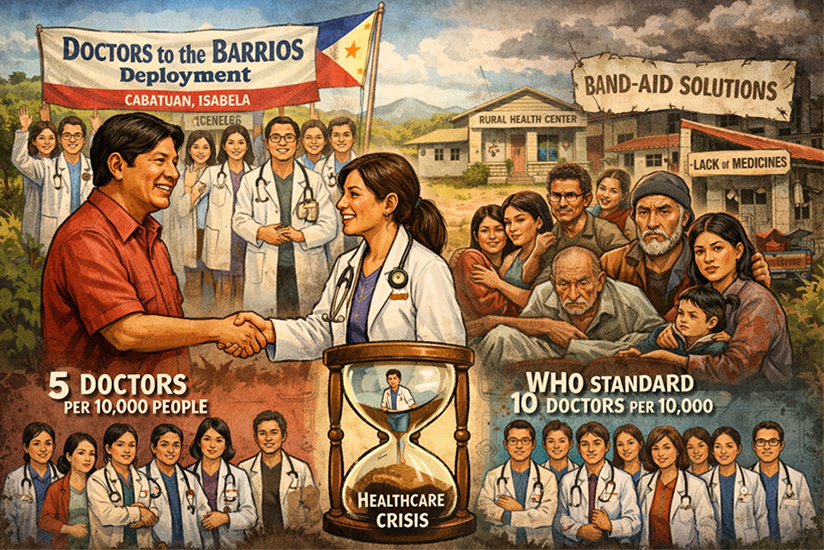
President Ferdinand “Bongbong” Marcos Jr.’s visit to Cabatuan, Isabela to meet Doctors to the Barrios (DTTB) coincided with the deployment of 290 physicians to geographically isolated and disadvantaged areas across the country. The program’s stated goal is to ensure that every municipality has access to medical professionals.
While this milestone is laudable, it risks being reduced to lip service if not matched with genuine reforms. Universal Health Care (UHC) goals remain unfulfilled, and the public continues to suffer from performative policies that mask systemic neglect.
The Philippines currently has an average of only 5 doctors per 10,000 population, far below the World Health Organization’s recommended ratio of 10 doctors per 10,000. This shortage underscores a severe healthcare workforce crisis, with many regions falling short of even the minimum threshold.
Doctor-to-Population Ratio in the Philippines
National Average
• 5 doctors per 10,000 population (national average).
• Half the WHO recommendation of 10 doctors per 10,000.
Regional Breakdown
• Cordillera Administrative Region (CAR): 13.4 doctors per 10,000 (above WHO standard).
• National Capital Region (NCR): 10.9 doctors per 10,000 (meets WHO standard).
• Bangsamoro Autonomous Region in Muslim Mindanao (BARMM): 0.4 doctors per 10,000 (severe shortage).
• 12 out of 17 regions fall below the national average.
Implications of the Shortage
• Healthcare Access Inequality: Rural and conflict-affected areas suffer the most, with limited access to physicians.
• Overburdened System: Doctors in underserved regions face overwhelming patient loads, leading to burnout and reduced quality of care.
• Migration & Brain Drain: Many Filipino doctors migrate abroad for better opportunities, worsening the domestic shortage.
• Public Health Risks: Inadequate physician coverage hampers disease prevention, emergency response, and chronic illness management.
Key Considerations for Policy Response
1. Retention Programs: Improve compensation, working conditions, and career development to keep doctors in the country.
2. Redistribution Incentives: Encourage doctors to serve in rural and underserved areas through scholarships, loan forgiveness, or housing benefits.
3. Medical Education Expansion: Increase slots in medical schools and support residency programs to grow the physician pipeline.
4. Task-Sharing Models: Empower nurses and allied health professionals to handle primary care tasks, easing the burden on doctors.
5. Digital Health Solutions: Telemedicine can bridge gaps in remote areas, though it requires infrastructure investment.
Beyond the Numbers
Behind the rhetoric lies a harsher reality: PhilHealth is being defunded, ghost hospitals exist only on paper, and healthcare workers endure low salaries and poor working conditions. These structural failures undermine any milestone of “zero doctorless municipalities.” Deployment alone does not equate to sustainable healthcare access.
Doctors in far-flung areas face isolation, inadequate facilities, and lack of medicines. Without proper support systems, their presence becomes symbolic rather than transformative. Communities need functioning hospitals, reliable supply chains, and fair compensation for health workers—not just ceremonial announcements.
Healthcare reform must go beyond numbers. It requires transparent funding, accountability, and investment in infrastructure and workforce welfare. Only then can we move from rhetoric to reality, from promises to performance, and from milestones to meaningful impact.
Conclusion
The Filipino people deserve more than statistics. They deserve a health system that truly heals, protects, and empowers. Genuine reform demands courage, humility, and urgency—qualities that must guide our leaders if we are to build a healthcare system worthy of our nation’s resilience and hope.
References
• Department of Health (DOH), Population-to-Physician Ratio per Region in the Philippines (2023)
• Daily Tribune, Doctor ratio in Phl just 1:10,000 — NGO (2025)
• IBON Foundation, One doctor per bayan? (2025)
• Presidential Communications Office (PCO), President Marcos visits DTTB doctors in Cabatuan, Isabela (2026)
#RelentlessForChange
#HealthWithHonor
#HopeInService