


There are few moments in medical practice more emotionally difficult than telling someone that a biopsy has confirmed cancer.
For the patient, those few words can divide life into two periods. Before the diagnosis. And after.
Suddenly, ordinary concerns become secondary. Work deadlines, household repairs, social engagements and family plans fade into the background.
What matters now is survival. Will treatment work? Will there be complications? How will the family cope?
And, especially for many Filipinos: How will we pay?
Modern medicine has made remarkable progress in cancer treatment. Surgery has become more sophisticated. Radiotherapy has become more precise. Targeted therapies and immunotherapy have transformed treatment for selected cancers.
Many patients are living longer, and some are being cured. These advances deserve celebration. But I sometimes wonder whether we devote enough attention to a different kind of medical success.
The cancer that never develops. The precancerous polyp removed during screening. The cervical cancer prevented through vaccination and appropriate follow-up. The liver cancer risk reduced because hepatitis B infection was prevented. The lung cancer risk lowered because a smoker finally decided to quit.
These victories rarely make headlines. There is no dramatic operation. No expensive chemotherapy. No prolonged hospitalization.
Sometimes there is not even a patient who knows that a future tragedy may have been avoided. And perhaps that is precisely why prevention is so easily overlooked.
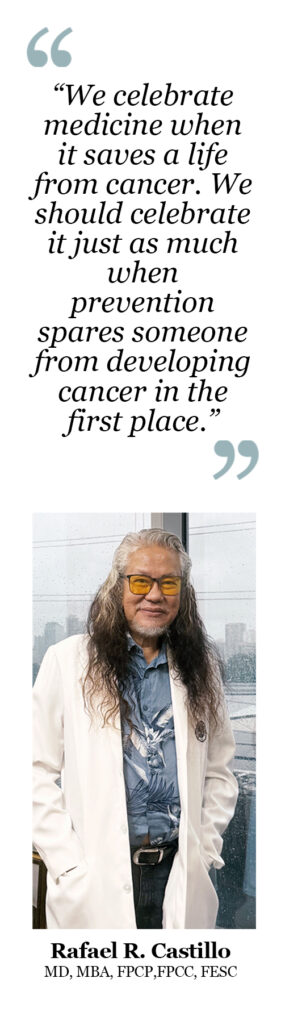
We tend to celebrate medicine when it rescues someone from the brink of death. We should also celebrate medicine when it helps someone avoid reaching that brink.
But prevention must never become a reason to blame patients.
Even people who follow every recommendation may develop cancer. Genetics, aging, chance and factors beyond individual control all contribute.
A cancer diagnosis is not a moral failure. Nor should we assume that every cancer could have been detected earlier. Some cancers develop rapidly. Others lack reliable screening tests.
Still others may produce few symptoms until they are advanced. This is why our message must balance hope with humility. We should encourage prevention without promising certainty. We should promote screening without encouraging unnecessary testing. We should support early diagnosis without blaming patients whose disease is discovered late. And we should remember that access matters.
It is easy to advise someone to undergo screening. It is harder for a minimum-wage worker to miss a day’s salary, travel to a distant hospital and pay for a test.
It is easy to recommend vaccination. It is harder when families do not know where vaccines are available or whether they can afford them.
The responsibility for cancer prevention therefore belongs not only to individuals. It belongs to healthcare professionals, hospitals, communities, government and society.
We must make the healthy choice easier. The preventive service more accessible. The diagnostic pathway faster. And the treatment more affordable.
October is Breast Cancer Awareness Month. It reminds us of the importance of breast health and appropriate screening. But perhaps we can use this occasion to remember something broader.
Every Filipino deserves a fair opportunity to prevent avoidable disease and obtain timely care.
Not only those who can afford expensive checkups. Not only those who live near major hospitals. Not only those with private insurance.
Everyone.
Because the finest achievement of medicine is not always restoring health after disease has taken hold. Sometimes it is protecting health before disease has the chance to strike.
And if we can help even one family avoid the fear, suffering and financial hardship of cancer, that is already a victory worth celebrating.








Leave a Reply