

Canned goods and instant noodles get us through the storm. Here’s how to keep them from raising your blood pressure.
By the H&L Editorial Team
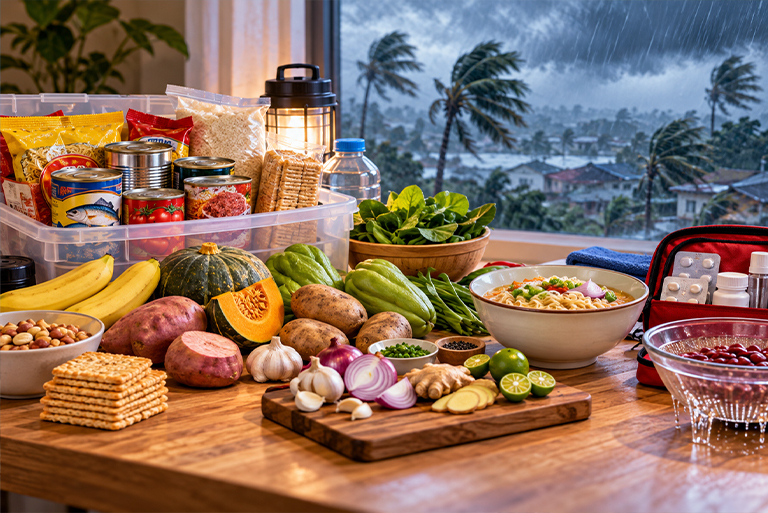
Every time a storm signal goes up, the same items disappear from supermarket shelves. Sardines. Corned beef. Luncheon meat. Instant noodles. Crackers.
They make sense. They’re cheap, filling, need little or no cooking, and last for months. For families waiting out a typhoon or living in an evacuation center, they are a lifeline.
But many of them have one thing in common: a lot of salt.
Why it matters
The World Health Organization recommends that adults keep salt intake below 5 grams a day — about one level teaspoon. That covers all the salt in a day, including what is already in packaged food.
A single pack of instant noodles with its seasoning can account for a large share of that, sometimes most of it. Add a can of corned beef, a few spoonfuls of patis or toyo, and a bag of chips, and a typhoon day can easily deliver two or three days’ worth of salt.
For most healthy people, a few salty days won’t cause lasting harm. But for the many Filipinos living with hypertension, heart failure or kidney disease, a week of storm food can push blood pressure up, cause fluid to build up, and sometimes land them in the hospital — at exactly the moment when hospitals are hardest to reach.
Smarter swaps for your storm stash
• Choose fish canned in water or tomato sauce over those in oil or heavily seasoned versions, and look for “low sodium” or “reduced salt” on the label.
• Use half the noodle seasoning packet, or less. Add flavor with garlic, onion, ginger, calamansi or pepper instead.
• Rinse canned beans and vegetables under running water. It washes away part of the salt.
• Stock up on low-salt staples: rice, oats, unsalted crackers, peanuts, bananas, camote, and canned fruit in juice rather than syrup.
• Keep fresh produce that lasts: sayote, kalabasa, onions, garlic, potatoes and calamansi keep well for a week or more without refrigeration.
• Read labels. Compare the sodium per serving. Two similar-looking cans can differ a lot.
• Go easy on dips. Patis, toyo, bagoong and ketchup add up fast.
Don’t forget the maintenance medicines
The most important item in a heart patient’s typhoon kit isn’t food. It’s medicine.
Keep at least a week’s supply of maintenance medicines — for blood pressure, diabetes, cholesterol, heart rhythm, and blood thinning — in a waterproof pouch, along with a list of what you take and the doses. Missing doses during a crisis is one of the most common reasons patients with heart conditions end up in the emergency room after a storm.
If you have heart failure, weigh yourself daily if you can. A sudden gain of more than about 1 kg in a day or 2 kg in a few days, along with swelling or shortness of breath, is a reason to call your doctor.
A typhoon-day plate, rebalanced: Half a pack of noodles cooked with chopped sayote and an egg, seasoned with garlic and calamansi instead of the full packet. Rice with sardines in tomato sauce and sliced tomatoes. A banana for dessert. Filling, cheap, and a lot kinder to your heart.








Leave a Reply