

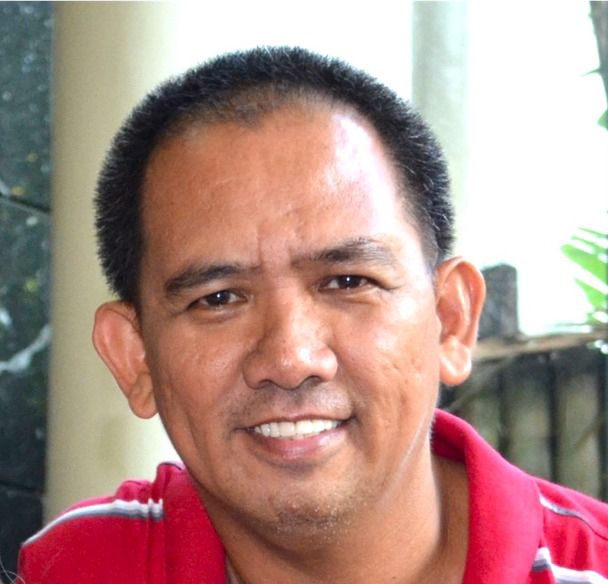
By Henrylito D. Tacio
Beyond Promises: How Commitment Shapes Success

I did not fully understand the true meaning of commitment until I accepted an offer from the regional office of the United Nations Food and Agriculture Organization (FAO) in Bangkok, Thailand, to oversee the drafting of case studies and conduct the initial editing of a book titled In Search of Excellence: Exemplary Forest Management in Asia and the Pacific Region.
At first, the assignment appeared straightforward. As a journalist and editor, I had handled numerous publications before. Editing manuscripts, organizing content, and coordinating with authors were familiar tasks. What I did not realize was that this particular project would become one of the most demanding professional undertakings of my career and would teach me invaluable lessons about commitment.
I was one of four editors assigned to the project and the only representative from the Philippines. The team leader was Patrick B. Durst, an American married to a Filipina. Joining us were Chris Brown from New Zealand and Miyuki Ishikawa from Japan, the sole female member of the editorial board.
When I accepted the role as editorial consultant, I had little idea of the amount of time, effort, and sacrifice that would be required. The project involved numerous trips from Davao to Manila and then onward to Bangkok. Meetings were necessary to discuss the structure of the book, the development of the case studies, and a host of editorial concerns.
I spent countless hours reviewing documents and establishing a thematic framework that would guide the various case studies. At the same time, I coordinated with authors from different countries, most of whom possessed doctoral degrees and extensive technical expertise in forestry and environmental management.
Patrick Durst had one clear instruction: the book should not be written solely for forestry specialists. He wanted a publication that ordinary readers could understand and appreciate.
That seemingly simple directive created a significant challenge.
The authors were experts in their respective fields, but many had limited exposure to journalistic writing. Technical jargon dominated several manuscripts. Rather than producing papers intended for a narrow scientific audience, they needed to craft stories that could engage policymakers, students, development practitioners, and ordinary readers.
I found myself explaining journalistic principles to accomplished academics. I provided detailed guidelines on how each case study should be structured. I suggested whom they should interview based on their original submissions. I recommended the kinds of photographs that would strengthen each story and make the material more appealing.
Initially, some authors were surprised by my requests. A few questioned why such revisions were necessary. However, commitment often requires persistence in the face of resistance.
Over time, through numerous phone calls and countless email exchanges, we developed a mutual understanding. Gradually, the manuscripts improved. The authors began seeing the value of presenting their work in a manner that would reach a broader audience.
One author’s comment remains memorable to this day. “Now, I understand how a journalist operates,” he wrote. That statement confirmed that our collaboration was succeeding.
Yet there were moments when I felt overwhelmed. Balancing the book project with my regular professional obligations was not easy. Deadlines piled up. Travel became exhausting. Unexpected issues surfaced. There were occasions when abandoning the assignment seemed tempting.
Fortunately, commitment is not tested when everything proceeds smoothly. Its true measure emerges when difficulties arise.
I reminded myself that I had accepted the responsibility voluntarily. I had given my word. More importantly, I believed in the value of the project and its potential contribution to sustainable forest management across Asia and the Pacific.
That conviction enabled me to persevere.
The effort ultimately proved worthwhile. After publication, the book became one of the most sought-after resources within the FAO regional office. Its success even led to the publication of a Chinese translation, allowing its message to reach an even wider audience.
Looking back, I realize that the book’s success was not merely the result of expertise, intelligence, or technical knowledge. It was largely a product of commitment.
Unfortunately, commitment is often underestimated in today’s world. Many people equate success with talent or opportunity. Others assume that completing assigned tasks is sufficient. Yet history consistently shows that accomplishment belongs to those who remain devoted to a goal long after the initial excitement fades.
As Ed McElroy of USAir once observed, “Commitment gives us new power. No matter what comes to us, sickness, poverty, or disaster, we never turn our eyes from the goal.”
His words capture a fundamental truth. Commitment enables people to continue moving forward despite obstacles. It transforms intentions into action and aspirations into achievements.
Management expert Peter F. Drucker expressed a similar idea when he said, “Unless commitment is made, there are only promises and hopes but no plans.”
Indeed, many dreams never materialize because they never progress beyond the level of wishful thinking. Commitment is the element that bridges the gap between wanting something and working for it.
For different people, commitment takes different forms. To a soldier, it may mean advancing into uncertainty without knowing what dangers lie ahead. To a marathon runner, it means continuing despite fatigue and pain. To a researcher, it may involve years of painstaking work in pursuit of discovery. To a parent, it means making sacrifices for the welfare of a child.
Whatever form it takes, commitment demands persistence. Leadership expert Dr. John C. Maxwell identifies four categories of people in relation to commitment: cop-outs, holdouts, dropouts, and all-outs.
Cop-outs have no goals and therefore make no commitment. Holdouts possess goals but hesitate because they fear failure. Dropouts begin the journey but quit when obstacles emerge. All-outs set goals, commit themselves wholeheartedly, and willingly pay the price required for success.
The distinction between these groups is not intelligence, education, or social status. It is commitment.
History offers numerous examples of individuals who demonstrate extraordinary commitment. Consider Elihu Thomson, one of the great inventors of the modern age. While conducting early experiments with X-rays in 1896, he used his own fingers to determine whether certain materials could block radiation. The experiments left his fingers permanently scarred and stiff. His discoveries contributed significantly to scientific understanding, but they came at personal cost.
Such examples remind us that meaningful accomplishments often require sacrifice. Race car champion Mario Andretti underscored this reality when he stated, “Desire is the key to motivation, but it’s determination and commitment to an unrelenting pursuit of your goal, a commitment to excellence, that will enable you to attain the success you seek.”
Many people desire success. Far fewer remain committed long enough to achieve it. Remarkable examples can be found among older individuals who refused to allow age to define their limits.
At age 92, Paul Spangler completed his fourteenth marathon. At age 91, he set a world record in swimming for his age group. Similarly, Hulda Crooks climbed Mount Whitney, the tallest mountain in the continental United States, at age 91. Such achievements demonstrate that commitment can be stronger than physical limitations.
Scottish mountaineer William H. Murray perhaps described commitment most eloquently when he wrote: “The moment one definitely commits oneself, then Providence moves too.”
Whether one interprets his statement spiritually or practically, there is wisdom in it. Once individuals fully dedicate themselves to a worthy goal, opportunities often emerge. Helpers appear. Unexpected resources become available. New possibilities reveal themselves. However, commitment begins with a choice.
In his book Choices, psychiatrist Frederic F. Flach notes that most people can identify specific moments when their lives changed significantly. These moments often involve decisions that shape the future.
Every meaningful commitment starts with such a decision. The challenge then becomes sustaining that commitment.
Based on my experience with the FAO publication and other major projects, I have learned several principles that help individuals remain faithful to their commitments:
First, connect your commitment to a deeper purpose. Understand why the goal matters. When commitment is rooted in personal values rather than external pressure, perseverance becomes easier.
Second, act regardless of how you feel. Motivation is unreliable because feelings fluctuate. Discipline is more dependable. Often, motivation follows action rather than preceding it.
Third, count the cost before making a commitment. Every worthwhile endeavor requires sacrifices of time, energy, resources, or comfort. Accepting these realities beforehand reduces the likelihood of quitting later.
Fourth, build self-trust through small victories. Honor minor promises you make to yourself. Small successes create confidence and reinforce habits of follow-through.
Fifth, design an environment that supports success. Reduce distractions and make productive behavior easier. The environment often influences behavior more than people realize.
Sixth, establish accountability. Share your goals with trusted individuals. Keep records of your progress. Accountability increases the likelihood of persistence.
Finally, practice resilience. Setbacks are inevitable. Rather than viewing them as reasons to quit, use them as opportunities to learn and adjust.
The lesson I learned from helping produce In Search of Excellence extends far beyond publishing. It applies to careers, relationships, community service, personal growth, and every worthwhile pursuit.
Talent may open doors. Opportunity may create possibilities. But commitment is what carries a person across the finish line.
In the end, success is rarely determined by who starts first, who possesses the most resources, or even who has the greatest ability. More often, it belongs to those who remain steadfast, persevere through difficulties, and honor their commitments long after others have given up.
For commitment, ultimately, is not merely about keeping a promise. It is about becoming the kind of person who finishes what he starts.









Leave a Reply