

There is something deeply reassuring about seeing floodwater finally recede.
After days of anxiety, families return home, roads reopen and cleanup begins. We naturally feel that the danger has passed.
From a physician’s perspective, however, this is precisely when we must resist becoming complacent.
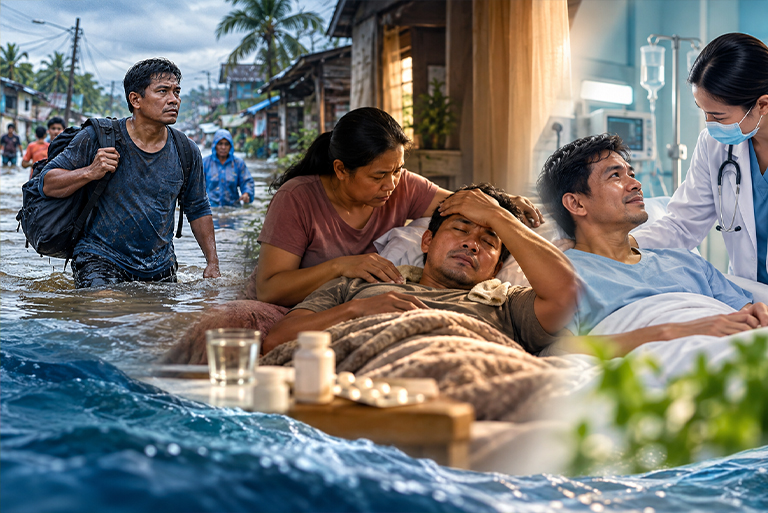
Floods have an unusual medical characteristic: some of their most important health consequences are delayed.
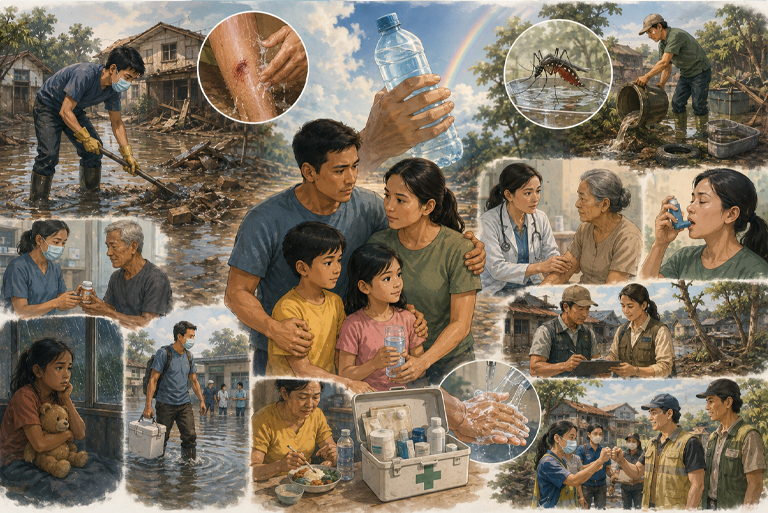
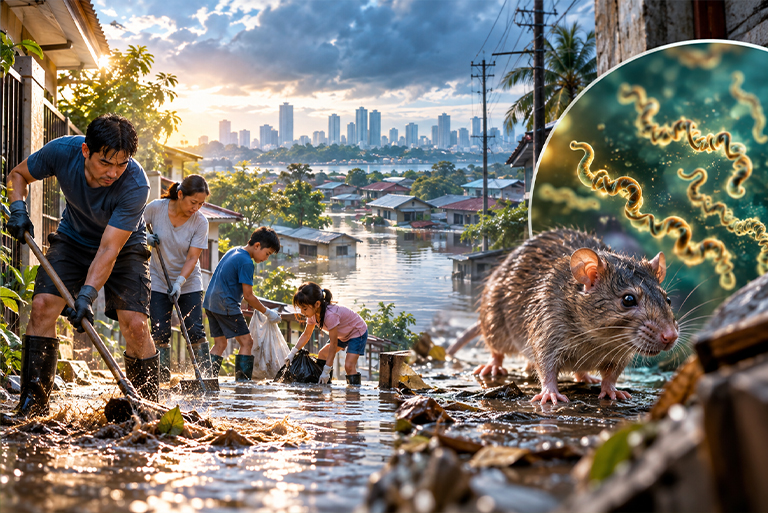
Leptospirosis may become apparent only days after exposure. Mosquito breeding can intensify after water becomes trapped in containers. Gastrointestinal infections may follow contaminated water or food. Small wounds acquired during cleanup can become infected. Damp houses may develop mold that worsens asthma and respiratory disease.
And then there are patients whose illnesses have nothing directly to do with contaminated water.
The hypertensive patient who lost his medicines.
The diabetic whose insulin supply was disrupted.
The dialysis patient struggling to reach a treatment center.
The older woman with heart failure eating whatever food is available in an evacuation center.
The child who becomes frightened every time heavy rain begins.
Disaster medicine therefore cannot end with rescue.
It must continue through recovery.
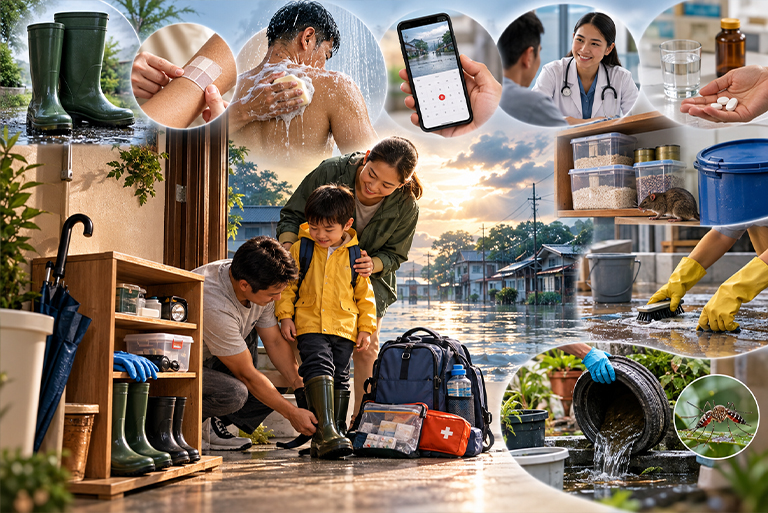
For families, that means treating the days after flooding as a period of active health surveillance. Fever after flood exposure deserves attention. Wounds should be cleaned and watched. Drinking water must be demonstrably safe. Standing water should be removed. Damp homes need to be dried properly. Maintenance medicines must be restored quickly.
For government, the same principle applies.
Success after a typhoon should not be measured only by how quickly roads reopen or electricity returns. We should also ask whether drinking water is safe, health centers are functioning, dialysis and medicines are accessible, mosquito breeding is controlled, and vulnerable families are receiving support.
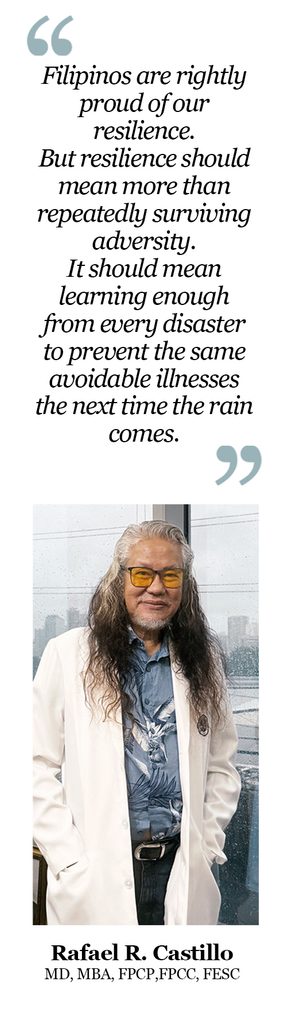
Filipinos are rightly proud of our resilience.
But resilience should mean more than repeatedly surviving adversity.
It should mean learning enough from every disaster to prevent the same avoidable illnesses the next time the rain comes.
When the water disappears, therefore, let us clean our homes—but continue watching our health.
Because sometimes the storm leaves before the disease arrives.




Leave a Reply