


By Rafael R. Castillo
One of the oldest principles of justice is also one of its simplest: Justice must not only be done, it must also be seen to be done.
This principle explains why judges routinely inhibit themselves from cases in which their impartiality may reasonably be questioned. The issue is not always actual bias. More often, it is the appearance of bias. Public confidence in judicial proceedings depends as much on perceived fairness as on fairness itself.
This principle deserves careful reflection in the ongoing impeachment trial of Vice President Sara Duterte.
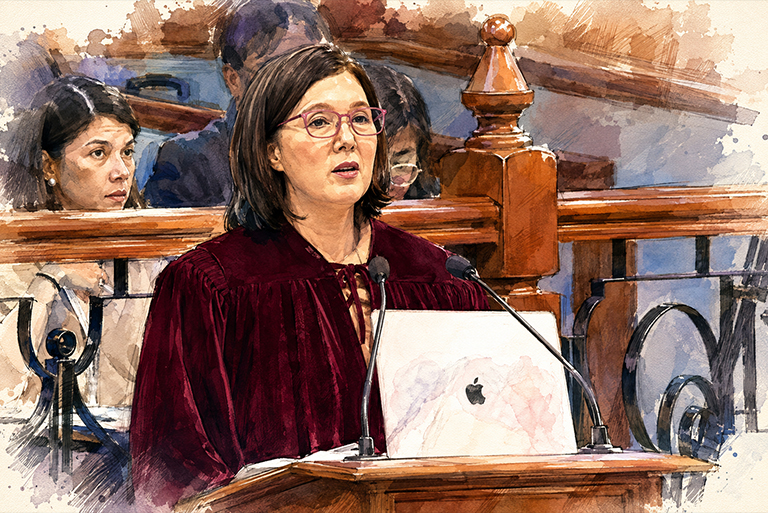
Recent calls for Sen. Pia Cayetano to voluntarily recuse herself raise a question that transcends personalities and partisan politics: When does public conduct by a senator-judge create a reasonable perception of prejudgment?
The duty of cold neutrality
Unlike ordinary legislative proceedings, an impeachment trial transforms senators into constitutional adjudicators. They no longer act primarily as policymakers or political advocates. They assume a quasi-judicial role requiring impartiality.
This obligation has often been described as the “cold neutrality of an impartial judge.”
Although the Constitution does not prescribe mandatory grounds for inhibition, the legitimacy of an impeachment court rests heavily upon each senator’s willingness to preserve both actual fairness and the appearance of fairness.
Why the issue arose
The controversy centers on Cayetano’s sharing, through her official social media account, of a shortened video clip involving Akbayan Rep. Chel Diokno, a member of the prosecution team.
Critics contend that the edited clip omitted the broader legal context of Diokno’s remarks, creating the impression that the prosecution had admitted possessing insufficient evidence. The House prosecution, as well as the groups that later filed an ethics complaint against Cayetano, argued that the complete statement conveyed a different legal point—an explanation distinguishing their request for evidence from what lawyers describe as a “fishing expedition.”
Whether the editing resulted from staff oversight or editorial judgment remains a matter of public discussion. But the more important constitutional question is different: Did the dissemination of that material create a reasonable perception that a senator-judge had publicly aligned herself with one side of the case before trial?
Appearance matters
Courts around the world recognize that the appearance of impartiality is indispensable to judicial legitimacy. Even where no actual prejudice exists, judges frequently inhibit themselves when reasonable observers could question their neutrality.
The standard protects institutions as much as individuals.
An impeachment trial is not merely about determining the fate of one public official. It is also a test of the Senate’s credibility as a constitutional court.
Once public confidence erodes, even a legally correct verdict may struggle to command moral authority.
Interestingly, Cayetano herself articulated this principle during the 2012 impeachment trial of then Chief Justice Renato Corona. She observed that the Constitution ultimately entrusts each senator with examining his or her own conscience, recognizing the need to divest oneself of prejudice as much as possible before sitting in judgment.
That observation remains equally relevant today.
Indeed, it provides perhaps the strongest argument for voluntary inhibition whenever circumstances create reasonable doubt about impartiality.
The counterarguments
To be fair, a number of counterarguments deserve consideration.
One is that the post may have originated from Cayetano’s staff rather than herself. Even assuming this to be true, official communications released through a senator’s verified account inevitably carry institutional responsibility. Public confidence depends less on authorship than on accountability.
Another argument is that the disputed post concerned preliminary procedural matters rather than the ultimate merits of the impeachment case. Yet procedural rulings themselves may significantly shape public perception regarding the strength or weakness of either party’s position.
Finally, some contend that the public should judge senators only by their final vote. But that argument overlooks an essential feature of due process. Fairness is measured throughout the proceedings, not merely at their conclusion.
Protecting the institution
Ultimately, this issue is no longer about a single social media post.
It is about preserving confidence in one of the Constitution’s most solemn accountability mechanisms.
Voluntary recusal is never an admission of wrongdoing. Rather, it is often an affirmation that the institution is more important than the individual.
If a senator-judge’s participation has become the subject of substantial public doubt regarding impartiality, voluntary inhibition may strengthen—not weaken—the legitimacy of the impeachment court.
Justice, after all, depends not only on constitutional authority. And institutions are not preserved by constitutions alone. They are preserved by the willingness of those entrusted with power to exercise restraint when the law does not compel it, but honor does.
In the end, the Senate’s greatest verdict will not be rendered against the accused, but upon itself.
This commentary first appeared in CoverStory.ph.










Leave a Reply