

Small things that keep floodwater — and what’s in it — away from your family
By the H&L Editorial Team
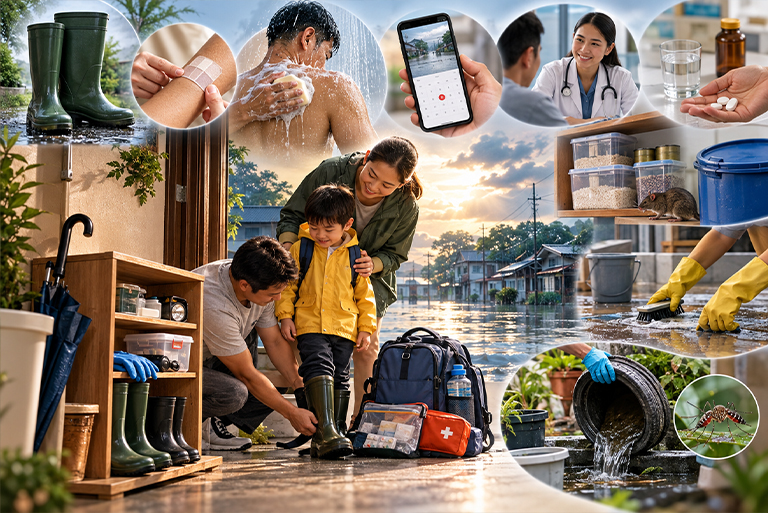
1. Keep a “flood shelf” by the door. Rubber boots, waterproof gloves, a flashlight, waterproof bandages and a bar of soap — all in one place, so no one wades out in slippers because the boots are buried somewhere.
2. Buy boots that are actually tall enough. Ankle-high rain boots fill up in shin-deep water and become pockets of contaminated water against your skin. Knee-high is the minimum for most urban floods.
3. Patch every wound before going out. Even small cuts, cracked heels, and scratched mosquito bites. Use waterproof bandages, and change them as soon as you’re home.
4. Wash within the hour. Soap and clean water on every bit of skin that touched floodwater or mud. Don’t wait until evening.
5. Write down the date you waded. Put it in your phone. If a fever comes two or three weeks later, you’ll be able to tell the doctor exactly when you were exposed.
6. Go to the health center within a day or two — even if you feel fine. Ask whether you need preventive medicine. It’s free in many public facilities.
7. Keep paracetamol, not ibuprofen, for fevers in flood season. Ibuprofen, mefenamic acid and aspirin can worsen bleeding in dengue. Paracetamol is safer until a doctor knows what’s going on.
8. Store food high and sealed. Rats are flood refugees too. Hard plastic containers with tight lids, on upper shelves, keep their urine and droppings away from what you eat.
9. Cover the water drums. Uncovered containers collect floodwater, rat urine, and mosquito larvae all at once.
10. Clean up after a flood with gloves on. Hose down mud and droppings before sweeping. Disinfect floors and surfaces with a diluted bleach solution, following label directions, and keep children away until it’s done.
11. Empty everything that collects rainwater. Old tires, flower-pot plates, roof gutters, cans and bottles. After every rain, tip them out. This is how you stay ahead of dengue.
12. Have a “go bag” ready — with medicines. Include at least a week’s supply of maintenance medicines for blood pressure, diabetes and other chronic conditions, plus copies of prescriptions. Evacuation is not the time to run out.
Bonus habit: Save your barangay health center’s number and the nearest hospital’s emergency number in your phone today, while it’s dry and the signal is strong.








Leave a Reply