


Simple habits for cemetery visits, long drives and family reunions

By the H&L Editorial Team
1. Go early or go late. Cemeteries are hottest and most crowded from late morning to mid-afternoon. Visit in the early morning or late afternoon to avoid heat exhaustion and long lines.
2. Bring more water than you think you’ll need. Older relatives often don’t feel thirsty even when they’re dehydrated. Offer water regularly, not just when they ask.
3. Pack the maintenance medicines. Bring the day’s doses of blood pressure, diabetes and heart medicines — plus an extra day’s supply in case of delays. Don’t skip them because you’ll be “out all day.”
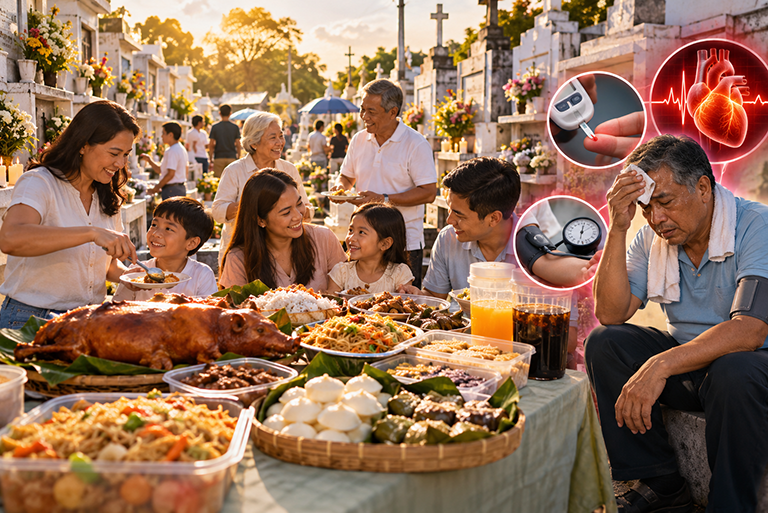
4. Dress for the sun — this year especially. PAGASA expects a strong El Niño to intensify through December. Hats, umbrellas, light-colored clothes and sunscreen. Bring a small foldable stool or chair for elderly family members who can’t stand for long.
5. Know the signs of heat illness. Heavy sweating, dizziness, headache, nausea, or confusion means it’s time to move to the shade, cool down and drink water. Hot, dry skin, confusion or fainting is an emergency.
6. Keep BE FAST in mind. Undas brings heat, long hours, missed medicines and salty food together — a combination that can trigger strokes and heart attacks in those at risk. Sudden face droop, arm weakness, slurred speech or chest pain means go to the nearest hospital immediately.
7. Take breaks on long drives. Stop every two hours to stretch and walk. Long periods of sitting raise the risk of clots in the legs, especially for older adults and those with heart disease.
8. Don’t drive drowsy. Many Undas trips start before dawn. Get a full night’s sleep, share the driving, and pull over if you catch yourself yawning repeatedly or drifting.
9. Be careful with candles. Keep them away from flowers, clothing and children. Watch the wind. Never leave candles burning unattended.
10. Mind the food left out. Food that sits in the heat for more than a couple of hours can cause food poisoning. Pack meals in insulated containers and eat them promptly.
11. Wear masks in crowded places if you are sick or high-risk. Respiratory infections spread easily in crowds. Stay home if you have a fever, and protect elderly and immunocompromised relatives.
12. Check on the ones who stay home. Some elderly relatives can’t make the trip. A phone or video call reminds them they’re part of the family remembrance — and it gives you a chance to check that they’re well.
Undas bag checklist: Water, maintenance medicines, sunscreen, hat or umbrella, folding stool, wet wipes, hand sanitizer, a small first-aid kit, a charged phone and power bank, and the number of the nearest hospital.







Leave a Reply