

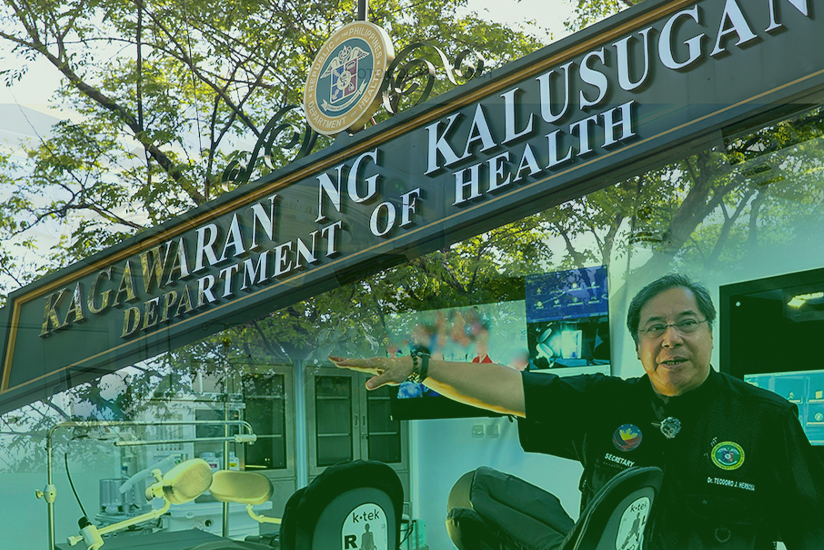
As the Department of Health expands its network of regional specialty centers, Filipino families now have greater access to advanced, life-saving medical services closer to home. From cancer and heart care to trauma, rehabilitation, mental health, and neonatal medicine, the DOH’s strengthened specialty infrastructure signals a major leap toward a more equitable, resilient, and patient-centered national health system.
By the H&L News Desk
The Department of Health (DOH) has reached another milestone in its nationwide effort to strengthen specialized healthcare services, announcing that 192 DOH Specialty Centers are now fully operational across the country—an expansion aligned with the directive of President Ferdinand R. Marcos Jr. to bring advanced medical care closer to Filipino communities.
This development marks a major leap from 172 specialty centers in 2024, reflecting the agency’s commitment to upgrading regional hospitals, improving access to expert care, and reducing disparities between urban and far-flung areas.
A Growing Network of Advanced Care
The specialty centers cover 17 critical areas of medicine, each designed to address the country’s most pressing diseases and improve outcomes through multidisciplinary, evidence-based care. These include:
- Cancer Care
- Cardiovascular Care
- Lung Care
- Renal Care & Kidney Transplant
- Brain & Spine Care
- Trauma Care
- Burn Care
- Orthopedic Care
- Physical Rehabilitation Medicine
- Infectious Disease & Tropical Medicine
- Toxicology
- Mental Health
- Geriatric Care
- Neonatal Care
- Dermatology
- Eye Care
- Ear, Nose & Throat (ENT) Care
These centers are strategically located in DOH hospitals nationwide, ensuring that families in Luzon, Visayas, and Mindanao can receive specialized treatment without the need for long-distance travel to Metro Manila.
“Specialized care should not depend on geography. Every Filipino deserves world-class treatment—wherever they live.”
Target: 349 Specialty Centers by 2028
Under the Regional Specialty Centers Act, the DOH aims to further expand this network to 349 specialty centers by 2028. This multi-year roadmap is part of a broader strategy to decentralize advanced medical services, enhance hospital capacity, and ensure that each region can deliver timely, high-quality care for complex conditions such as cancer, stroke, renal failure, and major trauma.
“With each specialty center established, we bring lifesaving treatment within reach of more Filipino families,” the DOH emphasized. “Quality care should not depend on where a person lives.”
Bringing World-Class Care Closer to Home
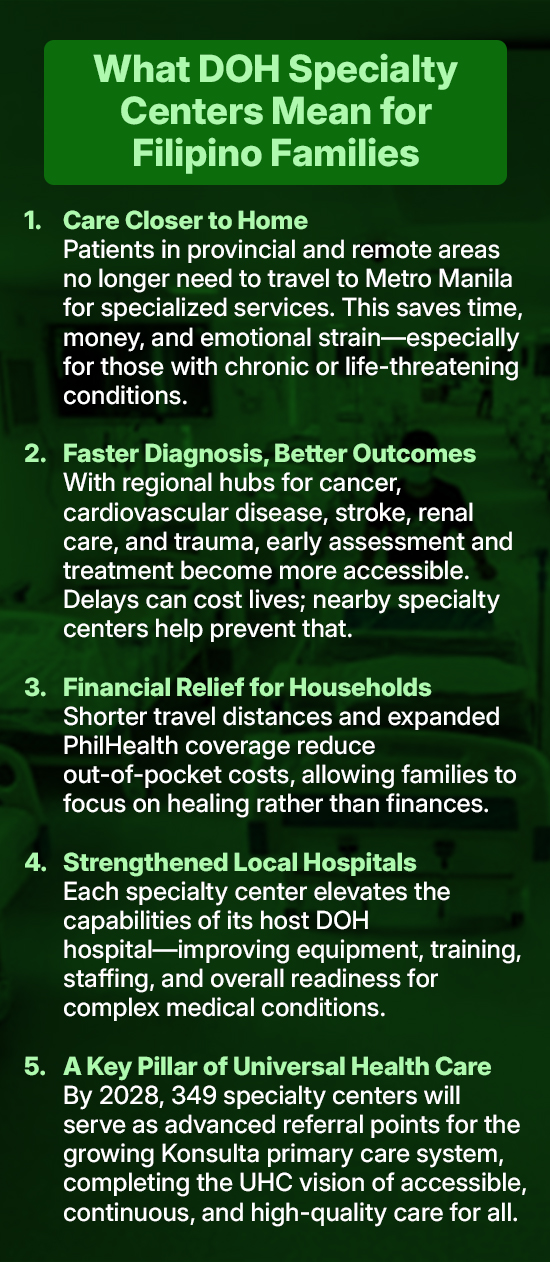
The expansion of specialty centers is expected to have significant impact on:
1. Health Equity
Patients in remote provinces gain access to services that used to be concentrated in major cities.
2. Early and Accurate Diagnosis
Regional centers equipped with specialists and modern diagnostics can detect conditions earlier—especially cancer, heart disease, and lung disease.
3. Reduced Out-of-Pocket Costs
Less travel means lower spending for families, while PhilHealth benefits continue to cover more specialty procedures and treatments.
4. Strengthening Universal Health Care
Specialty centers act as referral hubs within the country’s growing network of primary care providers, improving continuity and quality of care.
A Milestone for a Healthier, More Resilient Philippines
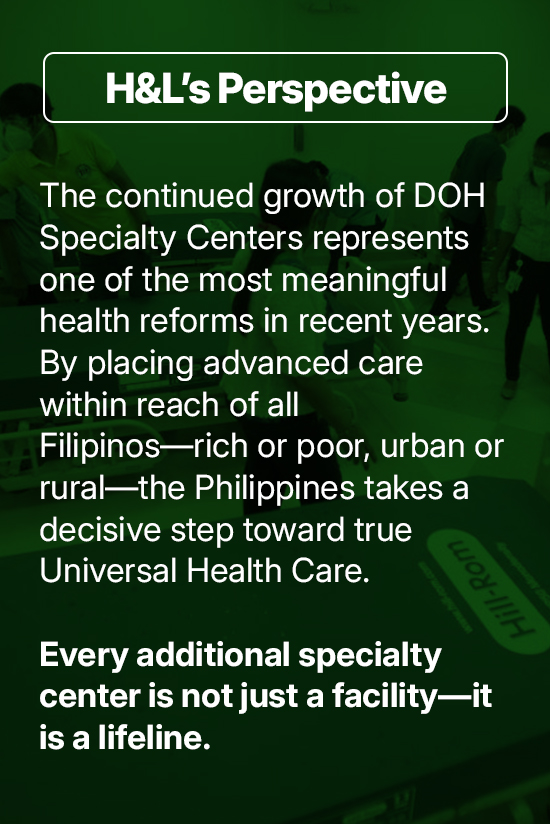
The DOH reiterates that this expansion is not merely an infrastructure upgrade—it is a decisive step toward a stronger national health system, one capable of delivering advanced, equitable, and regionally accessible care.
Filipinos can learn more about the Specialty Centers Program through the DOH’s health education series Pinasigla Ep. 18, available here:
Facebook: https://web.facebook.com/share/p/1Ab2Et26vR/
YouTube: https://www.youtube.com/watch?v=tHBJIYtAnC8&list=PL7amYNiWriCysYdFXyyXQdFeXvmWtBaGz&index=1
“The expansion of DOH regional hospitals marks a decisive turning point toward true Universal Health Care.”