

Can Protecting Your Hearing Help Protect Your Brain?

Most people think of hearing loss as an inconvenience—a natural part of aging that simply makes conversations more difficult. Yet emerging research suggests it may be something far more important. Hearing loss is now recognized as one of the most significant modifiable risk factors for cognitive decline and dementia. As populations age and noise exposure rises, experts are asking an urgent question: Could protecting our hearing today help preserve our memory, independence, and quality of life tomorrow?
By Rafael R. Castillo, MD
The Sounds We Slowly Lose
It often begins subtly.
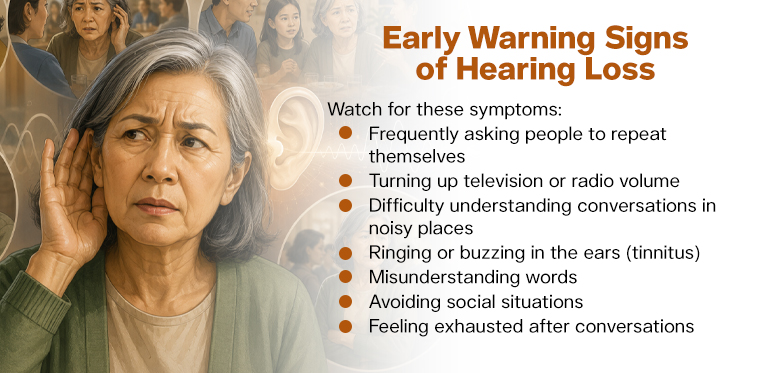
A grandfather turns up the television volume. A grandmother asks family members to repeat themselves more frequently. Someone starts avoiding social gatherings because conversations become difficult to follow.
Many dismiss these changes as normal aging. Yet hearing loss is far from a trivial condition.
According to the World Health Organization, more than 1.5 billion people worldwide live with some degree of hearing loss. That number is expected to rise substantially in the coming decades.
In the Philippines, hearing impairment affects millions of individuals, particularly older adults. However, many cases remain undiagnosed and untreated.
What makes this issue particularly important today is a growing body of evidence linking hearing loss not only to communication difficulties but also to cognitive decline, depression, social isolation, and dementia.
A New Understanding of Dementia Risk
For many years, dementia was viewed primarily as an inevitable consequence of aging or genetics. Today, scientists understand that several risk factors can influence whether cognitive decline develops later in life. One of the most important discoveries has been the relationship between hearing loss and brain health.
The landmark Lancet Commission on Dementia identified hearing loss as one of the leading modifiable risk factors for dementia. Researchers estimate that addressing hearing impairment could potentially prevent or delay a significant proportion of dementia cases worldwide. This finding has transformed hearing preservation from a quality-of-life issue into a major public health priority.
What Happens Inside the Brain?
The connection between hearing and cognition may seem surprising. After all, the ears and the brain appear to perform different functions. In reality, hearing is fundamentally a brain activity. The ears collect sound, but the brain interprets and assigns meaning to what we hear. When hearing declines, the brain receives less auditory information.
Experts propose several explanations for why this may contribute to cognitive decline.
One theory suggests that the brain must work harder to process degraded sounds, diverting resources away from memory and thinking.
Another proposes that reduced auditory stimulation accelerates changes in brain structure and function.
A third points to social isolation. People with hearing difficulties often withdraw from conversations and activities. Reduced social engagement has itself been linked to an increased risk of dementia.
The likely answer is that all of these mechanisms interact. The result is a gradual impact on cognitive health that may unfold over many years.
The Cost of Silence
Hearing loss affects much more than the ability to hear words. It influences relationships, confidence, emotional well-being, and independence. Many individuals with hearing impairment experience frustration, embarrassment, and loneliness.
They may avoid restaurants, family gatherings, church services, or community events because communication becomes exhausting. Over time, social withdrawal can contribute to depression and reduced quality of life.
For older adults, these effects may be particularly profound.
When people stop participating in conversations, they risk becoming disconnected from the very relationships that help keep the brain active and engaged.
The Good News: Hearing Loss Is Often Treatable
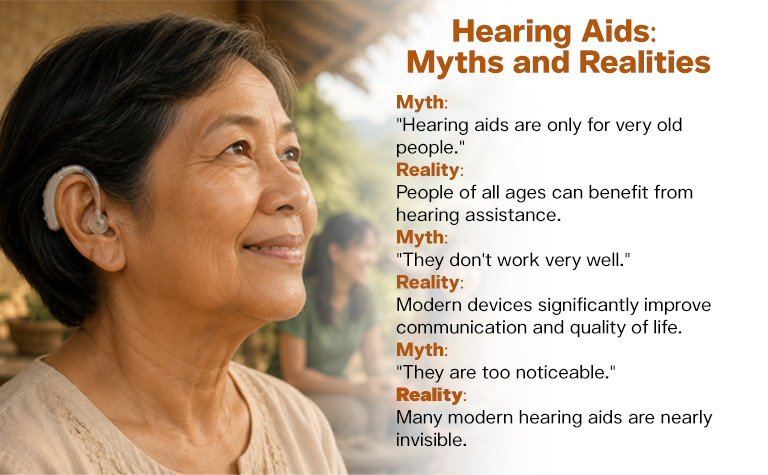
Unlike many risk factors for dementia, hearing loss is frequently identifiable and manageable. Modern hearing aids are smaller, more effective, and more sophisticated than ever before. Yet many individuals who could benefit from hearing aids never use them.
Some believe hearing aids are bulky or ineffective. Others fear stigma or assume hearing loss is simply part of aging and cannot be helped. These misconceptions prevent many people from seeking treatment.
Recent studies suggest that hearing interventions may help preserve cognitive function, particularly among individuals at higher risk of cognitive decline.
While hearing aids are not a cure for dementia, they may represent an important tool in protecting long-term brain health.
Why Prevention Matters
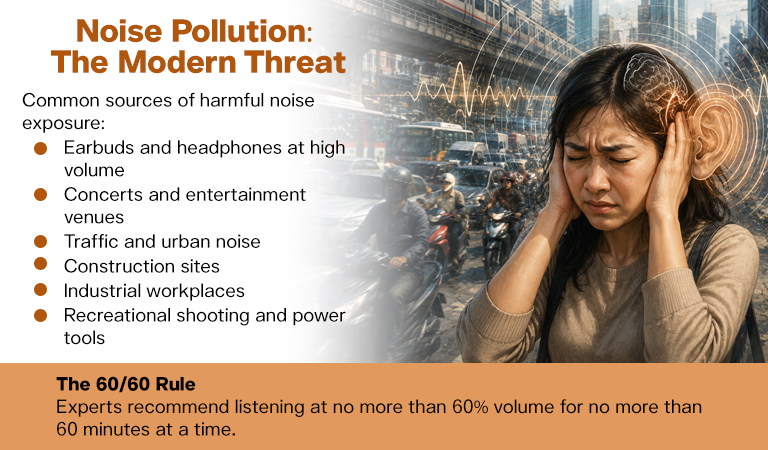
Many causes of hearing loss are preventable. Excessive noise exposure remains one of the most common threats. Personal listening devices, concerts, occupational noise, and urban environments expose millions of people to sound levels capable of damaging delicate structures within the inner ear.
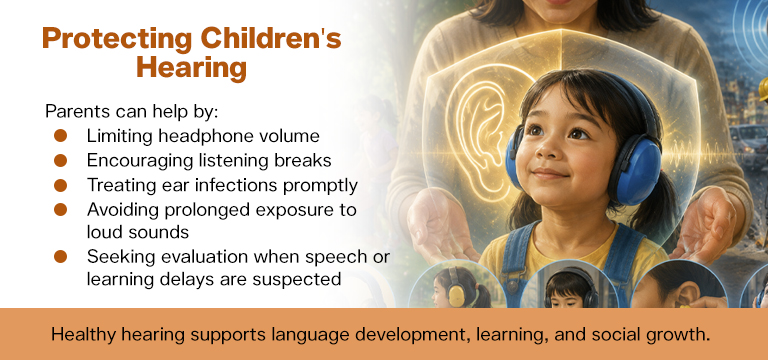
Unlike a broken bone, damaged hearing cells do not regenerate. Once lost, hearing may never fully return. Protecting hearing therefore becomes a lifelong investment in health. Simple measures such as lowering headphone volume, using hearing protection in noisy environments, and obtaining regular hearing evaluations can make a substantial difference.
A Message for Families
Families are often the first to notice hearing difficulties. Loved ones may become frustrated when conversations are repeatedly misunderstood. Yet impatience rarely helps. Encouragement, understanding, and early evaluation are far more effective.
When hearing loss is addressed promptly, individuals often regain confidence, reconnect socially, and improve their overall quality of life. The earlier intervention begins, the greater the potential benefits.
Listening to the Future
As medical science learns more about the relationship between hearing and brain health, one message is becoming increasingly clear. Protecting hearing is not simply about preserving sound. It is about preserving connection. It is about maintaining relationships, independence, communication, and cognitive vitality.
In a world growing louder, hearing may be one of the most valuable senses we possess.
And sometimes, the path toward protecting memory begins by protecting our ability to listen.
“Sometimes dementia begins not with memory loss, but with hearing loss.”
REFERENCES
- World Health Organization. World Report on Hearing.
- Lancet Commission on Dementia Prevention, Intervention and Care.
- National Institute on Aging. Hearing Loss and Cognitive Health.
- Alzheimer’s Association. Hearing Loss and Dementia Risk.
- Johns Hopkins Medicine. Hearing Loss and Brain Health.
- National Institute on Deafness and Other Communication Disorders (NIDCD).
- Livingston G, et al. Dementia Prevention, Intervention, and Care: Lancet Commission Reports.
- American Academy of Audiology Guidelines.
- World Health Organization. Safe Listening Initiative.
- Alzheimer’s Disease International Reports.










Leave a Reply