

Words and Photos by Henrylito D. Tacio
“At its best, travel should challenge our preconceptions and most cherished views, cause us to rethink our assumptions, shake us a bit, make us broader minded and more understanding.” –Arthur Frommer
I have a passion for traveling. I have been to around 15 countries and five continents. Each country offers distinct experiences for someone from the Philippines like me. The people, culture, food, and traditions differ, yet there is one common element: humanity.
Recently, I made my ninth trip to the United States. Even with the many trips I have taken, there is always something new to learn. Below are some of the fresh insights I acquired during my latest international journey:
Ensure you prepare your e-Travel prior to your trip. The eTravel system functions as a digital platform for gathering individual data related to passengers arriving in or departing from the Philippines. This system is designed for border control, health monitoring, and the evaluation of economic data.
The people required to register or update their details in the eTravel system include departing Filipino travelers, as well as incoming Filipino and foreign passengers, in addition to arriving Filipino and foreign crew members. Exemptions are granted to the following categories: foreign diplomats and their dependents, foreign dignitaries, members of their delegations, holders of 9(e) visas, and individuals with diplomatic or official/service passports.
Registration must be finalized within 72 hours (3 days) prior to your arrival in or departure from the Philippines. The registration process is complimentary, and the sole official website designated for this purpose is https://etravel.gov.ph. As travelers are mandated to present their proof of eTravel registration before boarding their flight, it is crucial to take a screenshot or download your QR code before closing or exiting the eTravel website or application.
During my recent trip, I showed my proof along with my passport to the immigration officer. I faced no difficulties, but the woman in front of me did. She was unable to provide her e-travel documentation and was directed to register first. She attempted to do so but encountered challenges downloading it due to her slow internet connection. I was unsure if she succeeded in completing the process as I was making my way to the boarding area for my flight.
It is crucial to first secure travel authorization from your supervisor, if you are a government employee traveling outside the country. You may think that traveling abroad is easier since the immigration officer is also a civil servant. However, the rules are quite strict for those in government roles.
As stated in Section 6 of Memorandum Circular No. 35, s.2017 from the Office of the President of the Philippines, “No government official or employee shall be allowed to travel abroad, even for personal or private reasons without any cost to the government, unless that official or employee has duly completed the required leave forms and obtained the necessary travel authorization from their respective agency.”
I was not aware of such a regulation until I overheard a discussion between two people about their friend who could not join them. He failed to present an authorization letter to the immigration officer, which led to his denial.
Upon further thought, the immigration officer asked if I was traveling for leisure. I confirmed that I was. He then inquired if I was a government employee, to which I answered no.
Notify your bank and credit card provider before traveling internationally. This measure helps your bank recognize legitimate transactions and avert fraudulent charges on your accounts. Generally, you can inform them via their website or by reaching out to customer support. Some banks allow you to enter your travel dates, which promotes seamless transactions during your trip.
Although some banks provide online notification options, in my case, I had to reach out to customer support. Certain banks enable you to input your travel dates, ensuring smoother transactions throughout your journey. Furthermore, you may want to ask about foreign transaction fees and other expenses associated with using your card overseas.
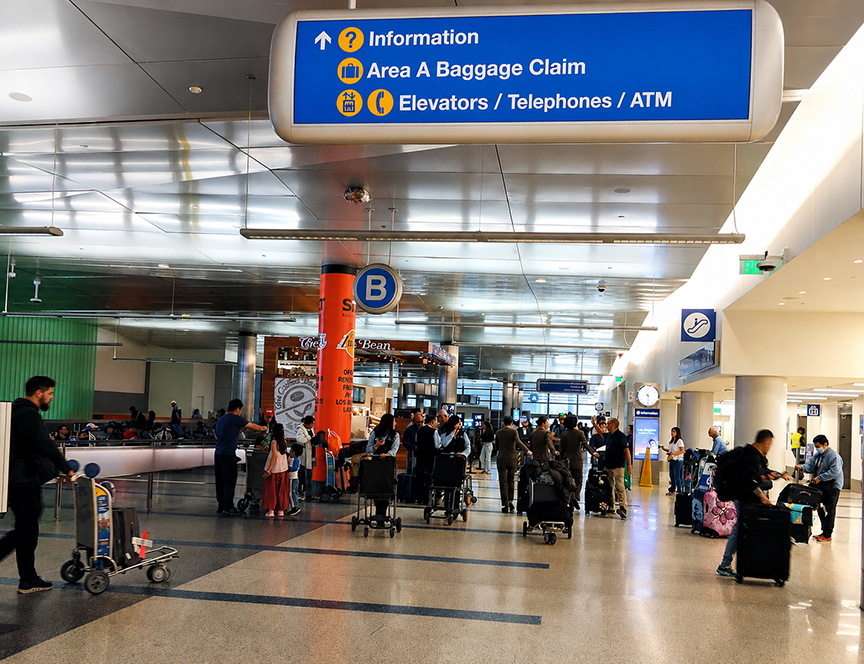
You may confuse time and dates. When traveling in the Philippines or other Southeast Asian nations, you will not face challenges regarding time and dates. However, this is not true in foreign countries like the United States, where I had to adjust to the time differences.
Imagine this situation. I left Davao City at 5:15 AM on Saturday and arrived in Manila at 7:10 AM, still on Saturday. There were no complications whatsoever during that time.
My experience of traveling to the United States was quite distinct. We departed from Ninoy Aquino International Airport in Manila at 11:05 AM on the same day and arrived in Los Angeles at 9:45 AM, still on that date. The entire journey took 13 hours and 40 minutes, but did I truly travel back in time?
On the same day, I departed from Los Angeles, California at 6:40 PM and arrived in Minneapolis, Minnesota at 12:15 AM on Sunday. The travel time was only 3 hours and 16 minutes. There was a time difference of almost six hours. It is important to note that there is a three-hour time difference between California and Minnesota.
Thus, when we left Los Angeles, it was already 9:40 PM in Minnesota, which coincided with the moment my sister and her husband departed from their home in Grand Rapids. The drive from Grand Rapids to the Minneapolis airport also took three hours. As a result, they arrived in Minneapolis exactly when our flight landed.
Turbulence occurs unexpectedly. It is one of the most uncomfortable yet common experiences for air travelers. “The definition of turbulence is fairly straightforward: chaotic and capricious eddies of air, disturbed from a calmer state by various forces,” writes Michelle Z. Donahue for National Geographic.
“Turbulence is probably the single most common cause of anxiety for airline passengers, yet it rarely causes the pilots any concerns about the safety of the aircraft,” says the website, fligthdeckfriend.com.
Turbulence contributes significantly to the fear of flying for many individuals. A friend residing in Japan confessed that her reluctance to frequently return to the Philippines is due to turbulence. Another acquaintance remarked that experiencing strong and prolonged turbulence would certainly induce a heart attack!
While traveling from Davao to Manila, we faced multiple episodes of turbulence, despite it being early morning. A woman next to me was repeatedly jolted by any abrupt movement. She revealed that her anxiety stemmed from a past incident where her plane had dropped three times during intense turbulence.
On my flight to Los Angeles, we encountered extended turbulence that lasted more than two hours. However, since I was seated in the middle of the aircraft, I was mostly oblivious to the plane’s shaking. Conversely, those at the back of the plane likely experienced a rather thrilling sensation.
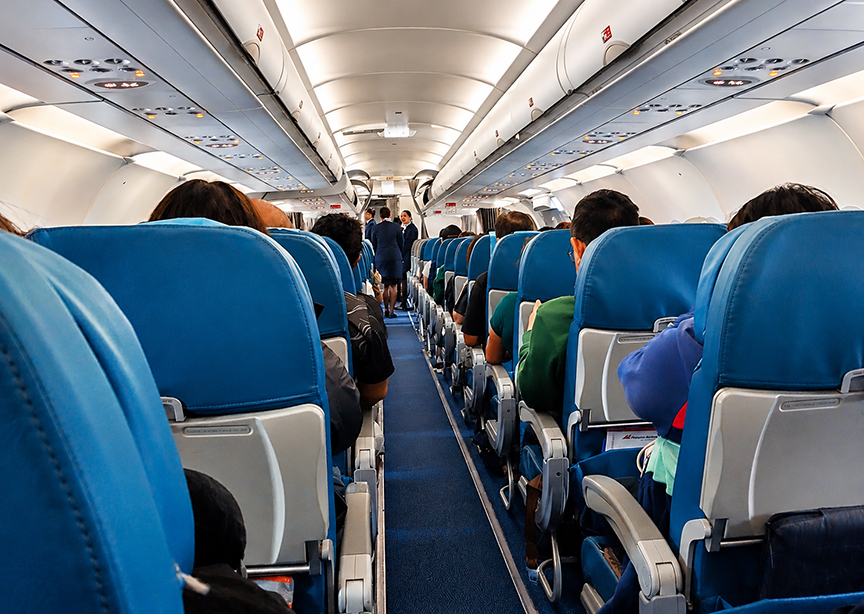
My personal experience of excitement, if it can be termed as such, took place during my flight from Los Angeles to Minneapolis. Halfway through our trip, the plane began to sway back and forth as though it were being tossed by a strong wind. I found myself sitting on the edge of my seat, earnestly praying for the turbulence to lessen. This severe shaking lasted for about 30 minutes. Thankfully, by the time it came to an end, we were getting ready for our descent.
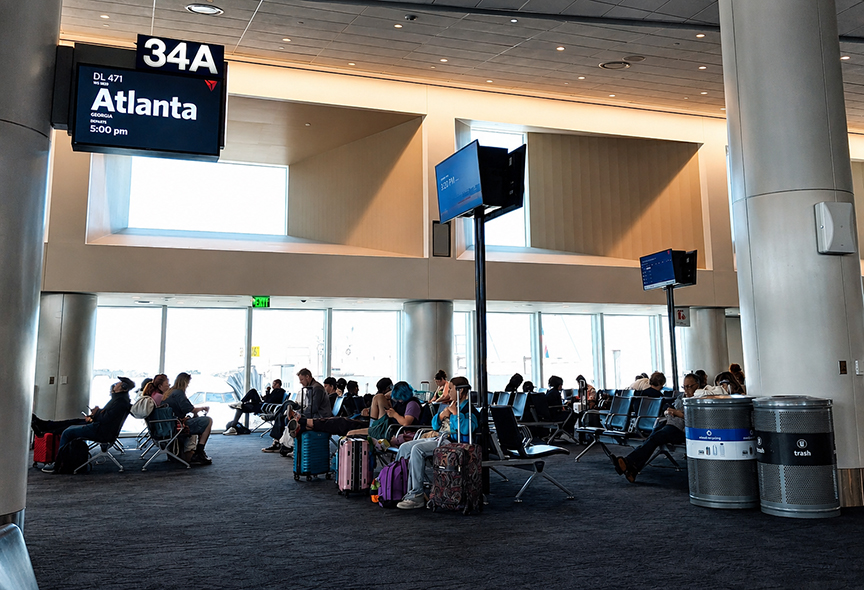
The act of stamping your passport at the airport is no longer necessary. Upon arriving in the United States, the initial step is to present your passport along with your US visa at the US Customs and Border Protection (CBP). I went through this procedure with my fellow passengers from the flight. The immigration officer asked the usual questions, and afterward, he handed my passport back to me.
While I was waiting for my luggage at the carousel, I took the chance to review my passport and found that it had not been stamped. I was completely taken aback and immediately reached out to my two sisters to inform them of this development. Both of them recommended that I contact my friend, an immigration attorney who currently lives in New York.
I heeded their advice and got in touch with him. He assured me that there was no reason to worry. He clarified that CBP has discontinued the practice of stamping passports upon entry; instead, they now create an electronic record known as the I-94 record, which can be accessed through the CBP website.
Based on the details shared by my sister Marilou, the I-94 record functions as the official proof of my entry into the United States. The lack of a passport stamp does not suggest that my entry into the US was illegal. CBP has moved to utilizing electronic records for monitoring entries and exits, which has diminished the need for physical stamps. I am aware that there could be new requirements or procedures to adhere to in the upcoming months. However, in the meantime, the information provided above will certainly enhance the reassurance and comfort of your trip to the United States.—###









Leave a Reply