
By the H&L Editorial Team
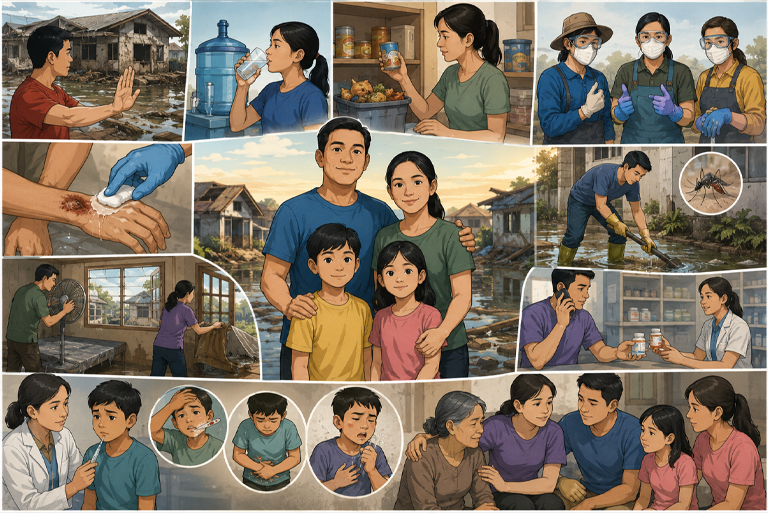
First, protect people before possessions. Do not enter an unsafe structure simply to salvage belongings.
Second, restore safe water. Follow local drinking-water advisories.
Third, inspect food. Discard anything unsafe or contaminated.
Fourth, protect the cleanup crew. Boots, gloves, eye protection and appropriate respiratory protection matter.
Fifth, clean every wound immediately.
Sixth, dry the home rapidly. Ventilate and remove water-damaged materials where appropriate.
Seventh, remove standing water. Repeat the search every few days.
Eighth, restore medications. Contact a physician, health center or pharmacy promptly if maintenance medicines were lost.
Ninth, watch for illness. Fever, diarrhea, breathing difficulty and infected wounds deserve attention.
Tenth, watch one another emotionally. Recovery is physical and psychological.
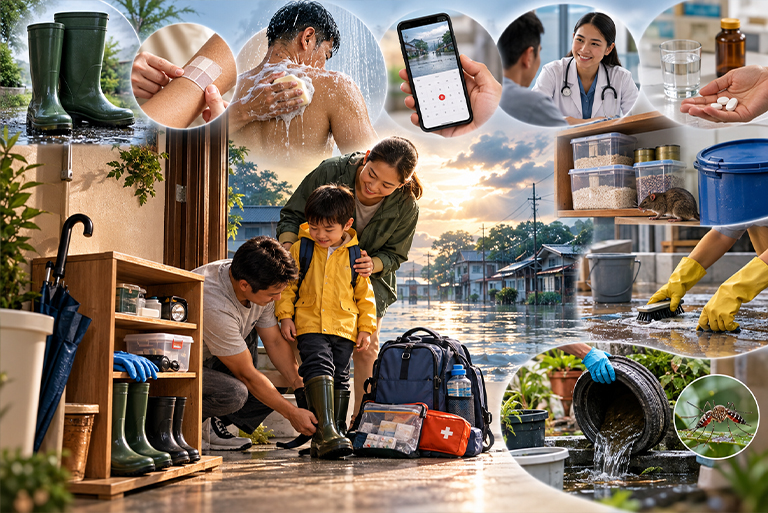
FAMILY POST-FLOOD CHECKLIST
Before returning
- Authorities say the area/building is safe.
- Electricity and gas hazards have been considered.
- Protective footwear, gloves and cleanup equipment are available.
Health
- Everyone’s maintenance medicines are accounted for.
- Cuts and wounds are cleaned and covered.
- Tetanus vaccination status can be checked if a significant wound occurs.
- Family members know the warning symptoms of leptospirosis and dengue.
Water and food
- Drinking water is from a confirmed safe source.
- Flood-contaminated food has been discarded.
- Refrigerator/freezer food affected by prolonged power loss has been assessed safely.
Home
- Wet materials are being dried or removed.
- Mold is addressed safely.
- Standing water around the property is eliminated.
- Children and vulnerable adults are kept away from hazardous cleanup.
Recovery
- Important medical documents are reconstructed if lost.
- Family routines are being restored.
- Emotional distress is being watched—not dismissed.








Leave a Reply