
By Dr. Tony Leachon
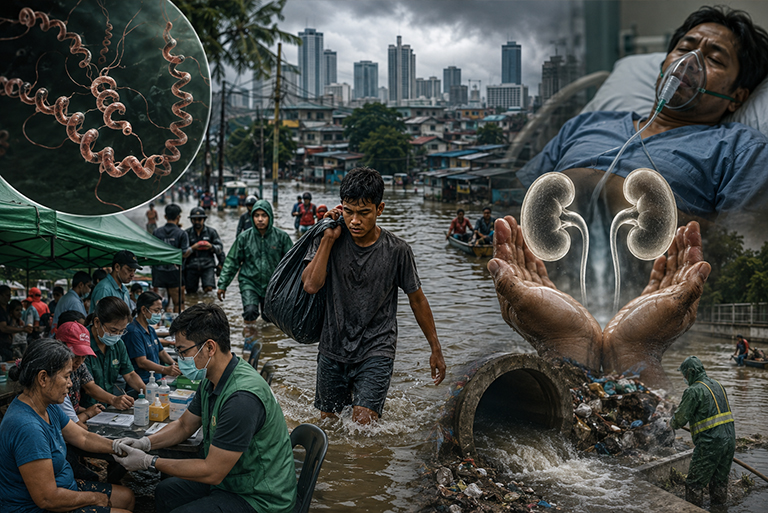
At least five deaths have already been recorded at the National Kidney and Transplant Institute (NKTI) since June 1 due to leptospirosis — a disease that resurges every year as floods overwhelm our cities.
Despite decades of warnings, the numbers continue to rise. And with more than 20 typhoons hitting the Philippines annually, this crisis is no longer seasonal; it is structural.
Flood control programs cannot keep up with rapid urbanization, clogged waterways, and poor drainage. As long as communities remain submerged for days, the poor and middle class will continue to suffer the most — those without stable incomes, HMOs, or access to early medical care.
The Department of Health faces a difficult challenge: doxycycline prophylaxis requires a prescription, limiting rapid deployment in high‑risk communities. Meanwhile, families exposed to floodwaters often delay consultation because of cost, distance, or lack of awareness.
PhilHealth recently increased its leptospirosis benefit package — ₱63,000 for regular hospitalization and ₱170,000–₱411,000 for intensive and critical care — a welcome step, but still reactive. Financial support helps families survive hospitalization, but it does not prevent the disease.
What must be done?
1. DOH must establish community‑level rapid response teams in flood‑prone barangays to provide early assessment, triage, and referral within 24–72 hours of exposure.
2. PhilHealth should expand coverage for outpatient prophylaxis and early diagnostics, especially for vulnerable workers: garbage collectors, traffic enforcers, delivery riders, and residents of low‑lying areas.
3. LGUs must implement year‑round flood mitigation and drainage maintenance, not just post‑typhoon cleanup.
4. A national “Leptospirosis Prevention Protocol” should be institutionalized, integrating DOH, DPWH, DILG, and LGUs — because health cannot be separated from infrastructure.
5. Public education campaigns must be intensified, teaching families that leptospirosis can enter through intact skin, eyes, and mouth — and that early consultation saves lives.
Leptospirosis is not just a medical problem. It is a governance problem, a poverty problem, and a systems problem.
Until we confront these realities, NKTI’s rising numbers will continue to reflect a painful truth: we are losing lives to a disease we already know how to prevent.
Health is non-negotiable. Prevention is the only way forward.
#RelentlessForChange
#HealthWithHonor










Leave a Reply