

WORLD STROKE DAY, OCTOBER 29

New Philippine guidelines, a one-shot clot-buster, wider treatment windows — and a sobering look at who actually gets treated
PLUS
• May vs. October — What’s New in Stroke Care
• Stroke in the Philippines at a Glance
• From FAST to BE FAST
• The Stroke That Goes Away: Why a “Mini-Stroke” Is an Emergency
• The Stroke Risk Hiding in Your Pulse: Atrial Fibrillation
• Too Young for a Stroke? Think Again
• Paying for a Stroke: What PhilHealth Covers — and What It Still Doesn’t
• Commentary: Your Address Should Not Decide Whether You Survive a Stroke
• Doctor’s Note: A Miracle on a Timetable
In May, we called stroke “the five-minute emergency” and walked readers through the warning signs and the habits that keep Filipinos at home when they should be rushing to a hospital. A lot has happened since. The country now has updated stroke guidelines. A simpler clot-dissolving drug has entered the mainstream. Research keeps stretching the hours in which a brain can be saved. And a regional report in September laid bare how few Filipinos can actually reach that care. For World Stroke Day, here is the update — what’s new, what it means for your family, and what still needs fixing.
By Rafael R. Castillo, MD
She woke up with it
She went to bed at ten, feeling fine. At five the next morning, she woke to find that her left arm would not move and her words came out thick and slow.
For years, a stroke like hers — a “wake-up stroke” — was treated almost as a lost cause. No one knew when it began. The clock for clot-dissolving medicine is counted from the moment symptoms start, and when that moment is unknown, doctors had to count from the last time the patient was seen well. Ten o’clock the night before. Seven hours. Too late.
Today, in a hospital with the right scanners, her story can end differently. Brain imaging can now show, in many cases, whether the damaged tissue is fresh enough to be saved, regardless of what the clock says. Some wake-up stroke patients can now receive treatment that would have been withheld from them a decade ago.
That is just one of the ways stroke care has moved forward. But the same advances throw a harsh light on another reality: the scanners, specialists and drugs that make these rescues possible are still out of reach for most Filipinos.
This is the story of both.
Picking up where we left off
When we ran our stroke cover in May, the message was simple and urgent. Learn the signs. Don’t explain them away as fatigue, high blood pressure or a “naipit na ugat.” Don’t wait for rest or massage to fix it. Go to the hospital.
All of that still stands. If anything, the developments of the past five months make it more important, not less. Every new treatment shares one requirement: the patient has to arrive.
So rather than repeat what we covered in May, this issue looks at what has changed — and what that means for the families who will face a stroke this year.
1. The Philippines has new stroke guidelines
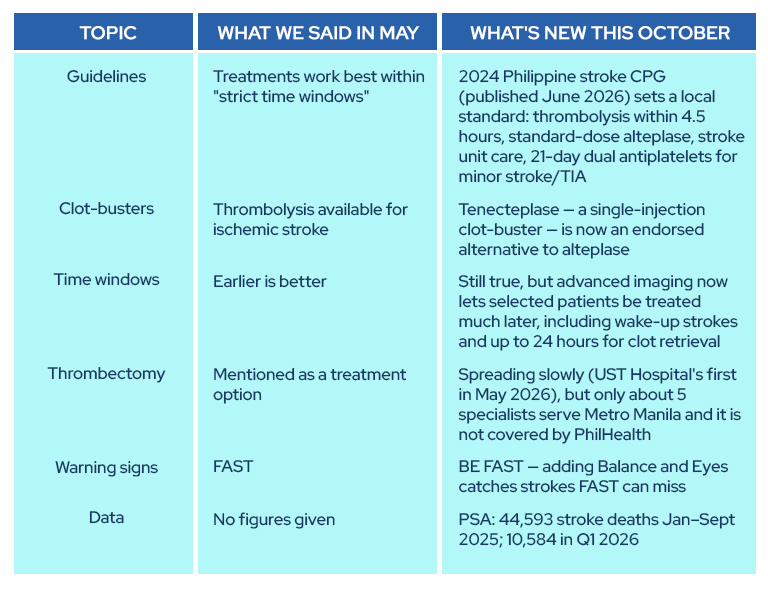
In June, the Philippine Journal of Cardiology published the 2024 Clinical Practice Guidelines on the Management of Acute Ischemic Stroke and Intracerebral Hemorrhage in the Philippines, developed by a multidisciplinary panel that included the Stroke Society of the Philippines. It is the first comprehensive local update in years, and it sets the standard that hospitals and doctors are now expected to follow.
Several of its recommendations matter directly to patients:
• Clot-dissolving treatment within 4.5 hours. The guideline strongly recommends intravenous thrombolysis with alteplase for eligible patients within 4.5 hours of symptom onset. Now there is a firm local benchmark, not just foreign guidelines.
• Full dose, not a reduced dose. For years, some doctors in Asia used lower doses of alteplase, hoping to reduce bleeding risk in Asian patients. The new guideline recommends the standard dose over the low dose. In plain terms: patients should get the dose the evidence supports.
• Tenecteplase as an alternative. The guideline endorses tenecteplase, a newer clot-buster, as an alternative to alteplase. More on why that matters below.
• Stroke unit care. Patients should be admitted to a dedicated stroke unit rather than a general ward. The guideline itself notes the catch: there are only about 50 established stroke units in the country, most in Metro Manila.
• Two antiplatelets for minor strokes and mini-strokes. For patients with a minor stroke or high-risk transient ischemic attack, aspirin plus clopidogrel for 21 days, started within 24 hours, is now strongly recommended. (See our supplemental article on mini-strokes.)
2. A one-shot clot-buster
For almost 30 years, the standard drug for dissolving stroke clots was alteplase. It works, but it is fiddly: an injection followed by an hour-long infusion, carefully weighed and timed.
Tenecteplase is a close relative that can be given as a single injection over a few seconds. In large trials, including the Canadian AcT trial published in 2022, it worked at least as well as alteplase, without more bleeding. In March 2025, the US Food and Drug Administration approved it for acute ischemic stroke — the first new stroke drug approved there in nearly three decades. Now the Philippine guideline lists it as an acceptable alternative.
Why should a family care? Because in a country of islands, traffic and long transfers, simplicity saves time. A single injection can be given quickly in a smaller hospital’s emergency room before the patient is transferred to a bigger center for further care, without nurses having to manage an infusion in the back of an ambulance. It frees up staff and shortens the time from door to treatment.
It is not a miracle drug, and it carries the same bleeding risks as other clot-busters. Its availability and cost in Philippine hospitals still vary. But it is a meaningful step toward making stroke treatment easier to deliver outside the biggest hospitals.
3. “Too late” isn’t always too late anymore
The rule most people have heard — that stroke must be treated within a few hours — is still the best rule to live by. Earlier is always better.
But research over the past few years has shown that for selected patients, the window can be stretched far beyond what we once thought, using advanced brain imaging to identify brain tissue that can still be saved:
• Wake-up strokes. The WAKE-UP trial showed that MRI could identify patients with unknown onset times who still benefit from clot-dissolving treatment.
• Clot retrieval up to 24 hours. The DAWN and DEFUSE 3 trials showed that removing a clot by catheter can help selected patients up to 16 to 24 hours after they were last well.
• Even large strokes. In 2023, trials such as SELECT2 and ANGEL-ASPECT showed that patients with large areas of damage — once considered beyond help — can still benefit from clot retrieval.
• Late clot-busting where clot retrieval isn’t available. The TRACE-III trial, published in 2024, found that tenecteplase given 4.5 to 24 hours after onset improved outcomes in selected patients with large-vessel blockages who could not get thrombectomy — a finding especially relevant for countries like ours.
There’s an important caveat. These extended windows depend on CT perfusion or MRI scans, specialist interpretation and, often, a thrombectomy team. Most Philippine hospitals don’t have them. And the local guideline does not yet cover thrombectomy at all.
So the practical message for families is two-sided. Never delay because you think it’s still early. But also, never give up because you think it’s already too late. A patient found hours after a stroke, or who woke up with one, should still go to the best-equipped hospital within reach. Let the doctors decide what is possible.
4. Clot retrieval is spreading — slowly
Mechanical thrombectomy — threading a catheter into the brain to pull out a clot — is one of the most powerful treatments in modern medicine for major strokes. In the Philippines, it remains rare.
There is progress. UST Hospital announced its first mechanical thrombectomy this May, joining a small group of centers that offer the procedure. But a regional report released in September put the scale of the gap into perspective.
The report, Strengthening Stroke System Readiness Across ASEAN, unveiled at Hospital Management Asia 2026 in Bangkok, drew on experts from seven countries. Among its findings for the Philippines:
• Metro Manila, home to an estimated 20 to 30 million people, has only about five neurovascular specialists able to perform thrombectomy.
• Private hospitals provide most advanced stroke care, including thrombolysis and thrombectomy, while government hospitals — which serve most patients — often lack the imaging needed for the most severe strokes.
• Thrombectomy is not yet covered by the national health insurance system, with no reimbursement mechanism in place.
• Weak emergency medical services and limited insurance coverage remain major barriers.
For a family facing a major stroke, those numbers translate into hard questions: Is there a thrombectomy team on duty tonight? Can we afford it? How far away is it?
5. The numbers keep climbing
Stroke remains the third leading cause of death in the Philippines, after heart disease and cancer. Provisional data from the Philippine Statistics Authority recorded 44,593 deaths from cerebrovascular disease — mostly strokes — from January to September 2025, nearly one in ten of all deaths. In the first quarter of 2026 alone, there were 10,584.
Global Burden of Disease estimates suggest roughly 156,000 Filipinos have a new stroke each year, and that more than 1.2 million are living with its after-effects.
6. From FAST to BE FAST
In May, we taught FAST: Face, Arm, Speech, Time. This issue, we are upgrading to BE FAST, which adds two letters at the front: B for Balance and E for Eyes.
The reason is practical. FAST is excellent at catching strokes in the front of the brain, which typically cause facial droop, arm weakness and speech problems. But strokes in the back of the brain often show up differently: sudden dizziness, unsteadiness, double vision or loss of vision. A study published in the journal Stroke in 2017 found that FAST alone missed about 14 percent of strokes, and adding balance and eye symptoms cut the miss rate to under 5 percent.
The full checklist is in our sidebar. Teach it to everyone in your household.
What hasn’t changed
For all the progress, the most important factor in stroke survival is still the oldest one: time.
Every new treatment works better the earlier it is given. And the biggest delays still happen before the patient leaves home — while the family waits, hopes, rubs the arm with oil, or calls a relative for permission. We wrote at length about these habits in May. They remain the single biggest obstacle between Filipinos and modern stroke care.
The other constant is high blood pressure. It remains the leading modifiable risk factor for stroke, by far. The cheapest stroke to treat is the one prevented by a blood pressure pill taken faithfully every day.
Why this week matters
World Stroke Day falls on October 29, days before Undas. That timing is worth noticing.
Over the last holiday season, from December 21 to January 2, acute stroke accounted for 205 of the 349 non-communicable disease emergencies recorded by the DOH’s sentinel hospitals, and it was the leading cause of death among them. Holidays bring long trips, disrupted routines, missed medicines, salty food and late nights.
This year, Undas also comes amid what PAGASA describes as a strong El Niño expected to intensify through December. Long hours in the heat, dehydration and skipped maintenance medicines are a risky combination for older adults with high blood pressure and heart disease.
A final word
Five months ago, we asked readers to treat stroke as a five-minute emergency. That message hasn’t changed. What has changed is what can happen once a patient reaches the right hospital: simpler drugs, longer windows, better guidelines.
The next step is ours as a nation: to make sure those advances reach the patient in Ilocos and Samar and Sulu as surely as the patient in Makati. Until then, each family’s best protection is still knowledge. Learn BE FAST. Know which hospital near you can treat stroke. Take your blood pressure medicine. And when a stroke strikes — even if you think it’s too early, even if you fear it’s too late — go.
“Never delay because you think it’s still early. Never give up because you think it’s already too late. In a stroke, the decision about what’s possible belongs in the emergency room, not at home.”
MAY VS. OCTOBER: WHAT’S NEW IN STROKE CARE
STROKE IN THE PHILIPPINES AT A GLANCE
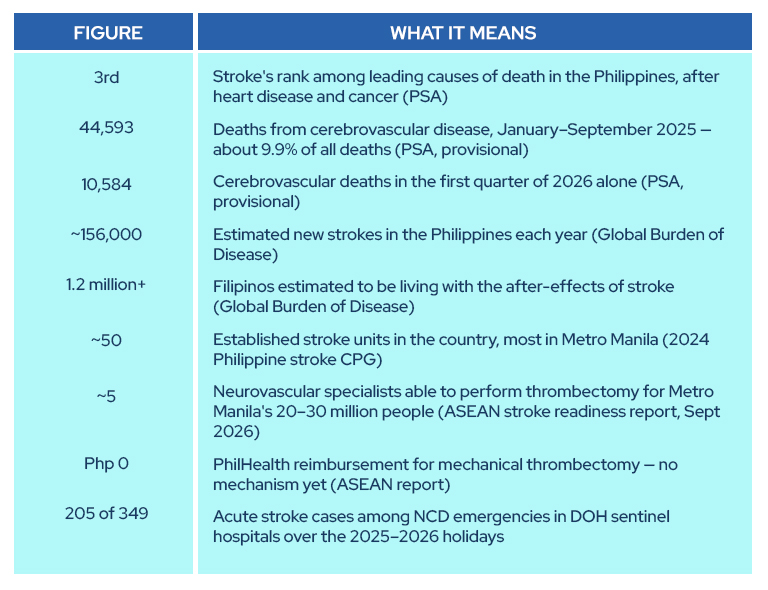
Sources: Philippine Statistics Authority provisional causes of death as reported by Daily Tribune (March 2026) and Context.ph (September 2026); 2024 Philippine CPG on Acute Ischemic Stroke and ICH (PJC, 2026); Siemens Healthineers, Strengthening Stroke System Readiness Across ASEAN (September 2026); DOH holiday NCD surveillance as reported by Manila Bulletin (January 2026); Global Burden of Disease data as compiled by PAVIN.
FROM FAST TO BE FAST
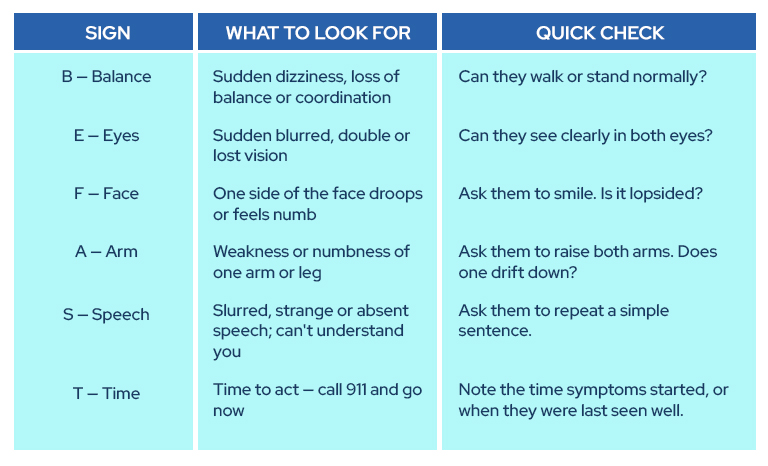
Tagalog version for your household: Balanse — biglang nahihilo o hindi makatayo nang maayos. Eyes (Mata) — biglang lumabo o dumoble ang paningin. Face (Mukha) — tabingi ang ngiti. Arm (Braso) — hindi maiangat ang isang braso. Speech (Pagsasalita) — bulol o hindi maintindihan. Time (Oras) — dalhin agad sa ospital. Tandaan kung anong oras nagsimula, o kailan siya huling nakitang maayos.
Before an emergency, ask your nearest hospital: Can you do a CT scan 24 hours a day? Can you give thrombolysis — and do you use alteplase or tenecteplase? Is there a neurologist on call? Where do you refer patients who need thrombectomy? Save the answers and the ER number in your phone.
KEY REFERENCES
1. San Jose MCZ, Macrohon-Valdez MC, Collantes MEV, et al. 2024 Clinical Practice Guidelines on the Management of Acute Ischemic Stroke and Intracerebral Hemorrhage in the Philippines. Philippine Journal of Cardiology. 2026;54(1):12–33. doi:10.69944/pjc.74a35b0ab9
2. Castillo RR. “Stroke: The 5-minute emergency Filipinos must recognize.” H&L Digital (healthandlifestyle.ph), May 25, 2026.
3. Siemens Healthineers. Strengthening Stroke System Readiness Across ASEAN. Presented at Hospital Management Asia 2026, Bangkok, September 2, 2026.
4. Menon BK, Buck BH, Singh N, et al. Intravenous tenecteplase compared with alteplase for acute ischaemic stroke in Canada (AcT). Lancet. 2022;400(10347):161–169.
5. US Food and Drug Administration approval of tenecteplase (TNKase) for acute ischemic stroke, March 2025, as reported by TCTMD, March 2025.
6. Thomalla G, Simonsen CZ, Boutitie F, et al. MRI-guided thrombolysis for stroke with unknown time of onset (WAKE-UP). N Engl J Med. 2018;379(7):611–622.
7. Nogueira RG, Jadhav AP, Haussen DC, et al. Thrombectomy 6 to 24 hours after stroke with a mismatch between deficit and infarct (DAWN). N Engl J Med. 2018;378(1):11–21.
8. Albers GW, Marks MP, Kemp S, et al. Thrombectomy for stroke at 6 to 16 hours with selection by perfusion imaging (DEFUSE 3). N Engl J Med. 2018;378(8):708–718.
9. Sarraj A, Hassan AE, Abraham MG, et al. Trial of endovascular thrombectomy for large ischemic strokes (SELECT2). N Engl J Med. 2023;388(14):1259–1271.
10. Huo X, Ma G, Tong X, et al. Trial of endovascular therapy for acute ischemic stroke with large infarct (ANGEL-ASPECT). N Engl J Med. 2023;388(14):1272–1283.
11. Xiong Y, Campbell BCV, Schwamm LH, et al. Tenecteplase for ischemic stroke at 4.5 to 24 hours without thrombectomy (TRACE-III). N Engl J Med. 2024;391(3):203–212.
12. Aroor S, Singh R, Goldstein LB. BE-FAST (Balance, Eyes, Face, Arm, Speech, Time): reducing the proportion of strokes missed using the FAST mnemonic. Stroke. 2017;48(2):479–481.
13. Philippine Statistics Authority. Registered deaths, January–September 2025 (provisional), as reported in: “Heart disease remains top killer in Philippines — PSA.” Daily Tribune, March 28, 2026.
14. Philippine Statistics Authority. Registered deaths, January–March 2026 (provisional), as reported in: “Heart disease remains country’s top cause of deaths.” Context.ph, September 25, 2026.
15. “Acute stroke tops deaths as DOH logs 9% rise in NCD cases during holidays.” Manila Bulletin, January 4, 2026.
16. “UST Hospital performs first life-saving brain clot removal.” Daily Tribune, May 23, 2026.
17. “Public warned vs heat stroke amid El Niño.” The Philippine Star, October 4, 2026.
18. Wang Y, Wang Y, Zhao X, et al. Clopidogrel with aspirin in acute minor stroke or transient ischemic attack (CHANCE). N Engl J Med. 2013;369(1):11–19.
19. Department of Health. Administrative Order No. 2020-0059: Guidelines on the Establishment of Acute Stroke Ready Hospitals.
20. PAVIN (pavin.org). “Current status of stroke data in the Philippines: Where are we now?”
21. World Stroke Organization. World Stroke Day 2026 campaign toolkit (#ActFAST).
22. Perez MV, Mahaffey KW, Hedlin H, et al. Large-scale assessment of a smartwatch to identify atrial fibrillation (Apple Heart Study). N Engl J Med. 2019;381(20):1909–1917.
23. Hart RG, Pearce LA, Aguilar MI. Meta-analysis: antithrombotic therapy to prevent stroke in patients who have nonvalvular atrial fibrillation. Ann Intern Med. 2007;146(12):857–867.
24. PhilHealth Circular No. 2025-0003: Physical Medicine and Rehabilitation benefit package, as reported by DOST-PCHRD (2025); stroke case rates as reported by Malaya Business Insight (Sept 22, 2025) and Philippine News Agency (Nov 28, 2023).
THE STROKE THAT GOES AWAY
Why a “mini-stroke” is an emergency, not a relief
By Marie Barrientos-Regala, MD

It happens more often than people think. A father at the dinner table suddenly can’t find his words. His left hand goes numb. The family panics — and then, twenty minutes later, he is fine. He laughs it off. “Napagod lang siguro ako.” Everyone goes back to eating.
What he probably had was a transient ischemic attack, or TIA. Many people call it a mini-stroke.
What a TIA is
A TIA happens when blood flow to part of the brain is blocked briefly, then restored before permanent damage sets in. The symptoms are the same as a stroke — face drooping, arm weakness, slurred speech, vision loss, loss of balance — but they disappear, usually within minutes and almost always within an hour.
Because the symptoms go away, many people never seek care. That is a dangerous mistake.
Why it matters
A TIA is a warning shot. The blockage that cleared on its own may come back, and next time it may not clear. The risk of a full stroke is highest in the first few days after a TIA. Studies have found that a significant share of people who have a TIA go on to have a stroke soon afterward, many within 48 hours, if they are not evaluated and treated.
The encouraging part is that rapid treatment greatly reduces this risk. Specialized TIA clinics abroad have shown that seeing patients quickly and starting prevention right away can cut the risk of a subsequent stroke dramatically.
What doctors do
After a TIA, doctors look for the cause: narrowed neck arteries, an irregular heartbeat, a clot source in the heart, uncontrolled blood pressure or diabetes. Tests may include a brain scan, imaging of the neck and brain arteries, an ECG and heart monitoring, and blood tests.
Treatment often begins immediately. For many patients with a high-risk TIA or a minor stroke, the 2024 Philippine stroke guidelines recommend a short course of two antiplatelet medicines, aspirin and clopidogrel, for 21 days, started within 24 hours of symptom onset, followed by a single antiplatelet. This strategy is backed by large trials. It should be started only after a doctor has examined the patient and ruled out bleeding with a brain scan.
Other steps may include controlling blood pressure, starting a statin, managing diabetes, stopping smoking, and — if atrial fibrillation is found — starting an anticoagulant.
Before an emergency, ask your nearest hospital: Can you do a CT scan 24 hours a day? Can you give thrombolysis — and do you use alteplase or tenecteplase? Is there a neurologist on call? Where do you refer patients who need thrombectomy? Save the answers and the ER number in your phone.
THE STROKE RISK HIDING IN YOUR PULSE
Atrial fibrillation causes some of the most disabling strokes. Many people who have it don’t know.
By Rafael R. Castillo, MD

Our May cover listed atrial fibrillation among the risk factors for stroke. It deserves a closer look, because it is one of the most preventable causes of severe stroke — and one of the most overlooked.
What it is
Atrial fibrillation, or AF, is the most common sustained heart rhythm disorder. Instead of contracting in a steady rhythm, the heart’s upper chambers quiver. Blood moves sluggishly, especially in a small pouch of the left atrium, and clots can form there. When a clot breaks loose, it often travels straight to the brain.
People with AF have roughly five times the risk of stroke compared with people without it. And strokes caused by AF tend to be larger, more disabling and more often fatal than other ischemic strokes, because the clots from the heart are big enough to block major brain arteries.
Who gets it
AF becomes more common with age, and the risk rises further with high blood pressure, heart failure, heart valve disease, diabetes, obesity, sleep apnea, thyroid problems and heavy drinking. A binge on a holiday weekend can sometimes trigger an episode — doctors call it “holiday heart.”
The problem: many people feel nothing
Some people with AF notice palpitations, a racing or fluttering heart, breathlessness, fatigue or dizziness. But many feel nothing at all. AF can also come and go, so a single normal ECG doesn’t rule it out. For a sizable share of patients, the first sign of AF is the stroke itself.
Can a smartwatch help?
Many smartwatches and some newer blood pressure monitors now flag a possibly irregular rhythm. In a large study of more than 400,000 smartwatch users, about a third of those who received an irregular-pulse alert and later wore a heart monitor were found to have AF.
These devices can be useful nudges, but they are not diagnoses. False alarms happen, and a device that says “normal” doesn’t guarantee your heart is fine. If you get an alert, or if you notice an irregular pulse yourself, see a doctor for an ECG and, if needed, longer heart monitoring.
The good news: treatment works
For most people with AF and additional risk factors, anticoagulants (blood thinners) reduce the risk of stroke by about two-thirds. That makes them among the most effective preventive treatments in all of medicine.
Doctors estimate stroke risk using simple scores that consider age, sex, high blood pressure, diabetes, heart failure, prior stroke and vascular disease. Based on that, they recommend whether to start an anticoagulant.
A few points worth knowing:
• Aspirin is not a substitute. For stroke prevention in AF, aspirin offers far less protection and is no longer recommended for this purpose in most guidelines.
• There are now options beyond warfarin. Newer anticoagulants (often called DOACs) don’t need frequent blood tests and have fewer food interactions. Cost can be a barrier, so discuss options openly with your doctor.
• Bleeding risk is real but manageable. Doctors weigh it carefully, and for most AF patients the benefit of preventing a stroke outweighs the risk.
• Don’t stop on your own. Stopping a blood thinner suddenly — including before dental work or surgery — should only be done on a doctor’s advice.
The 30-second pulse check: Sit quietly for five minutes. Place two fingers on the inside of your wrist below the thumb. Count for 30 seconds and notice whether the beats come at regular intervals. An irregular, “jumbled” rhythm, especially if you’re over 60 or have high blood pressure, is worth an ECG.
TOO YOUNG FOR A STROKE? THINK AGAIN
Strokes are increasingly striking people in their 30s, 40s and early 50s
By Marie Barrientos-Regala, MD

When a 38-year-old call center agent collapses after a night shift, or a 45-year-old businessman wakes up unable to move one side of his body, people are shocked. “Ang bata pa niya,” they say.
But stroke in younger adults is no longer rare. Studies in several countries have documented rising stroke rates among people under 55, even as rates among older adults have fallen in some places. In Philippine hospital registries, the average stroke patient is in their late 50s, which means many are considerably younger.
Why younger people are having strokes
Many of the causes are the same as in older adults, just arriving earlier:
• High blood pressure that has never been diagnosed, because younger people rarely get checked.
• Diabetes and obesity, which are increasingly common among young Filipinos.
• Smoking and vaping. Nicotine raises blood pressure and damages blood vessels.
• Heavy drinking, especially binge drinking.
• Illicit drugs, particularly stimulants such as shabu (methamphetamine), which can trigger both kinds of stroke.
• Poor sleep and shift work, which are linked to high blood pressure and metabolic problems.
Some causes are more specific to younger people:
• Arterial dissection — a small tear in the wall of a neck artery, sometimes after sudden neck movements, a minor injury or even vigorous neck manipulation. It may cause neck pain or headache before stroke symptoms.
• Heart conditions such as a small hole between the heart’s upper chambers (a patent foramen ovale), which can let clots pass to the brain.
• Blood clotting disorders, and in women, estrogen-containing contraceptives combined with smoking or migraine with aura.
• Pregnancy and the weeks after delivery, especially with preeclampsia.
The danger of “I’m too young”
Young people and their families often dismiss stroke symptoms, blaming fatigue, stress, a pinched nerve or too much screen time. Some doctors miss it too. That delay costs young patients the same brain cells it costs older ones — and they have more decades to live with the consequences.
If you’re under 50: Get your blood pressure, blood sugar and cholesterol checked at least once, and repeat as your doctor advises. Don’t smoke or vape. Treat sudden one-sided weakness, facial droop, slurred speech or vision loss as a stroke, whatever your age.
PAYING FOR A STROKE
What PhilHealth covers now — and the expensive treatment it still doesn’t
By the H&L Editorial Team

In May, we described the heavy toll stroke takes on families: hospital bills, rehabilitation, lost income, exhausting caregiving. This article looks at the practical side — what help is available today, and where the biggest gaps remain.
Hospital care
PhilHealth raised its stroke case rates in recent years. According to official announcements and news reports, coverage for ischemic stroke rose from P28,000 to P76,000, and for hemorrhagic stroke from P38,000 to P80,000.
That is a significant improvement. But for patients in private hospitals, or those who need ICU care, surgery or prolonged confinement, the bill can still run far higher.
Rehabilitation
PhilHealth now has a Physical Medicine and Rehabilitation (PM&R) benefit package under Circular 2025-0003. It covers rehabilitation assessments; physical, occupational and speech and language therapy; psychological support; laboratory and diagnostic tests; necessary medicines; and assistive mobility devices such as wheelchairs, walkers, crutches and canes. This builds on earlier Z Benefit packages that covered rehabilitation for stroke and heart attack patients.
For many families, this matters as much as hospital coverage. Recovery after stroke can take months of therapy, and families often stop rehab early because of cost.
The gap: thrombectomy
Here is where the system falls short. According to the ASEAN stroke readiness report released in September 2026, mechanical thrombectomy is not yet covered by the national health insurance system, and there is no reimbursement mechanism in place. The procedure — which can mean the difference between independence and lifelong disability for patients with major strokes — is mostly available in private hospitals, at a cost beyond the reach of most Filipino families. Experts behind the report recommended extending national health insurance to cover thrombectomy and other advanced stroke treatments. Until that happens, access to the most effective treatment for the most severe strokes will depend heavily on a family’s ability to pay.
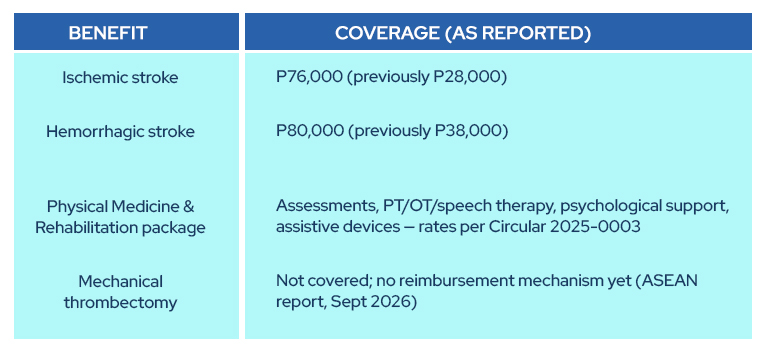
Check current PhilHealth circulars and your hospital’s PhilHealth desk for updated amounts, eligibility and accredited facilities.
Where else to look for help
• Malasakit Centers in participating public hospitals, which bring together assistance from PhilHealth, DOH, DSWD and PCSO.
• DOH medical assistance programs for indigent and financially incapacitated patients, subject to eligibility and available funds.
• Zero-balance billing in participating DOH hospitals for eligible patients in basic accommodation.
• PCSO and local government units for medical and financial assistance.
• HMOs and private insurance, if you have them — check whether they cover thrombectomy and rehabilitation, and what pre-approval they require.
Questions to ask the hospital early: Which PhilHealth package applies to this stroke? What is excluded? Can the social worker help us apply for assistance now, before the bill comes? If thrombectomy is recommended, what will it cost and is there any way to get help with it? Is the rehab facility PhilHealth-accredited for the PM&R package?
PUBLIC HEALTH COMMENTARY
YOUR ADDRESS SHOULD NOT DECIDE WHETHER YOU SURVIVE A STROKE
By the H&L Editorial Team

Imagine two women, both 60, who have identical strokes on the same morning.
One lives in Quezon City. Her family calls for help, and within an hour she is in a private hospital with a CT scanner, a neurologist and a stroke team. She receives a clot-busting injection. A large clot is found in a major artery, and a specialist pulls it out that afternoon. A week later, she walks out of the hospital.
The other lives in a mountain barangay in Mindanao. The nearest hospital with a CT scanner is four hours away by road, and there is no ambulance. By the time she arrives, the window for treatment has closed. Even if it hadn’t, no one there could remove the clot, and her family could not have paid for it. She survives, but she will never walk on her own again.
Same stroke. Same age. Different addresses. Different lives.
The past few months have made the medical side of this story more hopeful. The new Philippine stroke guidelines set a clear national standard. Tenecteplase makes clot-busting simpler to deliver. Research has stretched the windows in which a brain can be saved.
But September’s ASEAN stroke readiness report was a reminder that progress in medicine doesn’t automatically become progress for patients. It found that most advanced stroke care in the Philippines is delivered by private hospitals, while government hospitals — which serve most patients — often lack the imaging needed for the most severe strokes. Metro Manila, with an estimated 20 to 30 million people, has only about five specialists who can perform thrombectomy. The procedure isn’t covered by national health insurance. Emergency medical services remain weak.
Add to that what we already knew: only about 50 stroke units nationwide, mostly in the capital, and two-thirds of Filipino neurologists practicing in Metro Manila.
The DOH has a framework to change this. Administrative Order 2020-0059 set guidelines for Acute Stroke Ready Hospitals. Thrombolysis rates have risen over the past decade. Regional health offices, including in the Ilocos Region this October, have been pushing for better stroke care coordination. These efforts deserve support.
What would it take to close the gap?
• A stroke-ready public hospital within reach of every province, with a CT scanner working 24 hours a day and staff trained to give thrombolysis — including tenecteplase, which is simpler to use in smaller hospitals.
• Telestroke networks that link provincial emergency rooms to neurologists in larger centers, so a specialist can review a scan remotely and guide treatment.
• Hub-and-spoke referral systems for thrombectomy, with clear transfer agreements and functioning ambulances.
• Training and deploying more neurovascular specialists outside Metro Manila, as the ASEAN report recommends.
• PhilHealth coverage for thrombectomy, so the most effective treatment for major strokes is not reserved for those who can pay.
• Public education so every barangay health worker, teacher and family knows BE FAST.
• Primary care that controls blood pressure, because the cheapest stroke to treat is the one that never happens.
• Data that measure what matters: how quickly patients are treated and how many recover, not just how many hospitals are certified.
None of this is beyond our reach. Many countries with comparable incomes have built regional stroke networks within a decade. What they needed was a plan, funding and the will to see it through.
The Universal Health Care Act promised Filipinos equitable access to quality care. For stroke, equity means something very concrete: that a woman’s chance of walking again should not depend on her address — or her bank account.









Leave a Reply