
By Dr. Tony Leachon
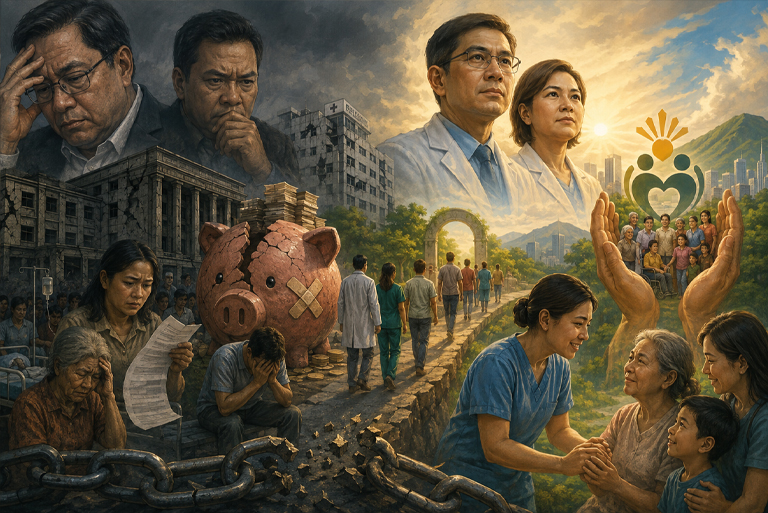
The Department of Health (DOH) and PhilHealth, once envisioned as pillars of Universal Health Care, have instead become cautionary tales of how weak governance erodes trust, undermines institutions, and abandons the very people they were meant to serve. Their failures are not abstract—they are lived realities for millions of Filipinos who face collapsing hospitals, unpaid claims, and the indignity of a health system on its knees.
Leadership as Destiny
Leadership in health is not about prestige or appearances abroad; it is about stewardship, competence, and moral courage. Secretary Teodoro Herbosa’s tenure revealed the opposite: incompetence, political entanglements, junket travels, and unresolved Ombudsman cases. His resignation was not merely a personal retreat—it symbolized the collapse of an institution that had lost its moral ascendancy.
His successor, Dr. Jose Pujalte Jr., entered office under a cloud of uncertainty, with little credible background and allegations of gambling and corruption involving tuberculosis drugs. Leadership cannot be built on shadows. When credibility is absent, trust evaporates, and the health system falters further.
PhilHealth Betrayed
The crisis deepened when Emmanuel Ledesma, then PhilHealth CEO, orchestrated the unconstitutional transfer of ₱60 billion in 2024 under the directive of DOF Secretary Recto. The Supreme Court later struck this down, but the damage was done. In 2025, PhilHealth received zero subsidy, leaving hospitals unpaid and patients burdened with catastrophic costs. This reckless act crippled the very institution meant to shield Filipinos from financial ruin.
Universal Health Care was betrayed. Instead of protecting the vulnerable, PhilHealth became a symbol of fiscal negligence and political expediency.
A Chance for Reform
The appointment of Dr. Edwin Mercado as PhilHealth CEO offers a glimmer of hope. Alongside reform advocates like Dr. Beverly Ho, there is now an opportunity to restore integrity, protect billions in public funds, and dismantle programs like MAIFIP that undermine the spirit of UHC. But reform requires more than new faces—it demands competence, transparency, and accountability at every level.
Systemic Failure, National Consequence
The failures of DOH and PhilHealth are not isolated missteps. They are the product of executive and legislative actions that eroded trust, weakened institutions, and left Filipinos vulnerable. When leaders prioritize ambition over service, when funds are diverted instead of protected, the health of the nation becomes collateral damage.
Time is running out. The Philippines must catch up with competent, effective, and honest leadership. Health is not a privilege—it is a right. And leadership in health is not about prestige—it is about protecting lives,










Leave a Reply