

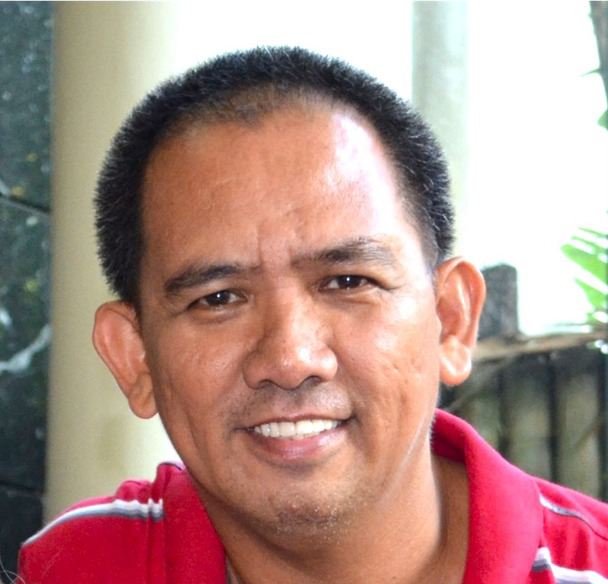
By Henrylito D. Tacio

“God gave you a gift of 86,400 seconds today. Have you used one to say, ‘Thank you?’” – William A. Ward, one of America’s most quoted writers of inspirational maxims
***
This story happened in the United States. On July 2, 1964, American President Lyndon Baines Johnson enacted the Civil Rights Bill, which rendered racial segregation and discrimination unlawful in the nation.
Prior to the official vote in Congress, the bill underwent intense debate. The majority of southern representatives were against the bill, except for Congressman Jack Pickle from Texas, who jeopardized his political future by supporting the president and voting in favor of the civil rights legislation.
After he cast his vote, Pickle returned to his District hotel at 2 a.m., contemplating whether his political career had come to an end. At the hotel, the front desk attendant informed him that President Johnson had been trying to reach him. Due to the late hour, Pickle decided to return the call to the White House the following morning.
However, the attendant urged him, saying, “Please don’t say that. The President has called three times. He wishes for you to return his call immediately. If you do not, he will simply call again.”
Upon hearing those words, Pickle retreated to his room and made a call. “We have searched extensively throughout Washington for you,” the White House operator responded.
However, before he could reply, the President was already on the line: “I made a commitment to myself that I would not allow this night to pass without personally informing you that your president is proud of you. During my time in the House, I had the opportunity to vote on a bill like this one, but I never found the courage to do so. Yet you accomplished it, Jake. Thank you, thank you.”
“I live in the space of thankfulness – and I have been rewarded a million times over for it. I started out giving thanks for small things, and the more thankful I became, the more my bounty increased.”
Are you aware of who said those words? If you wish to know, the statement comes from the renowned Oprah Winfrey.
How could this celebrated American television figure ever express gratitude? Consider that she was born to unmarried parents and placed in her grandmother’s care shortly after her birth. At the age of nine, she moved in with her mother. She endured repeated sexual assaults by a teenage cousin, followed by further abuse from other relatives.
“I was, and still am, severely damaged by the experience. I unconsciously blamed myself for those men’s acts,” she told the world in 1985.
Winfrey thanked her friend and mentor Maya Angelou for turning her life around. “You’re saying thank you,” Maya told her, “because your faith is so strong that you don’t doubt that whatever the problem, you’ll get through it. You’re saying thank you because you know that even in the eye of the storm, God has put a rainbow in the clouds. You’re saying thank you because you know there’s no problem created that can compare to the Creator of all things. Say thank you!”
Indeed, how easy is it to say, “Thank you.” But oftentimes, we fail to do so. The Holy Bible is replete with stories of not giving thanks to the person who has done something great for them. One such story was recorded in Luke 17:11-19.
As Jesus went to a village, ten men who had leprosy (the Greek word was used for various diseases affecting the skin – not necessarily leprosy) met him. They stood at a distance and called out a loud voice, “Jesus, Master, have pity on us!”
When Jesus saw them, he said, “Go, and show yourselves to the priests.” And as they went, they were cleansed. One of them, when he saw he was healed, came back, praising God in a loud voice. He threw himself at Jesus’ feet and thanked the Healer.
Jesus wondered: “Were not all ten cleansed? Where are the other nine? Was no one found to return and give praise to God except this person?”
“Gratitude,” Cicero states, “is not only the greatest of virtues, but the parent of all others.” But “we often take for granted the very things that most deserve our gratitude,” Cynthia Ozick reiterates. A Chinese proverb urges that when you eat bamboo sprouts, always remember the man who planted them.
In some instances, saying thank you may not be enough. In fact, appreciate a person for who he is and for what he has done. Appreciation, Voltaire pinpoints, “is a wonderful thing. It makes what is excellent in others belong to us as well.”
Jim Stovall suggests, “You need to be aware of what others are doing, applaud their efforts, acknowledge their successes, and encourage them in their pursuits. When we all help one another, everybody wins.”
Business tycoon Sal Walton has the same idea in mind when he said, “Appreciate everything your associates do for the business. Nothing else can quite substitute for a few well-chosen, well-timed, sincere words of praise. They’re absolutely free and worth a fortune.”
Expressing gratitude is most effective when it is specific, timely, and genuine. You can demonstrate appreciation through considerate actions, such as composing a handwritten note, or verbally by explicitly acknowledging the recipient’s efforts and their precise impact on you. A structured and personal approach enhances the communication of your appreciation effectively:
1. Be specific.
Avoid merely saying “thanks.” Clearly articulate what they did and why it is significant to you. For instance: “Thank you very much for covering my shift on Tuesday. It enabled me to attend my doctor’s appointment without any stress.”
2. Go beyond the basic “Thank you”
There are numerous creative methods to convey gratitude when a simple phrase falls short. Examples include: “Your support means more than you can imagine.” “I truly appreciate your actions.” “I will always cherish this.” “Words cannot convey how much you mean to me.”
3. Choose the right medium
Align the gesture with the relationship and the magnitude of the favor. A text message or a brief email suffices for everyday favors. A handwritten note or a phone call is appropriate for significant support, holiday greetings, or gifts.
Conversely, small, non-transactional favors may include treating someone to coffee, bringing them a snack, or performing a reciprocal chore.
4. Practice consistency
Incorporate gratitude into your daily routine. You might consider starting a gratitude journal to document the things you appreciate, which will naturally alter your perspective and enhance your interactions with others.
“Gratitude is the healthiest of all human emotions,” said inspirational speaker Zig Ziglar. “The more you express gratitude for what you have, the more likely you will have even more to express gratitude for.”










Leave a Reply