
THE WORD MY PATIENT COULDN’T SAY

He came to my clinic for chest pain. He was in his early 40s, well dressed, polite, the kind of patient who apologizes for taking up your time.
The chest pain turned out to be his heart. His cholesterol was high, his arteries showed early disease, and his blood pressure needed attention. All of that was familiar territory for a cardiologist.
It was only when I asked about his other medicines that he hesitated. He looked at the floor. Then he slid a small plastic bag of pills across the desk and said, very quietly, “Doc, may iniinom po ako para sa… para doon.”
I have something I’m taking for… for that.
He couldn’t say the word. HIV. After fifteen years of living with it — fifteen years of taking his pills faithfully, of keeping his viral load undetectable, of doing everything right — he still couldn’t bring himself to say it out loud to his doctor.
I’ve thought about that moment many times since.
Medically, his HIV was the least of his problems. His virus was perfectly controlled. What threatened his life was his heart, and the fact that he had almost not told me about his HIV medicines, some of which can interact with heart drugs. Had he stayed silent, I might have prescribed something that could have harmed him.
But what struck me most wasn’t the medicine. It was the shame. Here was a man who had done everything medicine asked of him, and still he carried his diagnosis like a secret crime.
That shame didn’t come from nowhere. It came from us — from a society that for decades spoke of HIV in whispers, as a punishment, as something that happened to “other” people. It came from families who turned away, employers who discriminated, and, I’m sorry to say, health workers who treated patients with HIV differently.
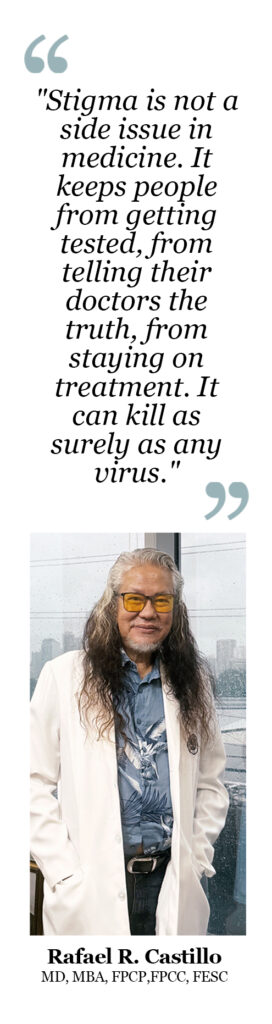
As a doctor, I’ve learned that stigma is not a side issue in medicine. It is a health risk. It keeps people from getting tested. It keeps them from telling their doctors the truth. It makes them miss appointments and stop their medicines. It can kill as surely as any virus.
And yet the medicine itself has never been better. People with HIV who are on treatment can live long lives, and those with undetectable virus don’t transmit it to their partners. Today, someone like my patient is far more likely to die of a heart attack than of AIDS — which is why I now tell my colleagues that caring for people with HIV means caring for their hearts, their blood pressure, their cholesterol, their whole selves.
My patient is doing well now. He’s on a statin, his blood pressure is controlled, and he still takes his HIV medicines every morning. Before he left that first day, I told him that he never needed to lower his voice in my clinic. HIV is a medical condition, like hypertension or diabetes. It is nothing to be ashamed of.
He looked at me for a long moment, and then he said it — clearly this time. “HIV, Doc.”
It was a small thing. But I think it was the beginning of healing.






Leave a Reply